
Astilbe chinensis ‘Lowlands Ruby Red’
Blooming Time
Exposure

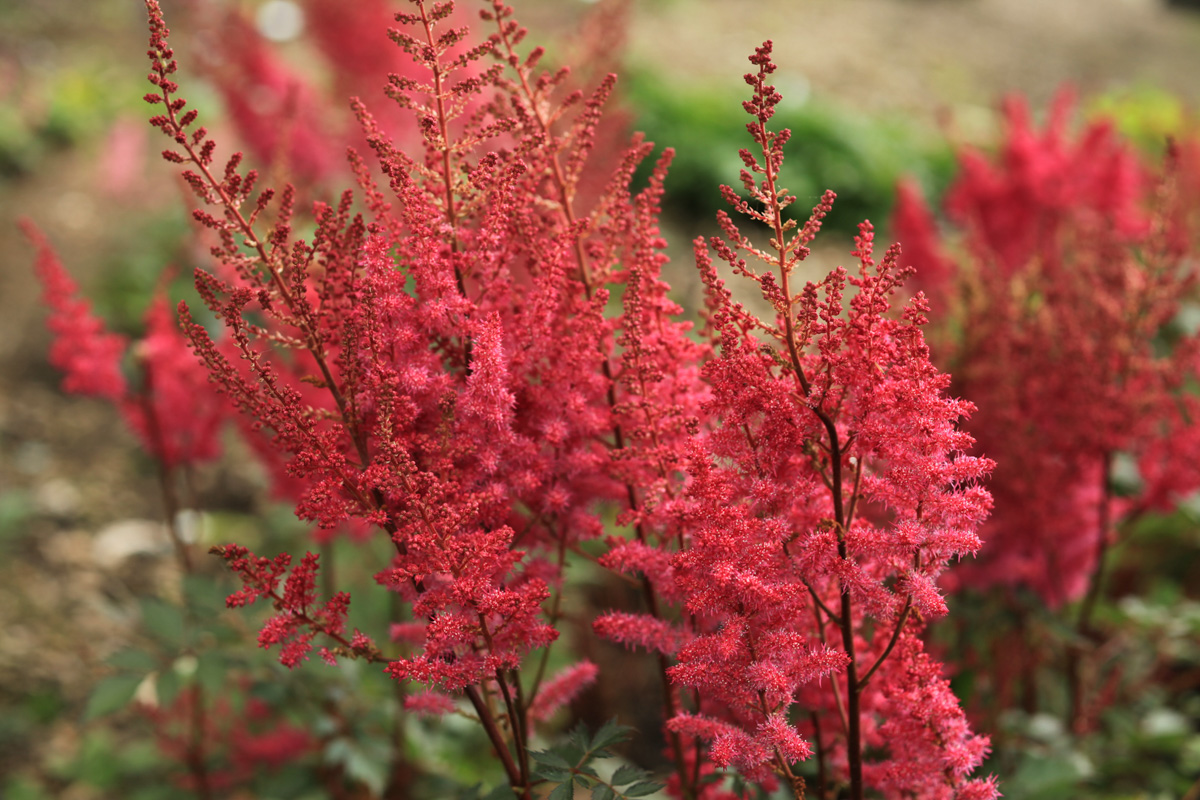
Considered one of the best red chinensis types on the market; ‘Lowlands Ruby Red’ stands alone with large bouquets of vivid cherry-red plumes atop deep purple stems. Glossy, dark green, toothed foliage makes a wonderful backdrop for its impressive floral display, which is irresistible to humans and pollinators alike. An excellent choice for any woodland or shaded border, as well as in the cutting garden, ‘Lowlands Ruby Red’ will thrive in any shaded spot with ample moisture and good drainage.
Details
Hardiness Zone:
Blossom Color:
Red
Growth Habit:
Clump Forming
Max Height:
2'
Texture:
Recommended Spacing:
We sell this plant in these containers:
Special Characteristics










Features
Considered one of the best red chinensis types on the market, 'Lowlands Ruby Red' stands alone with large bouquets of vivid cherry-red plumes atop deep purple stems.
Landscape Value
An excellent choice for any woodland or shaded border, as well as in the cutting garden, 'Lowlands Ruby Red' will thrive in any shaded spot with ample moisture and good drainage.
Care
Watering:
'Lowlands Ruby Red' Astilbe requires a fair amount of supplemental watering and often requires watering on a regular basis during the growing season.
Fertilizing:
'Lowlands Ruby Red' Astilbe is a moderate feeder, benefiting from a couple of annual applications of slow release fertilizer. A spring application of a 3-1-2 ratio (such as a 15-5-10) can be applied at a rate of about 10 pounds per 1000 square feet, and during early fall, an application of a 2-1-2 ratio (such as a 10-5-10) can be applied to encourage root development and cold hardiness.
Pruning:
'Lowlands Ruby Red' Astilbe is a deciduous plant (nonevergreen) and does not require pruning. It is perfectly acceptable to allow the dropped leaves to decompose and nourish the soil.