
Aruncus dioicus
Blooming Time
Exposure



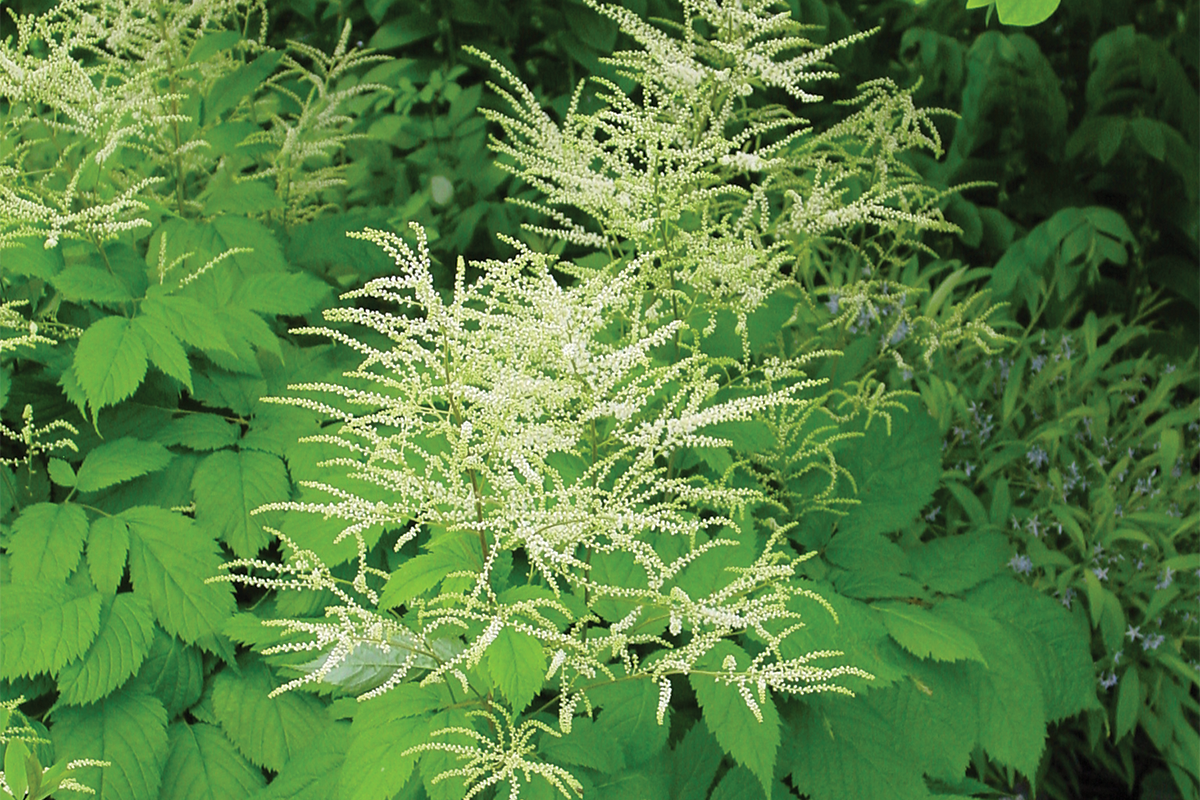
Resembling a large astilbe, this North American native is valued for its large clumps of medium green foliage and densely held 1-foot plumes of creamy white flowers. It is effective as a specimen or backdrop and its rhizomatous nature makes it useful on a moderate to large scale. Goat’s beard prefers organically rich, well-drained soil with average moisture. Good companions include other shade-loving perennials and groundcovers.
Details
Hardiness Zone:
Blossom Color:
White to Cream
Growth Habit:
Shrubby
Max Height:
6'
Texture:
Recommended Spacing:
We sell this plant in these containers:
Special Characteristics







Features
This North American native is valued for its large clumps of medium green foliage and 1-foot plumes of creamy white flowers.
Landscape Value
Effective as a specimen or backdrop. Its rhizomatous nature makes it useful on a moderate to large scale.
Care
Watering:
Goat's Beard requires a fair amount of supplemental watering and often requires watering on a regular basis during the growing season.
Fertilizing:
Goat's Beard is a moderate feeder, benefiting from a couple of annual applications of slow release fertilizer. A spring application of a 3-1-2 ratio (such as a 15-5-10) can be applied at a rate of about 10 pounds per 1000 square feet, and during early fall, an application of a 2-1-2 ratio (such as a 10-5-10) can be applied to encourage root development and cold hardiness.
Pruning:
Goat's Beard should be pruned while dormant during late fall or winter.