
Campsis radicans
Blooming Time
Exposure


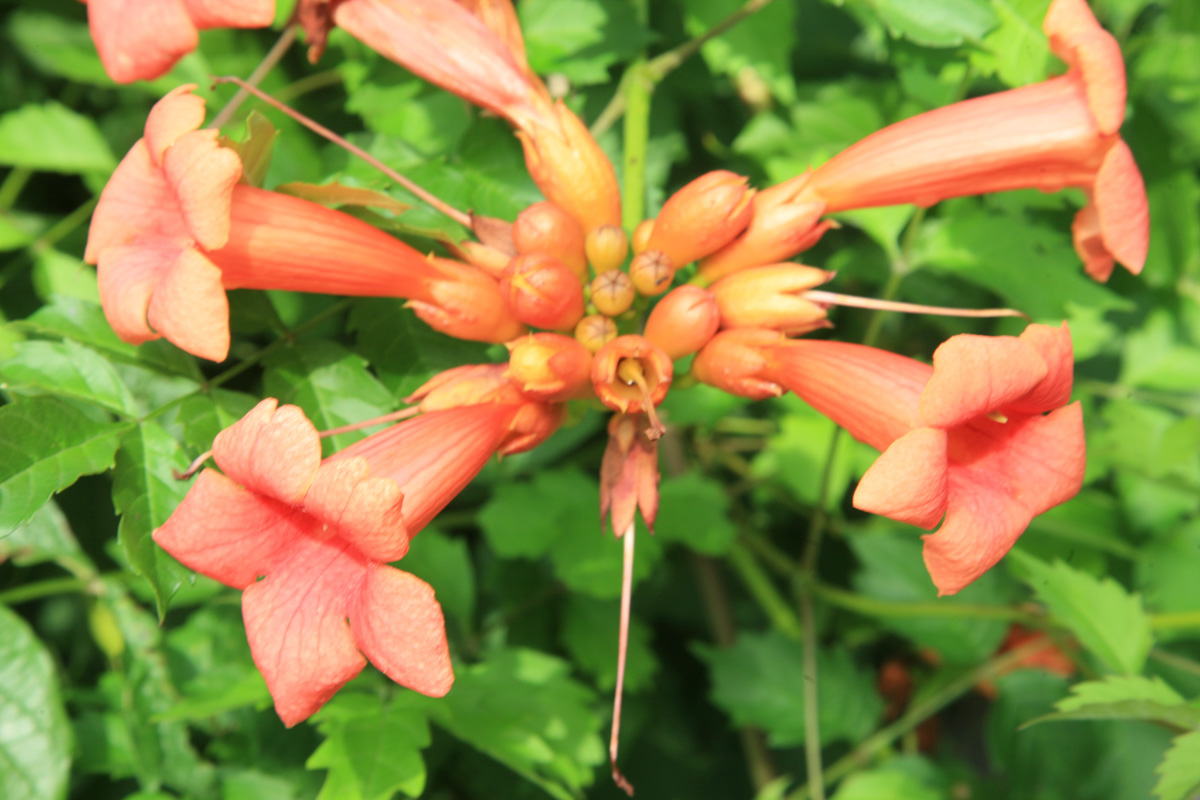
A rapid grower, trumpetvine can be used to sprawl over the top of retaining walls or old stumps, or to cover a chain link fence. Its medium green, deciduous, compound foliage is arranged in opposite manner, and serves as a splendid backdrop to the flamboyant floral array of orange-tubed, scarlet petalled, hummingbird-attracting trumpets that bloom from June until September.
Details
Hardiness Zone:
Blossom Color:
Orange, Copper, Gold
Growth Habit:
Aerial Rootlets
Max Height:
30'
Texture:
Recommended Spacing:
We sell this plant in these containers:
Special Characteristics









Features
Attractive native with green foliage and loads of hummingbird attracting, orange-tubed, scarlet petaled, summerborne flowers.
Landscape Value
Sprawls over retaining walls and stumps, attaches to coarse bark or brick. Trainable as self supporting shrub. Great floral interest.
Care
Watering:
Trumpetvine is very drought tolerant and typically only needs watering during the hottest days of summer.
Fertilizing:
Trumpetvine is a moderate feeder, benefiting from a couple of annual applications of slow release fertilizer. A spring application of a 3-1-2 ratio (such as a 15-5-10) can be applied at a rate of about 10 pounds per 1000 square feet, and during early fall, an application of a 2-1-2 ratio (such as a 10-5-10) can be applied to encourage root development and cold hardiness.
Pruning:
Trumpetvine should be pruned while dormant during late fall or winter.