
Cimicifuga ramosa ‘Pink Spike’
Blooming Time
Exposure


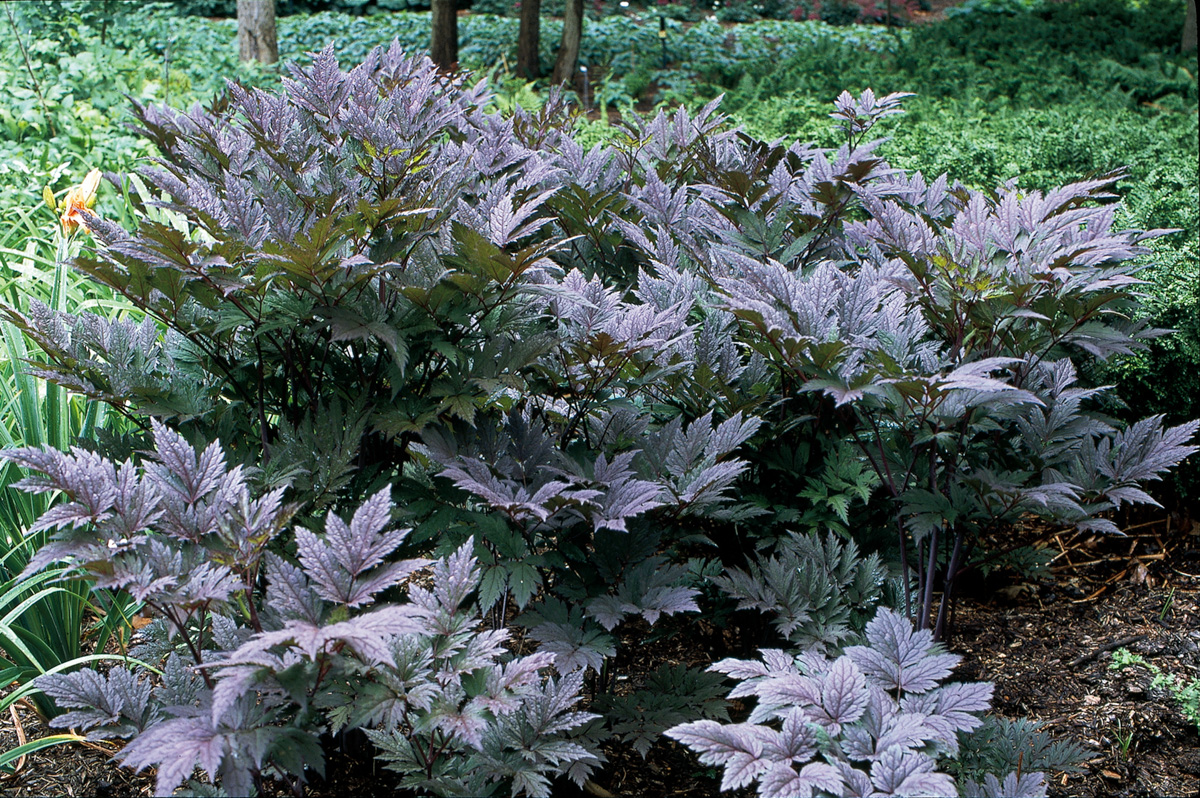
One of the most low-maintenance plants on the market, `Pink Spike’ is also one of the most elegant, colorful, and fragrant. A great bloomer, `Pink Spike’ bears numerous upright spikes of rich pink, amazingly fragrant florets. The fragrance of `Pink Spike’ is better than any perfume and the flowers bring the added bonus of being attractive to butterflies. It is also a fabulous foliage plant with deep-purple, richly textured leaves. `Pink Spike’ prefers richly organic, moist but well drained soils.
Details
Hardiness Zone:
Blossom Color:
Rose to Pink
Growth Habit:
Clump Forming
Max Height:
3'
Texture:
Recommended Spacing:
We sell this plant in these containers:
Special Characteristics










Features
Fragrant, colorful and elegant upright spikes of rich pink and deep-purple textured leaves. Its amazing fragrance is better than any perfume and, as an added bonus, attracts butterflies.
Landscape Value
Create rich inviting character to the landscape often as a backdrop in shady border plantings, great mass planted as a ground cover and as an edging to garden pathways.
Care
Watering:
'Pink Spike' Snakeroot is moderately drought tolerant but benefits from occasional watering, to maintain soil in a moist but not wet condition, during the summer months.
Fertilizing:
'Pink Spike' Snakeroot is a moderate feeder, benefiting from a couple of annual applications of slow release fertilizer. A spring application of a 3-1-2 ratio (such as a 15-5-10) can be applied at a rate of about 10 pounds per 1000 square feet, and during early fall, an application of a 2-1-2 ratio (such as a 10-5-10) can be applied to encourage root development and cold hardiness.
Pruning:
'Pink Spike' Snakeroot should be enjoyed all winter long, then, during early April before it begins to grow again, it should be pruned or mowed back to ground level.