
Ligularia stenocephala ‘The Rocket’
Blooming Time
Exposure


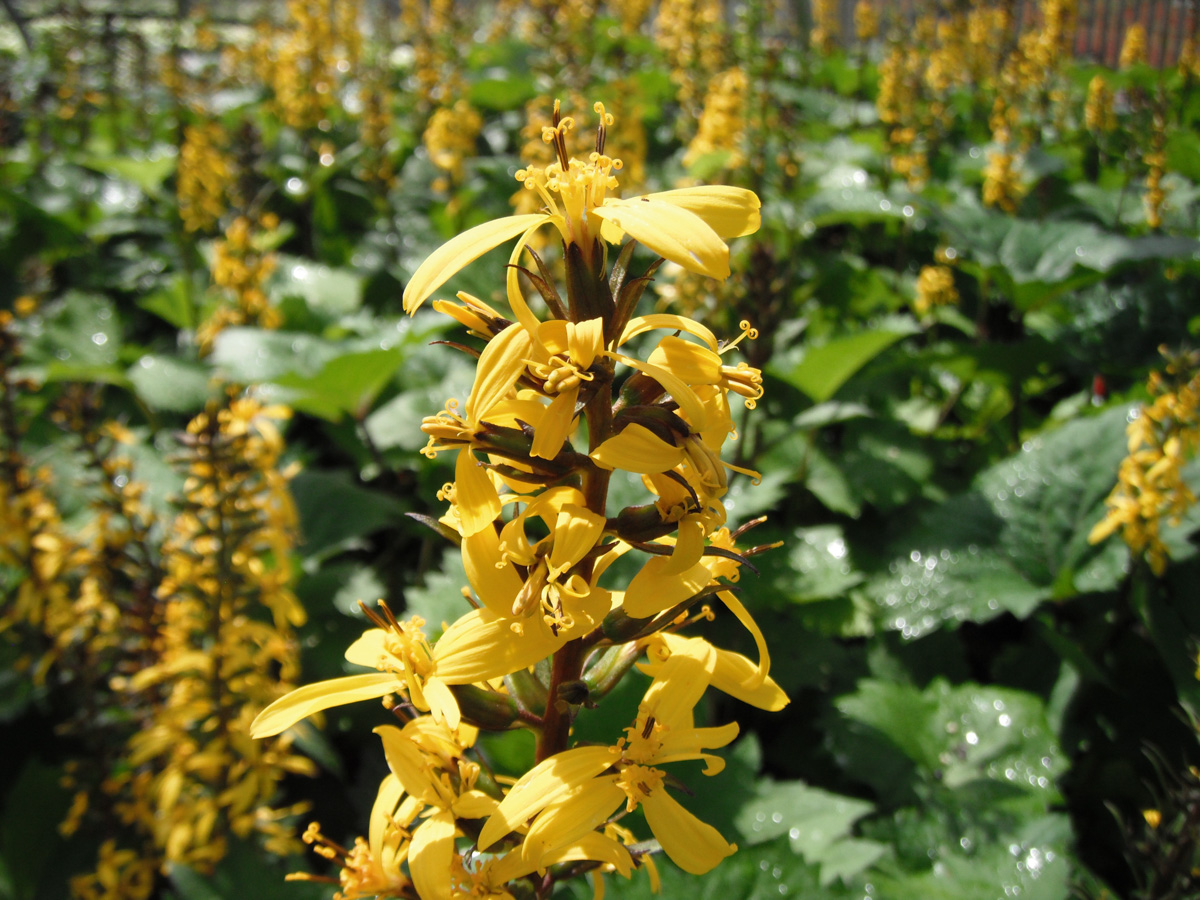
A lover of moist soil conditions, cool nights, and afternoon shade, ‘The Rocket’ performs well in midwestern landscapes and is a great indicator for when to water as it will generally droop before other plants. ‘The Rocket’ is a fine and robust foliage plant with large rich green leaves and rich texture. Its flowers, however, are even more noteworthy–and the source of its name. Ascending upon upright stalks it bears 1½ to 2-foot tall upright floral spikes. Loaded with lovely lemon yellow flowers, they lend vertical dimension and exceptional color during the summer months.
Details
Hardiness Zone:
Blossom Color:
Yellow to Chartreuse
Growth Habit:
Clump Forming
Max Height:
4½'
Texture:
Recommended Spacing:
We sell this plant in these containers:
Special Characteristics








Features
Lush, green, rich textured leaves. Flowers borne during summer upon upright stalks are lemon yellow and bring great vertical dimension and exceptional color.
Landscape Value
Moderate to large scale ground cover, accent, edging, naturalizer, companion. Lover of moist soil, cool nights, and afternoon shade.
Care
Watering:
'The Rocket' Ligularia requires a fair amount of supplemental watering and often requires watering on a regular basis during the growing season.
Fertilizing:
'The Rocket' Ligularia is a moderate feeder, benefiting from a couple of annual applications of slow release fertilizer. A spring application of a 3-1-2 ratio (such as a 15-5-10) can be applied at a rate of about 10 pounds per 1000 square feet, and during early fall, an application of a 2-1-2 ratio (such as a 10-5-10) can be applied to encourage root development and cold hardiness.
Pruning:
'The Rocket' Ligularia is a deciduous plant (nonevergreen) and does not require pruning. It is perfectly acceptable to allow the dropped leaves to decompose and nourish the soil.