
Lobelia cardinalis
Blooming Time
Exposure


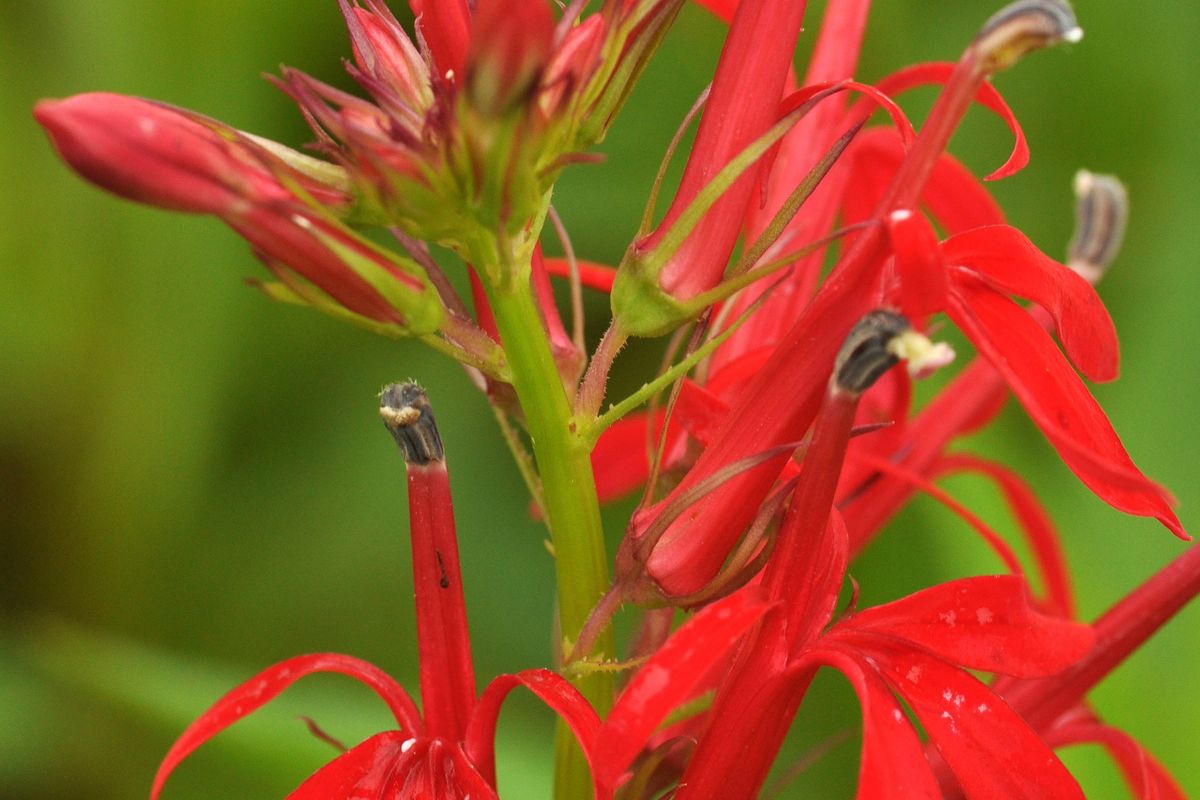
A hummingbird delight, cardinal flower features 2-foot long spikes of pure red tubular flowers that are full of nectar. It develops in clumps of upright, unbranched stems with green and purple-bronze leaves. Considered to be a short-lived perennial, cardinal flower is known for self-seeding and naturalizing within the landscape. It prefers moist to wet soils and therefore is best when planted at the edge of water features, ponds, streams, and lakes or in low-lying areas of the landscape.
Details
Hardiness Zone:
Blossom Color:
Red
Growth Habit:
Clump Forming
Max Height:
4'
Texture:
Recommended Spacing:
We sell this plant in these containers:
Special Characteristics










Features
A hummingbird's delight, cardinal flower features 2 foot long spikes of pure red tubular flowers that are full of nectar.
Landscape Value
Cardinal flower is known for self-seeding and naturalizing within the landscape at the edge of water features, ponds, streams, or in low-lying areas of the landscape.
Care
Watering:
Cardinal Flower requires a fair amount of supplemental watering and often requires watering on a regular basis during the growing season.
Fertilizing:
Cardinal Flower is a moderate feeder, benefiting from a couple of annual applications of slow release fertilizer. A spring application of a 3-1-2 ratio (such as a 15-5-10) can be applied at a rate of about 10 pounds per 1000 square feet, and during early fall, an application of a 2-1-2 ratio (such as a 10-5-10) can be applied to encourage root development and cold hardiness.
Pruning:
Cardinal Flower should be enjoyed all winter long, then, during early April before it begins to grow again, it should be pruned or mowed back to ground level.