
Hosta ‘Touch of Class’
Blooming Time
Exposure


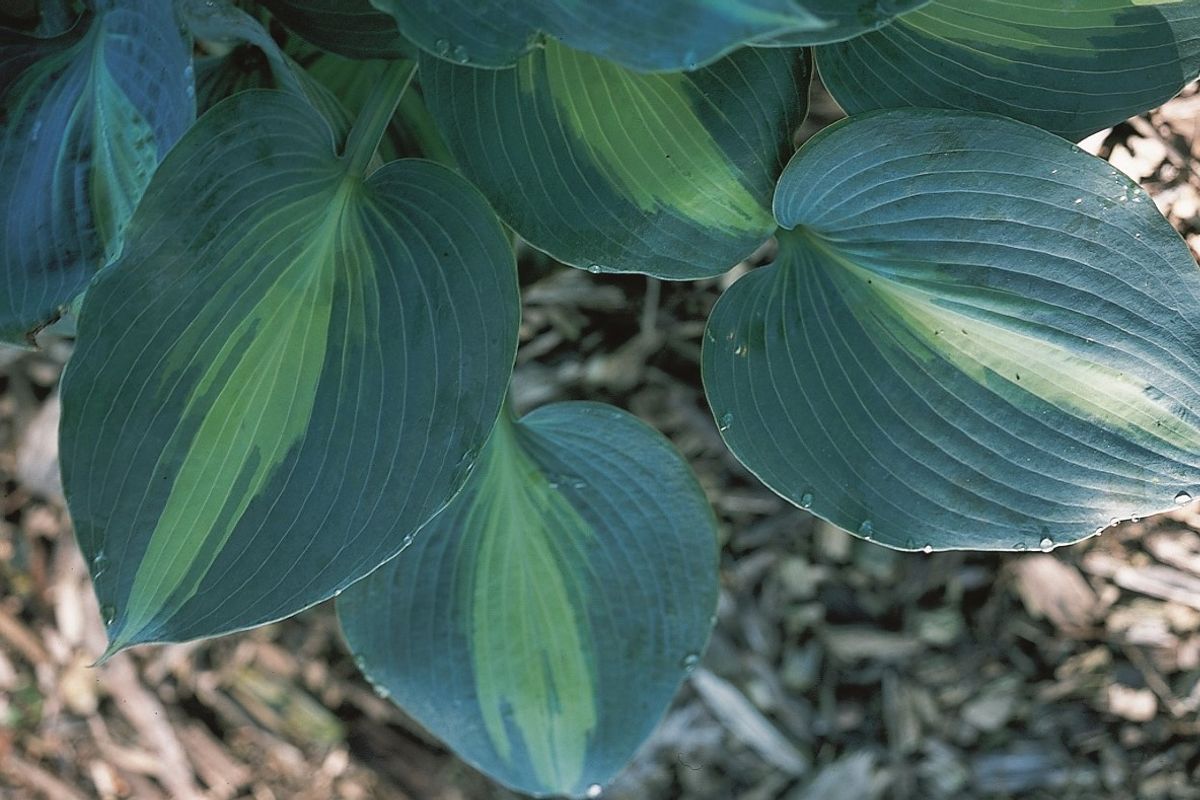
Developed at Shady Oaks Nursery by Hans Hansen, this is the tetraploid version (double the normal chromosome count) of Hosta ‘June’. Characterized by doubly thick, slug resistant, chartreuse-centered, extra wide iridescent-blue margined leaves, ‘Touch of Class’ lives up to its name and provides a dramatic effect in the landscape. It is great for edging, accent, and specimen use. Flowering mid-summer atop 2-foot scapes, it makes a nice show of soft lavender flowers.
Details
Hardiness Zone:
Blossom Color:
Violet to Purple
Growth Habit:
Clump Forming
Max Height:
12"
Texture:
Recommended Spacing:
We sell this plant in these containers:

Special Characteristics








Features
Doubly thick, slug resistant, chartreuse-centered, extra wide iridescent-blue margined leaves. Flowering midsummer atop 2 foot scapes, it makes a nice show of soft lavender flowers.
Landscape Value
Superb moderate to large scale ground cover, great specimen, accent, companion or edging for woodland paths.
Care
Watering:
'Touch of Class' Hosta is moderately drought tolerant but benefits from occasional watering, to maintain soil in a moist but not wet condition, during the summer months.
Fertilizing:
'Touch of Class' Hosta is a moderate feeder, benefiting from a couple of annual applications of slow release fertilizer. A spring application of a 3-1-2 ratio (such as a 15-5-10) can be applied at a rate of about 10 pounds per 1000 square feet, and during early fall, an application of a 2-1-2 ratio (such as a 10-5-10) can be applied to encourage root development and cold hardiness.
Pruning:
'Touch of Class' Hosta is a deciduous plant (nonevergreen) and does not require pruning. It is perfectly acceptable to allow the dropped leaves to decompose and nourish the soil.