
Carex elata ‘Bowles Golden’
Blooming Time
Exposure


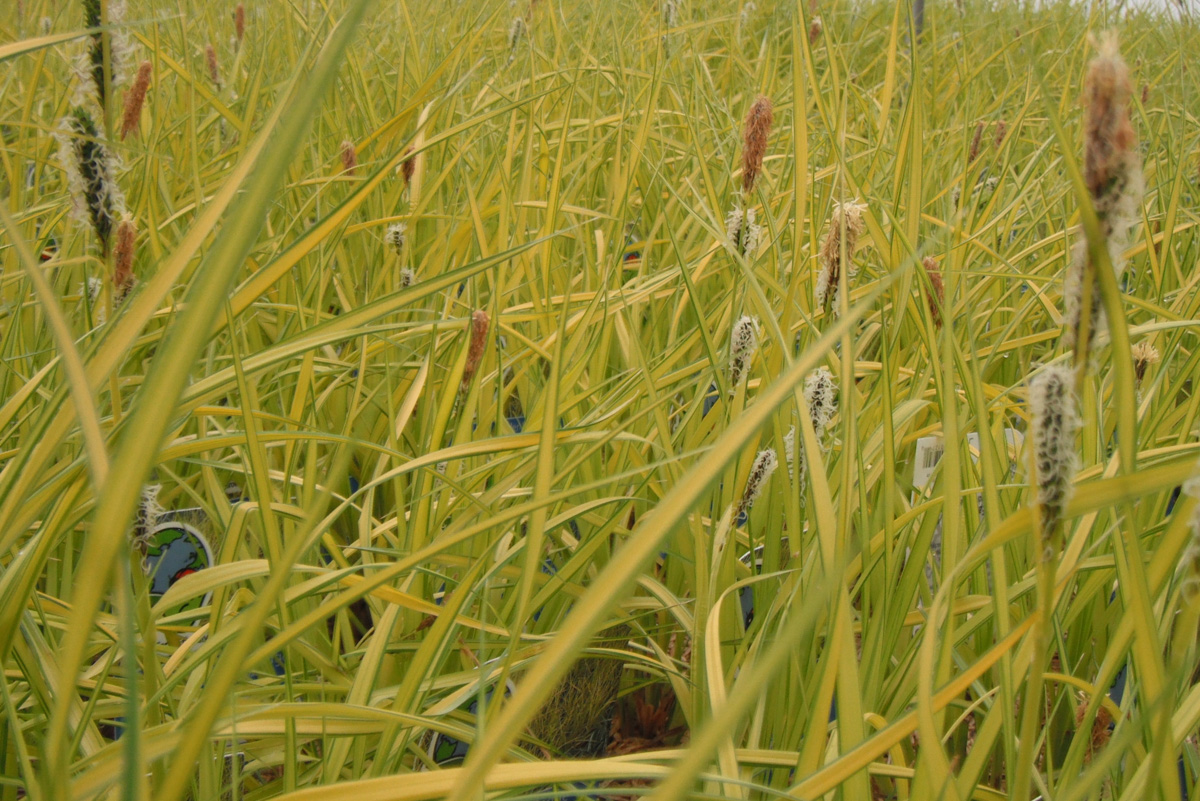
You might want to put on your sunglasses before viewing this brilliant yellow selection. It is very bright. And, needless to say, this is a plant for specimen and accent use, or mass planting when you want to really make a show. Discovered in the Norfolk Broads, of the UK, `Bowles Golden’ is named for its famous discoverer E.A. Bowles and is characterized by brilliant yellow leaves longitudinally thin green striped. Most colorful in constantly moist soil in the coolest part of the garden, it may become lime green in too much shade or burn if too dry and hot. Its subtle lime green floral spikes are borne early spring and soon become buried under its lovely foliage.
Details
Hardiness Zone:
Blossom Color:
Yellow to Chartreuse
Growth Habit:
Clump Forming
Max Height:
2'
Texture:
Recommended Spacing:
We sell this plant in these containers:
Special Characteristics







Features
Lime green floral spikes during early spring become buried under brilliant yellow, thin-green-striped leaves.
Landscape Value
Superb specimen, edging plant, accent, or companion. Also may be used as a ground cover when mass planted.
Care
Watering:
'Bowles Golden' Sedge requires a fair amount of supplemental watering and often requires watering on a regular basis during the growing season.
Fertilizing:
'Bowles Golden' Sedge is a moderate feeder, benefiting from a couple of annual applications of slow release fertilizer. A spring application of a 3-1-2 ratio (such as a 15-5-10) can be applied at a rate of about 10 pounds per 1000 square feet, and during early fall, an application of a 2-1-2 ratio (such as a 10-5-10) can be applied to encourage root development and cold hardiness.
Pruning:
'Bowles Golden' Sedge should be enjoyed all winter long, then, during early April before it begins to grow again, it should be pruned or mowed back to ground level.