
Phlox paniculata ‘Laura’
Blooming Time
Exposure


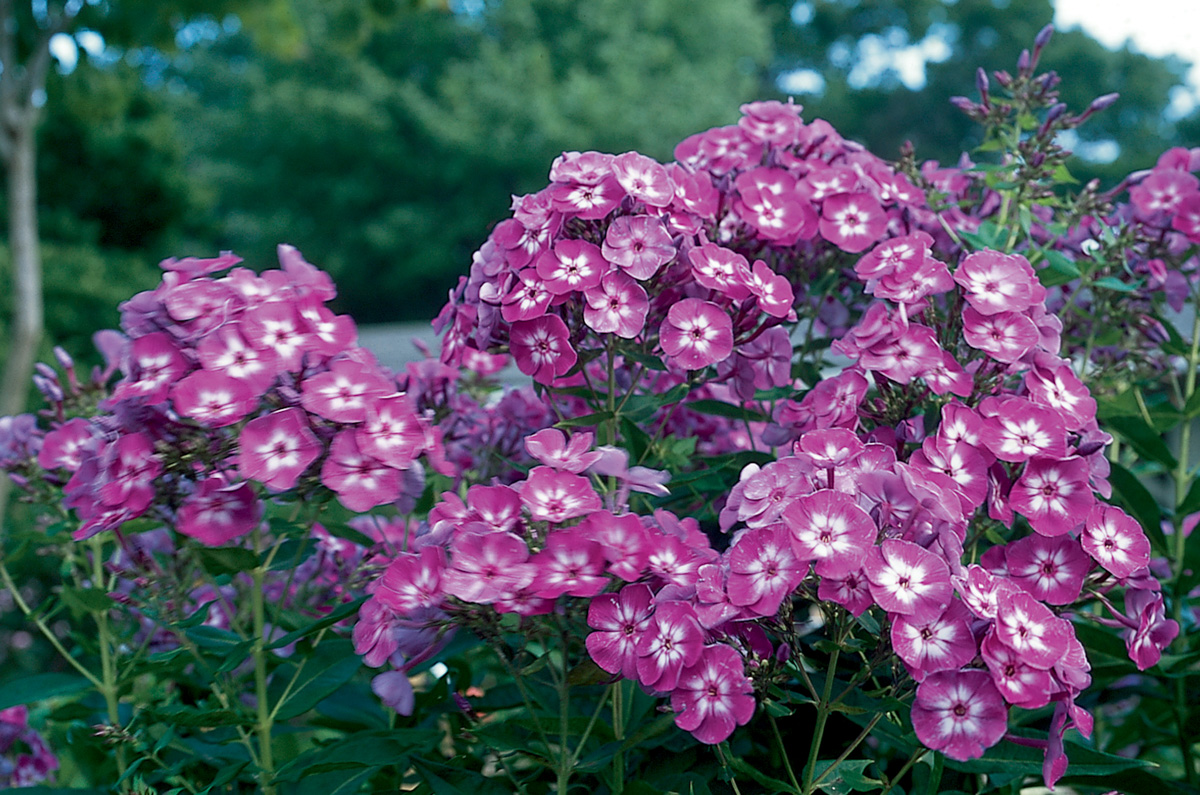
Particularly impressive for its upright dense growing habit and mildew resistant foliage, ‘Laura’ is excellent for ground cover use. It is also among the very best for its character of blooming from midsummer well into fall. This is when it is blanketed with dense panicles of lovely pink-purple fragrant butterfly/hummingbird attracting flowers – each with a distinct white star in its center. Use ‘Laura’ to exceptional effect in broad sweeping drifts, in small groupings for accent, as a backdrop to shorter ground covers, or even as a tall edging plant.
Details
Hardiness Zone:
Blossom Color:
Violet to Purple
Growth Habit:
Clump Forming
Max Height:
2½'
Texture:
Recommended Spacing:
We sell this plant in these containers:
Special Characteristics










Features
Among the very best phlox for dense ground covering habit. Exceptional pink-purple fragrant butterfly/hummingbird attracting flowers blanket its attractive mildew resistant foliage mid summer well into fall.
Landscape Value
Moderate to large scale ground cover--very high contrast when in flower. Also great for accent and companion planting.
Care
Watering:
'Laura' Garden Phlox requires a fair amount of supplemental watering and often requires watering on a regular basis during the growing season.
Fertilizing:
'Laura' Garden Phlox is a moderate feeder, benefiting from a couple of annual applications of slow release fertilizer. A spring application of a 3-1-2 ratio (such as a 15-5-10) can be applied at a rate of about 10 pounds per 1000 square feet, and during early fall, an application of a 2-1-2 ratio (such as a 10-5-10) can be applied to encourage root development and cold hardiness.
Pruning:
'Laura' Garden Phlox should be enjoyed all winter long, then, during early April before it begins to grow again, it should be pruned or mowed back to ground level.