
Asclepias tuberosa var. Interior
Blooming Time
Exposure

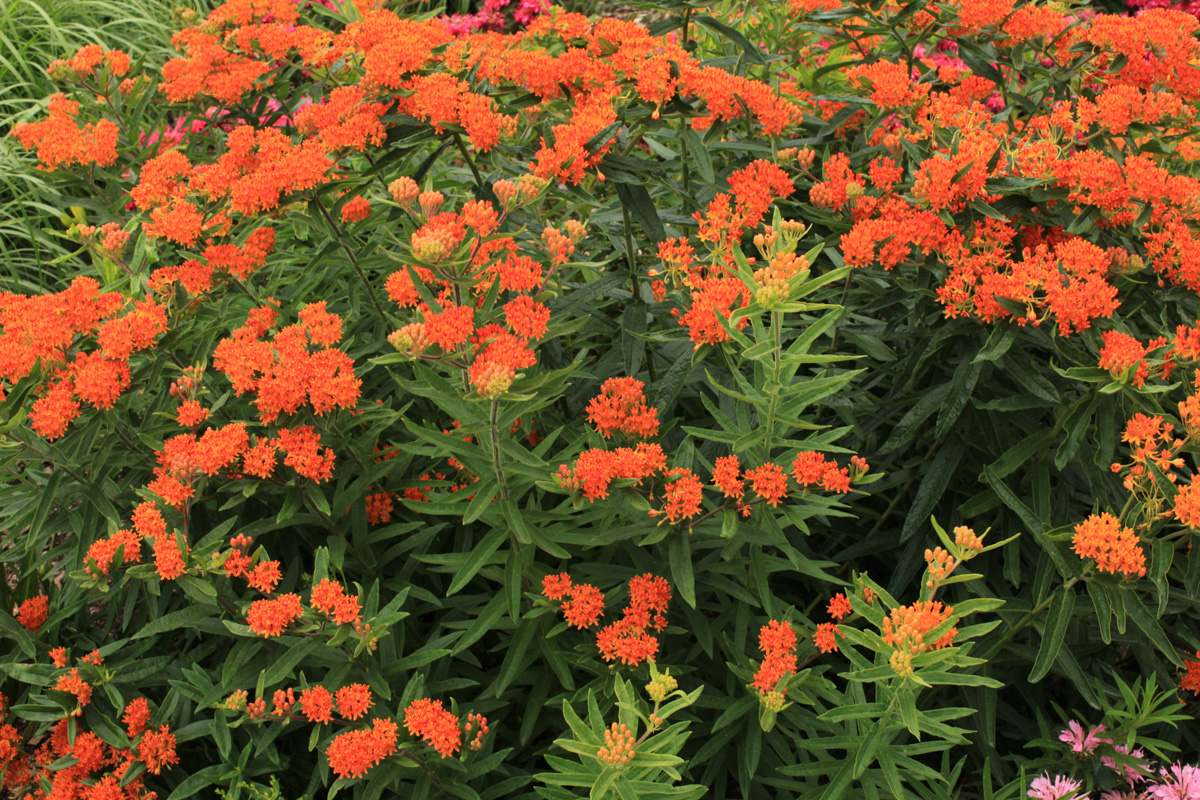
Native to the Midwest and broadly distributed across North America, this vigorous and florific strain of Butterfly milkweed is a favorite for prairie restoration, native planting, or simply providing colorful butterfly havens in the landscape. It produces a brilliant display of copiously borne orange flowers from early to mid-summer. These give way to attractive 4 to 5-inch long seed pods, adding great late-season interest. Butterfly milkweed is drought resistant and can grow in almost any soil.
Details
Hardiness Zone:
Blossom Color:
Orange, Copper, Gold
Growth Habit:
Shrubby
Max Height:
3'
Texture:
Recommended Spacing:
We sell this plant in these containers:

Special Characteristics











Features
Native to the Midwest, Butterfly milkweed is a favorite for prairie restoration. It produces a brilliant display of copiously borne orange flowers from early to mid-summer. These give way to attractive 4 to 5-inch long seed pods.
Landscape Value
Butterfly milkweed is drought resistant and can grow in almost any soil.
Care
Watering:
Butterfly Milkweed is very drought tolerant and typically only needs watering during the hottest days of summer.
Fertilizing:
Butterfly Milkweed needs little fertilizer, but benefits from a single springtime or fall topdressing (about 1 inch deep) of organic compost or well rotted leaves. Alternatively, a springtime application of a slow release fertilizer with a 3-1-2 ratio (such as a 15-5-10) can be applied at a rate of about 10 pounds per 1000 square feet.
Pruning:
Butterfly Milkweed should be enjoyed all winter long, then, during early April before it begins to grow again, it should be pruned or mowed back to ground level.