
Clematis x ‘Nelly Moser’
Blooming Time
Exposure



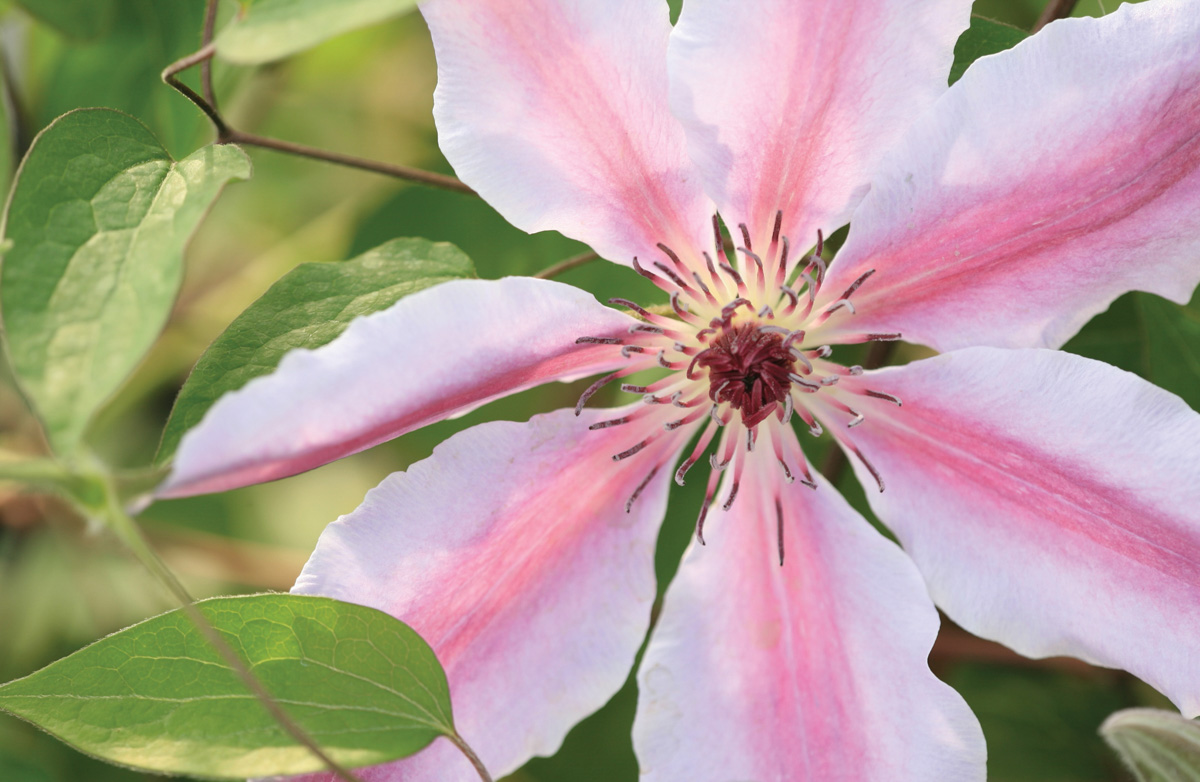
Tolerating more shade than most other cultivars, ‘Nelly Moser’ is a popular “classic” clematis with lovely bicolor, 5 to 6-inch wide flowers of pale pink with dark red bar down the middle of each petal. ‘Nelly Moser’ is long blooming, and flowers during May, June, August, and September. While beautiful on its own, it is also lovely when planted with other clematis of complementary flower color.
Details
Hardiness Zone:
Blossom Color:
Rose to Pink
Growth Habit:
Tendrils
Max Height:
12'
Texture:
Recommended Spacing:
We sell this plant in these containers:
Special Characteristics






Features
'Nelly Moser' is a popular "classic" clematis with lovely bicolor, 5-6 inch wide flowers of pale pink with dark red bar down the middle of each petal.
Landscape Value
Tolerating more shade than most other cultivars, 'Nelly Moser' is beautiful on its own and is also lovely when planted with other clematis of complementary flower color.
Care
Watering:
'Nelly Moser' Clematis requires a fair amount of supplemental watering and often requires watering on a regular basis during the growing season.
Fertilizing:
'Nelly Moser' Clematis benefits from regular feeding and likely will grow best with: a spring (May) application of slow release fertilizer with a 3-1-2 ratio (such as a 15-5-10) at a rate of about 10 pounds per 1000 square feet, and a summer (July) application of slow release fertilizer with a 3-1-2 ratio (such as a 15-5-10) at a rate of about 10 pound per 1000 square feet, and and an early fall (September) application of a 2-1-2 ratio (such as a 10-5-10) at a rate of 15 pounds per 1000 square feet to encourage root development and cold hardiness.
Pruning:
'Nelly Moser' Clematis sets its flower buds in fall, blooms in spring, and should be pruned (if that is desirable) back to a bud, immediately after flowering.