
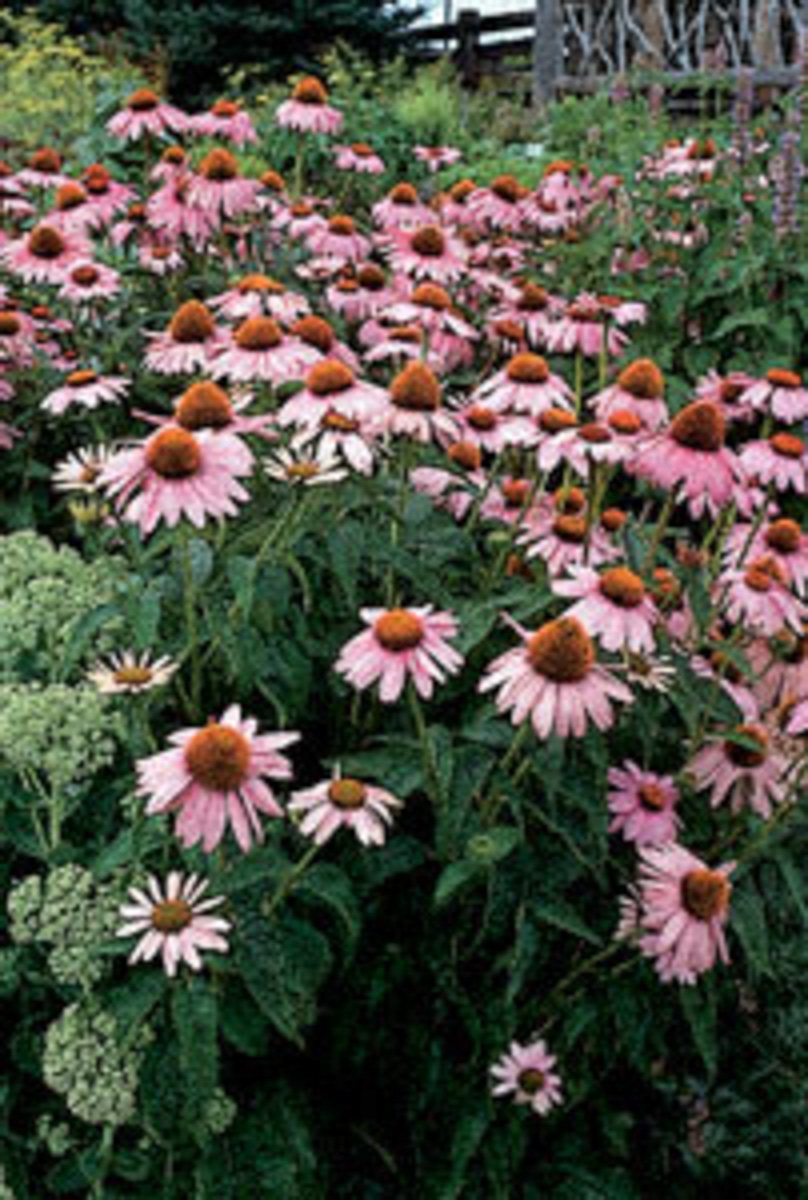
Echinacea purpurea ‘Magnus’
Blooming Time
Exposure

Among the finest and most popular perennials, ‘Magnus’ is sturdy, drought tolerant, and unusually florific. When planted alone it makes a superb addition to the perennial border combining marvelously with ornamental grasses. Or, it can be massed as a ground cover for dramatic effect. During spring, coneflower sports dark green coarse textured leaves and by mid summer is decorated with masses of large purple petaled brown centered cones – excellent for dried flower arrangements and persistent to the point of providing color through fall and seed for songbirds during winter. Perennial Plant of the Year 1998
Details
Hardiness Zone:
Blossom Color:
Rose to Pink
Growth Habit:
Clump Forming
Max Height:
3'
Texture:
Recommended Spacing:
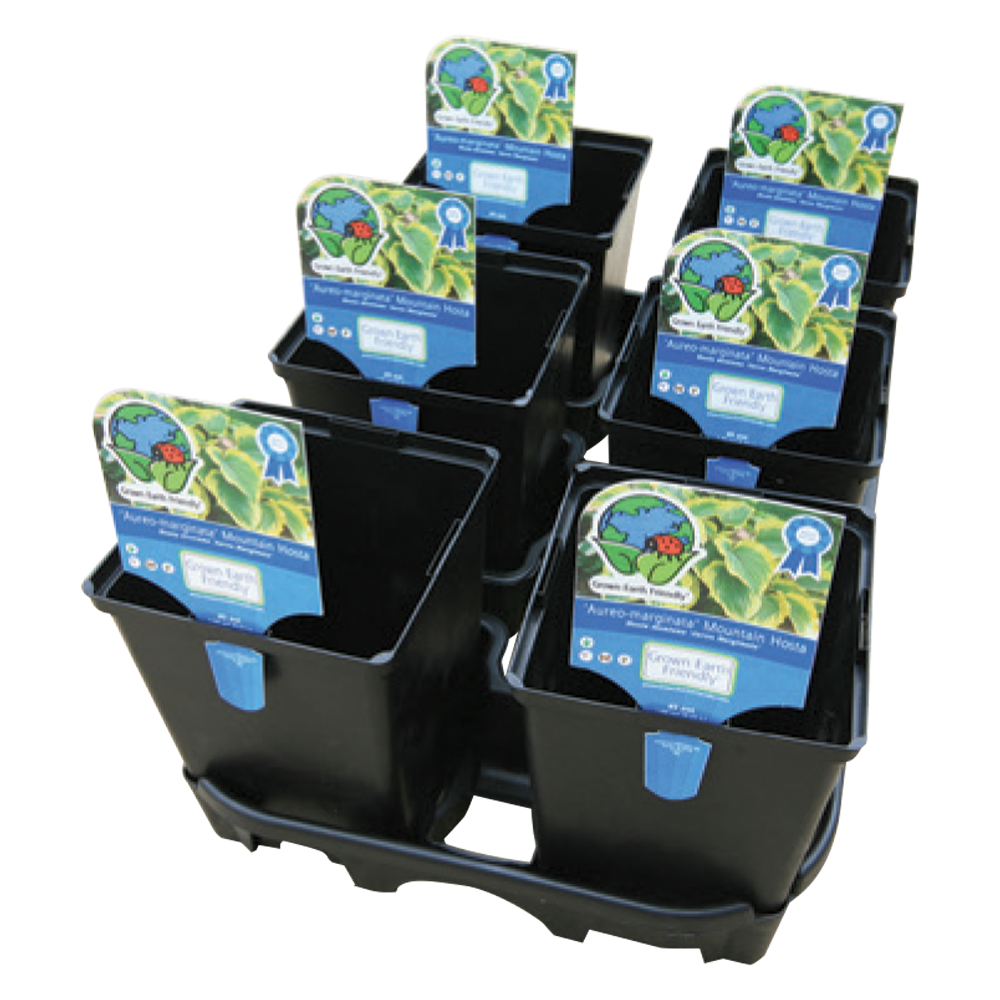
We sell this plant in these containers:
Special Characteristics












Features
Masses of large purple petaled coppery golden centered summerborne flowers above rugged dark green coarse textured foliage.
Landscape Value
Small to large scale ground cover, companion, or accent plant. Great for naturalizing. Native cultivar.
Care
Watering:
'Magnus' Purple Coneflower is moderately drought tolerant but benefits from occasional watering, to maintain soil in a moist but not wet condition, during the summer months.
Fertilizing:
'Magnus' Purple Coneflower is a moderate feeder, benefiting from a couple of annual applications of slow release fertilizer. A spring application of a 3-1-2 ratio (such as a 15-5-10) can be applied at a rate of about 10 pounds per 1000 square feet, and during early fall, an application of a 2-1-2 ratio (such as a 10-5-10) can be applied to encourage root development and cold hardiness.
Pruning:
'Magnus' Purple Coneflower should be enjoyed all winter long, then, during early April before it begins to grow again, it should be pruned or mowed back to ground level.