
Hypericum kalmianum ‘Ames’
Blooming Time
Exposure


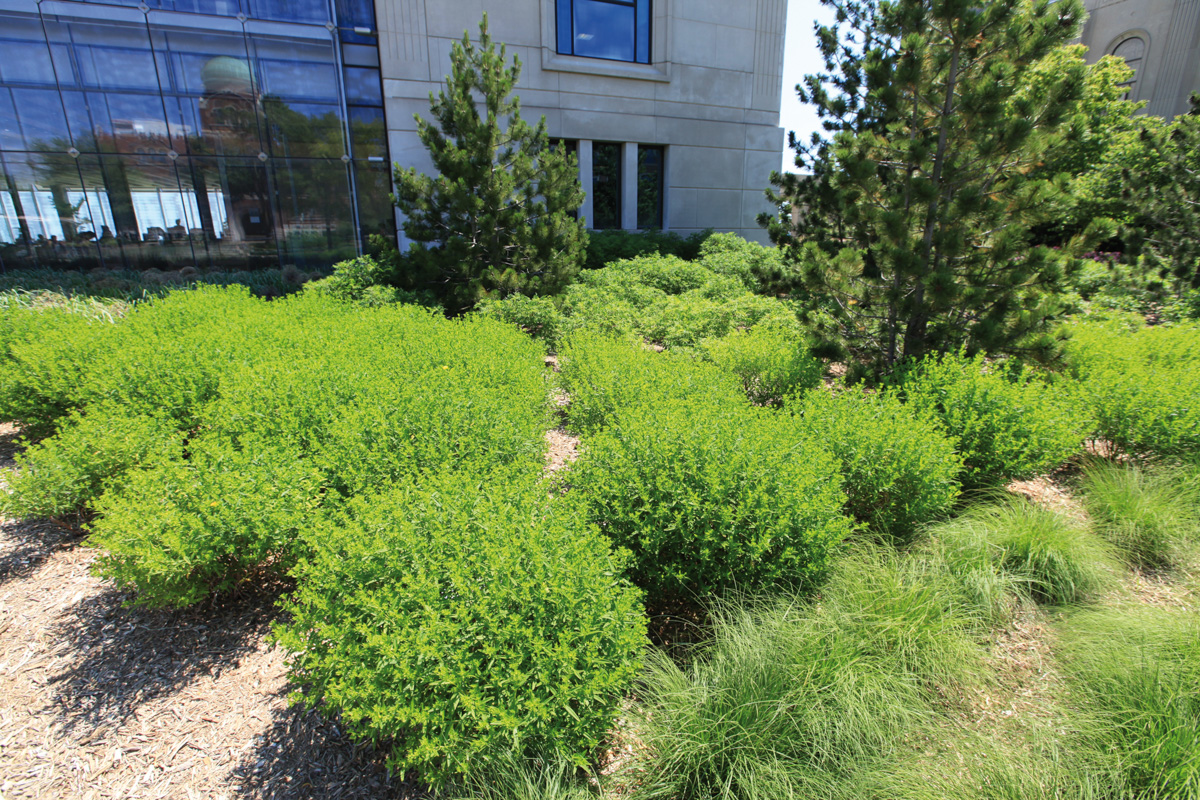
With a uniform shape and fine texture, this shrubby perennial has earned its way into the sunny landscape. Its features include blue-green slender leaves that are borne on dense, upright branches and masses of charming golden yellow flowers in midsummer. It is particularly useful where irrigation is limited, tolerating dry conditions and holding up well through the Midwestern heat and humidity. Its strong root system and dense globose habit make it useful for controlling erosion or for general ground covering in any type of soil, and it requires very little maintenance.
Details
Hardiness Zone:
Blossom Color:
Yellow to Chartreuse
Growth Habit:
Shrubby
Max Height:
3'
Texture:
Recommended Spacing:
We sell this plant in these containers:
Special Characteristics










Features
Uniform shape and fine texture, featuring blue-green slender leaves on dense, upright branches and masses of charming golden yellow flowers in midsummer.
Landscape Value
Useful for controlling erosion or for general ground covering in any type of soil.
Care
Watering:
'Ames' St. John's-wort is very drought tolerant and typically only needs watering during the hottest days of summer.
Fertilizing:
'Ames' St. John's-wort is a moderate feeder, benefiting from a couple of annual applications of slow release fertilizer. A spring application of a 3-1-2 ratio (such as a 15-5-10) can be applied at a rate of about 10 pounds per 1000 square feet, and during early fall, an application of a 2-1-2 ratio (such as a 10-5-10) can be applied to encourage root development and cold hardiness.
Pruning:
'Ames' St. John's-wort is a deciduous plant (nonevergreen) and does not require pruning. It is perfectly acceptable to allow the dropped leaves to decompose and nourish the soil.