
Lamium maculatum ‘Orchid Frost’
Blooming Time
Exposure



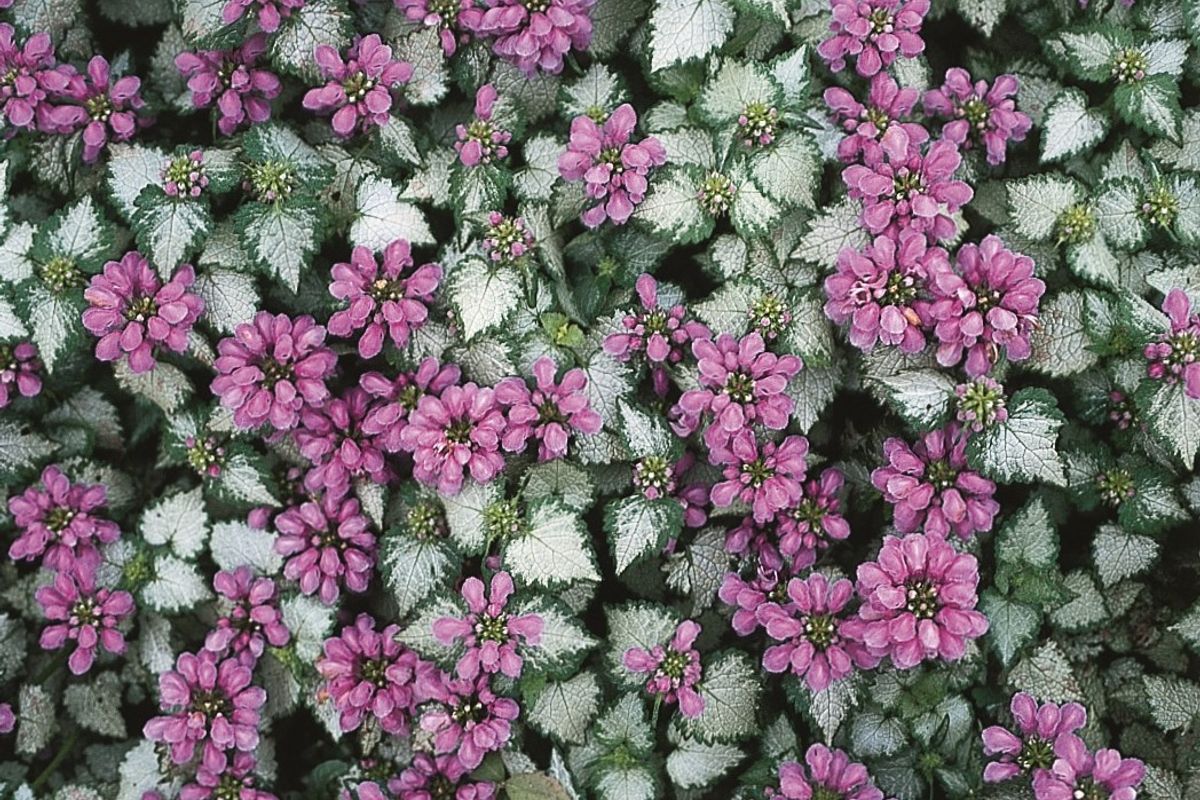
A lovely, highly florific selection (by Mike Bovio), ‘Orchid Frost’ introduces a lovely orchid pink flower to this popular species. And not only is ‘Orchid Frost’ a terrific flowering plant, literally loaded with clusters of mintlike flowers for April to late June and again in fall, it is also extrordinary for its bright silver and soft green variegated foliage – which happily has proven to be more resistant to leaf spot (in our trials) than the cultivar ‘Beacon Silver’.
Details
Hardiness Zone:
Blossom Color:
Rose to Pink
Growth Habit:
Sprawling
Max Height:
8"
Texture:
Recommended Spacing:
We sell this plant in these containers:

Special Characteristics








Features
Many lovely clusters of orchid pink flowers during spring, sporadically during summer, and heavy again in fall; bright silver/soft green variegated evergreen foliage.
Landscape Value
Small to large scale ground cover, accent, specimen, companion--very high contrast plant valued for brightening up the landscape.
Care
Watering:
'Orchid Frost' Spotted Dead Nettle is moderately drought tolerant but benefits from occasional watering, to maintain soil in a moist but not wet condition, during the summer months.
Fertilizing:
'Orchid Frost' Spotted Dead Nettle is a moderate feeder, benefiting from a couple of annual applications of slow release fertilizer. A spring application of a 3-1-2 ratio (such as a 15-5-10) can be applied at a rate of about 10 pounds per 1000 square feet, and during early fall, an application of a 2-1-2 ratio (such as a 10-5-10) can be applied to encourage root development and cold hardiness.
Pruning:
'Orchid Frost' Spotted Dead Nettle is a deciduous plant (nonevergreen) and does not require pruning. It is perfectly acceptable to allow the dropped leaves to decompose and nourish the soil.