
Heuchera ‘Midnight Rose’ PP18,551
Blooming Time
Exposure


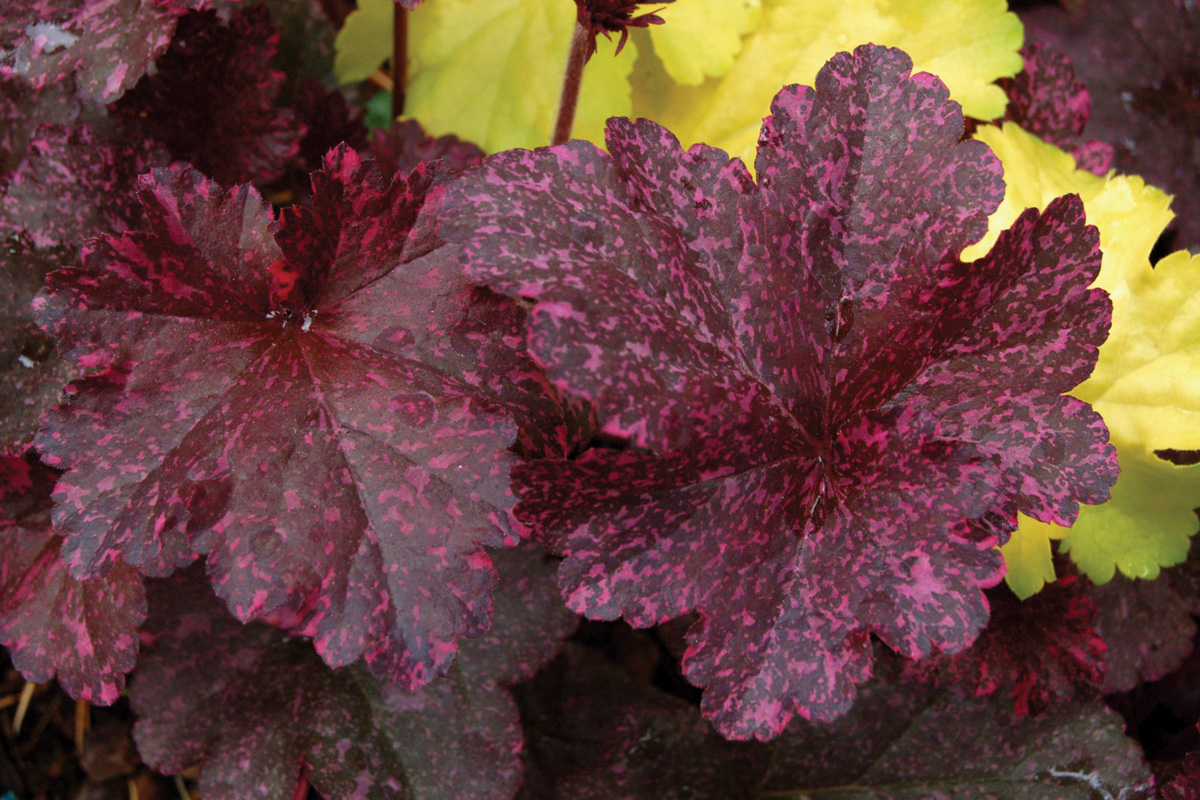
Price Includes Royalty. Hot pink polka dots against a backdrop of purple are the outstanding feature of this `Obsidian’ sport, discovered by Larry Hurley of Behnke Nursery. `Midnight Rose’ represents a new look for this magnificent Heuchera that never seems to quit producing new and interesting selections (mostly due to the remarkable work of Heuchera breeders Dan Heims and Charles and Martha Oliver). The pink polka dots of `Midnight Rose’ may lighten to cream as the season unfolds, adding further interest to this unique selection. Flowers of creamy white are borne upon whispy stems during late spring.
Details
Hardiness Zone:
Blossom Color:
White to Cream
Growth Habit:
Clump Forming
Max Height:
2'
Texture:
Recommended Spacing:
We sell this plant in these containers:

Special Characteristics










Features
Hot pink polka dots against a backdrop of purple which may lighten to cream at the season unfolds. Flowers of creamy white are borne upon wispy stems during late spring.
Landscape Value
Edging, small scale ground cover, and accent.
Care
Watering:
'Midnight Rose' Coral Bells is moderately drought tolerant but benefits from occasional watering, to maintain soil in a moist but not wet condition, during the summer months.
Fertilizing:
'Midnight Rose' Coral Bells is a moderate feeder, benefiting from a couple of annual applications of slow release fertilizer. A spring application of a 3-1-2 ratio (such as a 15-5-10) can be applied at a rate of about 10 pounds per 1000 square feet, and during early fall, an application of a 2-1-2 ratio (such as a 10-5-10) can be applied to encourage root development and cold hardiness.
Pruning:
'Midnight Rose' Coral Bells is a deciduous plant (nonevergreen) and does not require pruning. It is perfectly acceptable to allow the dropped leaves to decompose and nourish the soil.