
Lonicera ‘Mandarin’
Blooming Time
Exposure

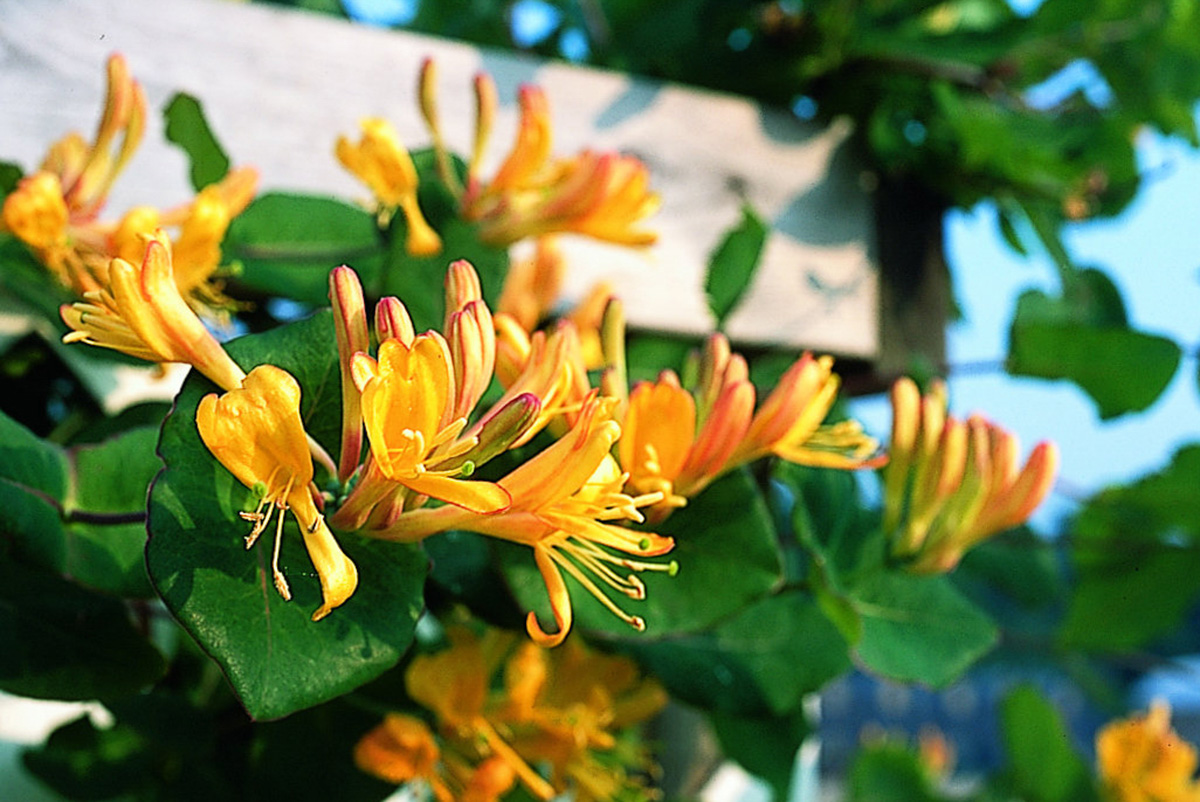
From the breeding program at the University of British Columbia, `Mandarin’ boasts massive clusters of pleasantly fragrant late spring borne hummingbird attracting flowers of bright orange with yellow centers. Its foliage, also, is exquisite. First coppery-brown then dark green, it is rounded, leathery, and provides a lovely foil as it twines on trellis or chain link.
Details
Hardiness Zone:
Blossom Color:
Yellow to Chartreuse
Growth Habit:
Twining
Max Height:
20'
Texture:
Recommended Spacing:
We sell this plant in these containers:
Special Characteristics








Features
New leaves copper tinged maturing to rich green, hummingbird attracting early summerborne fragrant flowers are orange in bud opening to bright yellow.
Landscape Value
Attaches by twining to trellis, pole, chain link, or arbor.
Care
Watering:
`Mandarin' Honeysuckle is moderately drought tolerant but benefits from occasional watering, to maintain soil in a moist but not wet condition, during the summer months.
Fertilizing:
`Mandarin' Honeysuckle is a moderate feeder, benefiting from a couple of annual applications of slow release fertilizer. A spring application of a 3-1-2 ratio (such as a 15-5-10) can be applied at a rate of about 10 pounds per 1000 square feet, and during early fall, an application of a 2-1-2 ratio (such as a 10-5-10) can be applied to encourage root development and cold hardiness.
Pruning:
`Mandarin' Honeysuckle should be pruned while dormant during late fall or winter.