
Lonicera sempervirens ‘Major Wheeler’
Blooming Time
Exposure


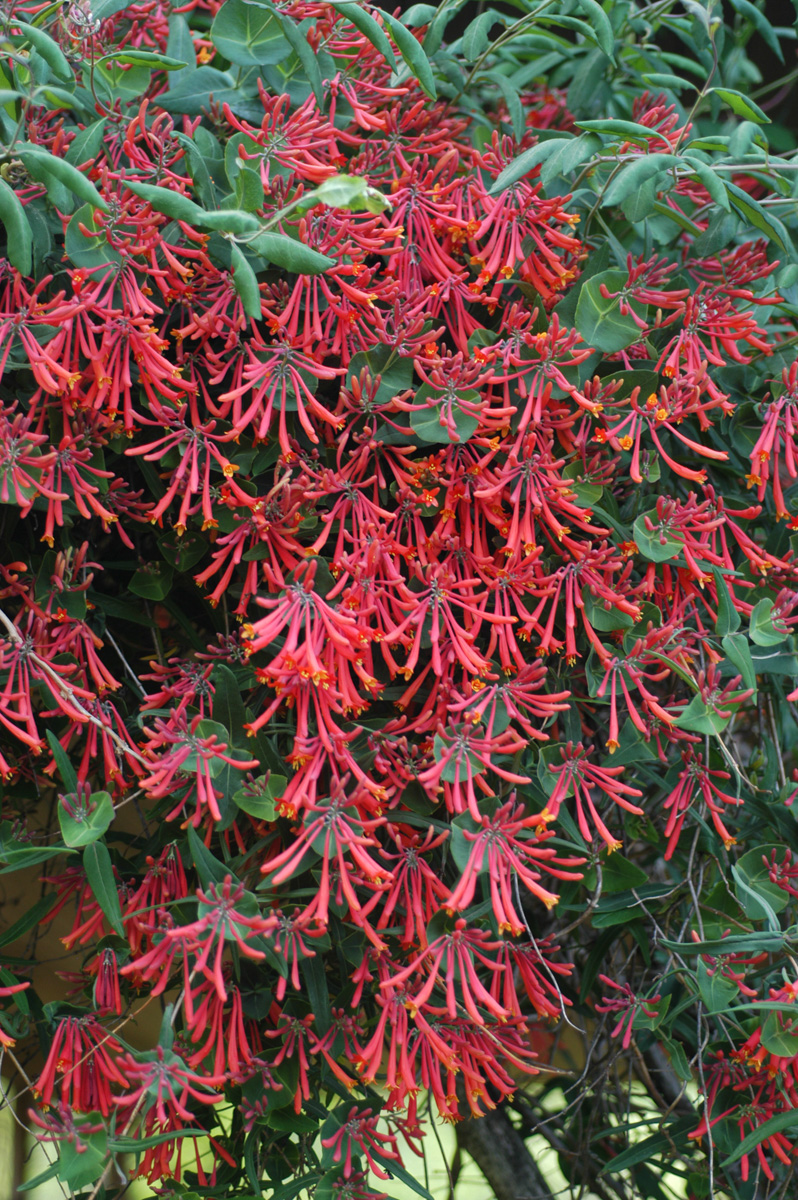
`Major Wheeler’ is a real breakthrough plant. A descendant of a fine native species, it differs with exceptional growth and floral characteristics. Its blue green evergreen foliage tends to stay clean as it resists mildew, much unlike the parent species. It also makes a fine backdrop to the deep scarlet, tube shaped, hummingbird attracting flowers that it bears in great quantity from late spring through midsummer. `Major Wheeler’ is a plant of extreme flower power, and it can be combined with other honeysuckles or vines of different flower color or bloom season.
Details
Hardiness Zone:
Blossom Color:
Red
Growth Habit:
Twining
Max Height:
8'
Texture:
Recommended Spacing:
We sell this plant in these containers:
Special Characteristics









Features
A plant of extreme flower power, with deep scarlet, tube-shaped, hummingbird attracting flowers that it bears in great quantity from late spring through mid summer. Blue green evergreen foliage tends to stay clean as it resists mildew, unlike the parent species.
Landscape Value
Attaches by twining to trellis, pole, chain link, or arbor.
Care
Watering:
`Major Wheeler' Honeysuckle is moderately drought tolerant but benefits from occasional watering, to maintain soil in a moist but not wet condition, during the summer months.
Fertilizing:
`Major Wheeler' Honeysuckle is a moderate feeder, benefiting from a couple of annual applications of slow release fertilizer. A spring application of a 3-1-2 ratio (such as a 15-5-10) can be applied at a rate of about 10 pounds per 1000 square feet, and during early fall, an application of a 2-1-2 ratio (such as a 10-5-10) can be applied to encourage root development and cold hardiness.
Pruning:
`Major Wheeler' Honeysuckle should be pruned while dormant during late fall or winter.