
Pennisetum alopecuroides ‘Red Head’
Blooming Time
Exposure


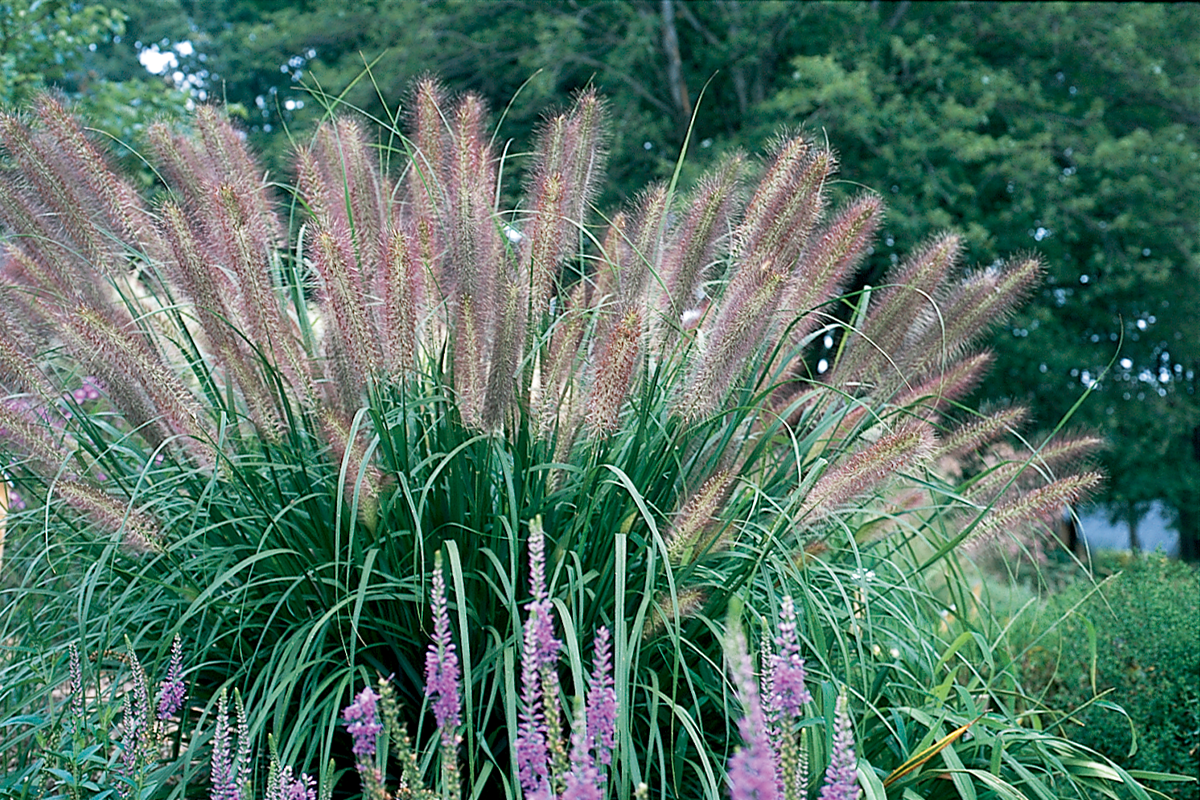
How about a Fountain Grass that when planted in spring produces a floral spray that reaches 6 feet wide and 4 feet tall–that same fall? That’s what ‘Red Head’ does, and when it flowers it is incredible. Beginning during August, its flowers are set well within the foliage mass. This isn’t desirable, but they continue to elongate, and a week or so later, they are standing a foot above the foliage. And, the plumes are amazing deep reddish purple 8 inch long, 3 inch wide bottle-brush spikes which remain prominent well into winter. The foliage of ‘Red Head’ is nice as well. A rich deep green during the growing season, it turns lovely golden tones during fall and maintains a nice tawny shade all winter–especially nice when decorated with new fallen snow.
Details
Hardiness Zone:
Blossom Color:
Violet to Purple
Growth Habit:
Clump Forming
Max Height:
4'
Texture:
Recommended Spacing:
We sell this plant in these containers:
Special Characteristics









Features
Robust grower with attractive fountain shaped habit of rich green leaves topped by sprays of 8 inch long feathery deep purplish colored flower spikes in late summer.
Landscape Value
Superb specimen, accent, companion, edging, or dwarf hedge. Also excellent as a large-scale ground cover when mass planted.
Care
Watering:
'Red Head' Fountain Grass is moderately drought tolerant but benefits from occasional watering, to maintain soil in a moist but not wet condition, during the summer months.
Fertilizing:
'Red Head' Fountain Grass is a moderate feeder, benefiting from a couple of annual applications of slow release fertilizer. A spring application of a 3-1-2 ratio (such as a 15-5-10) can be applied at a rate of about 10 pounds per 1000 square feet, and during early fall, an application of a 2-1-2 ratio (such as a 10-5-10) can be applied to encourage root development and cold hardiness.
Pruning:
'Red Head' Fountain Grass should be enjoyed all winter long, then, during early April before it begins to grow again, it should be pruned or mowed back to ground level.