Panicum virgatum ‘Shenandoah’

Blooming Time

August
September

Exposure

True
Full Sun
True
Light Shade

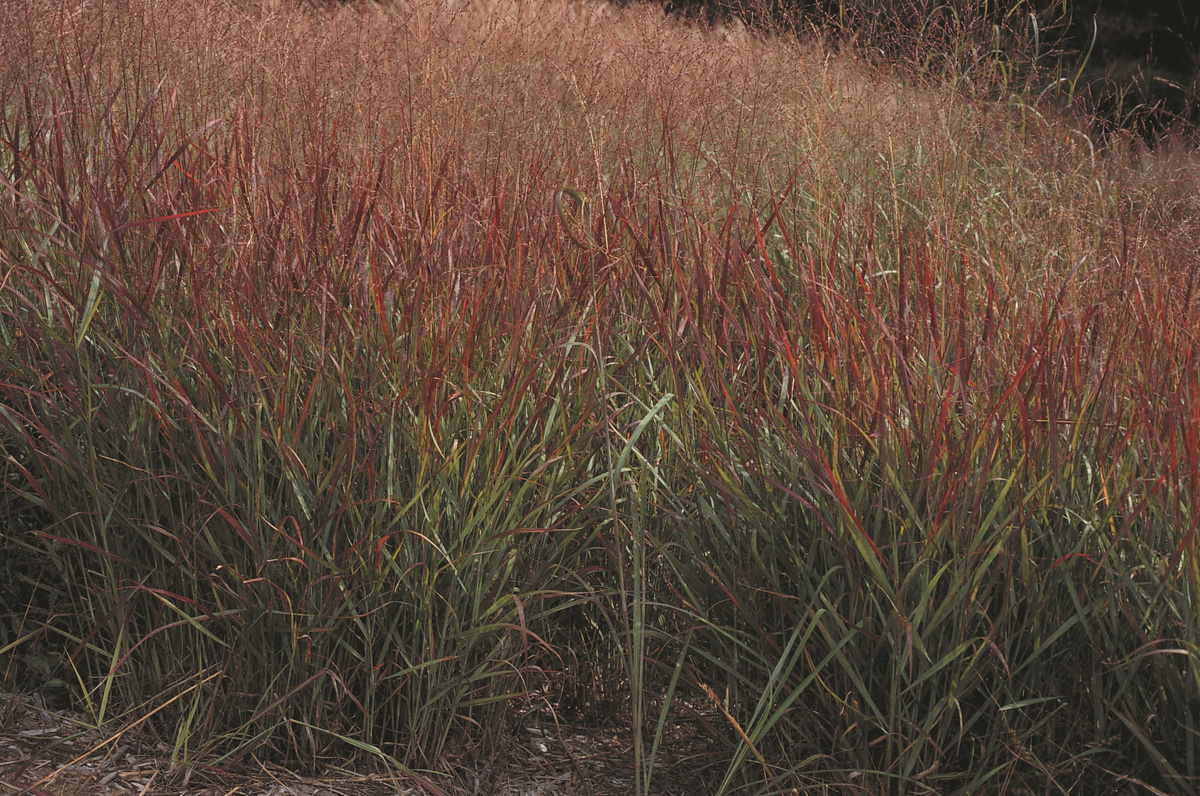
Perhaps the shortest Panicum, ‘Shenandoah’ might be considered a taller more durable substitute for Imperata ‘Red Baron’ as its foliage becomes red by June and becomes more intensely colored as the season progresses. From Germany and introduced by Dr. Hans Simon, ‘Shenandoah’ flowers bright red in late summer and is a fine companion to numerous perennials and grasses. ‘Shenandoah’, like other switch grasses, is tolerant of dry and infertile soils and is excellent for naturalizing and large-scale groundcover use.

Details

Hardiness Zone:

4

Blossom Color:

Red

Growth Habit:

Clump Forming

Max Height:

3'

Texture:

Medium Texture

Recommended Spacing:

2' to 2½'

We sell this plant in these containers:

#1 Pot
#1 Pot
#2 Pot
#2 Pot

Special Characteristics

True
Cuttings
True
Seasonal Effect
True
Moderate Area
True
Salt Tolerant
True
Drought Tolerant
True
Large Area
True
Deer Resistant
True
Sandy Soil Tolerant
Controls Erosion
True
Native Cultivar

Features

Native cultivar with compact habit and amazing foliage that gradually changes from gray green in spring to brilliant crimson by late summer. Open flower panicles in late summer and fall.

Landscape Value

Superb specimen, accent, companion, or dwarf hedge. Also excellent as a large-scale ground cover when mass planted.

Care

Watering:

'Shenandoah' Switch Grass is very drought tolerant and typically only needs watering during the hottest days of summer.

Fertilizing:

'Shenandoah' Switch Grass is a moderate feeder, benefiting from a couple of annual applications of slow release fertilizer. A spring application of a 3-1-2 ratio (such as a 15-5-10) can be applied at a rate of about 10 pounds per 1000 square feet, and during early fall, an application of a 2-1-2 ratio (such as a 10-5-10) can be applied to encourage root development and cold hardiness.

Pruning:

'Shenandoah' Switch Grass should be enjoyed all winter long, then, during early April before it begins to grow again, it should be pruned or mowed back to ground level.

Companion Plants

Solidago rugosa ‘Fireworks’View
Goldenrod, `Fireworks'
Sedum spectabile ‘Neon’View
Sedum, `Neon'
Eupatorium fistulosum ‘Gateway’View
Joe-Pye Weed, `Gateway'
Echinacea Sombrero® Sangrita PP30,138View
Coneflower, Sombrero® Sangrita
Aster oblongifolius ‘October Skies’View
Aster, Aromatic, `October Skies'
Aster ‘Wood’s Light Blue’View
Aster, `Wood's Light Blue'
Aster novae-angliae ‘Grape Crush’ PP33,612View
Aster, New England, `Grape Crush'
Sedum ‘Autumn Fire’ PPAFView
Sedum, `Autumn Fire'
Sedum ‘Autumn Joy’View
Sedum, `Autumn Joy'
Sedum ‘Carl’View
Sedum, `Carl'
Solidago Little Lemon®View
Goldenrod, Little Lemon®
Echinacea ‘Big Kahuna’ PP22,159View
Coneflower, `Big Kahuna'
Echinacea ‘Delicious Candy’ PP24,329View
Coneflower, `Delicious Candy'
Echinacea Dark Shadows™ ‘Wicked’ PPAFView
Coneflower, Dark Shadows™ `Wicked'
Echinacea ‘Glowing Dream’ PP24,329View
Coneflower, `Glowing Dream'
Echinacea ‘Fragrant Angel’View
Coneflower, `Fragrant Angel'
Eupatorium ‘Phantom’ PP18,354View
Joe-Pye Weed, `Phantom'
Eupatorium Monarch Madness® White (`Nonetihwss’)View
Joe-Pye Weed, Monarch Madness® White
Eupatorium Monarch Madness® Pink (`Nonknipss’)View
Joe-Pye Weed, Monarch Madness® Pink
Miscanthus sinensis ‘Gracillimus’View
Japanese Silver Grass, Narrow Leaved
Miscanthus sinensis ‘Graziella’View
Japanese Silver Grass, `Graziella' [Grace]
Miscanthus sinensis ‘Encore’ PP29,070View
Maiden Grass, `Encore
Miscanthus sinensis ‘Dixieland’View
Japanese Silver Grass, `Dixieland'
Miscanthus sinensis ‘Cosmopolitan’View
Japanese Silver Grass, `Cosmopolitan'