
Clematis ‘New Love’
Blooming Time
Exposure


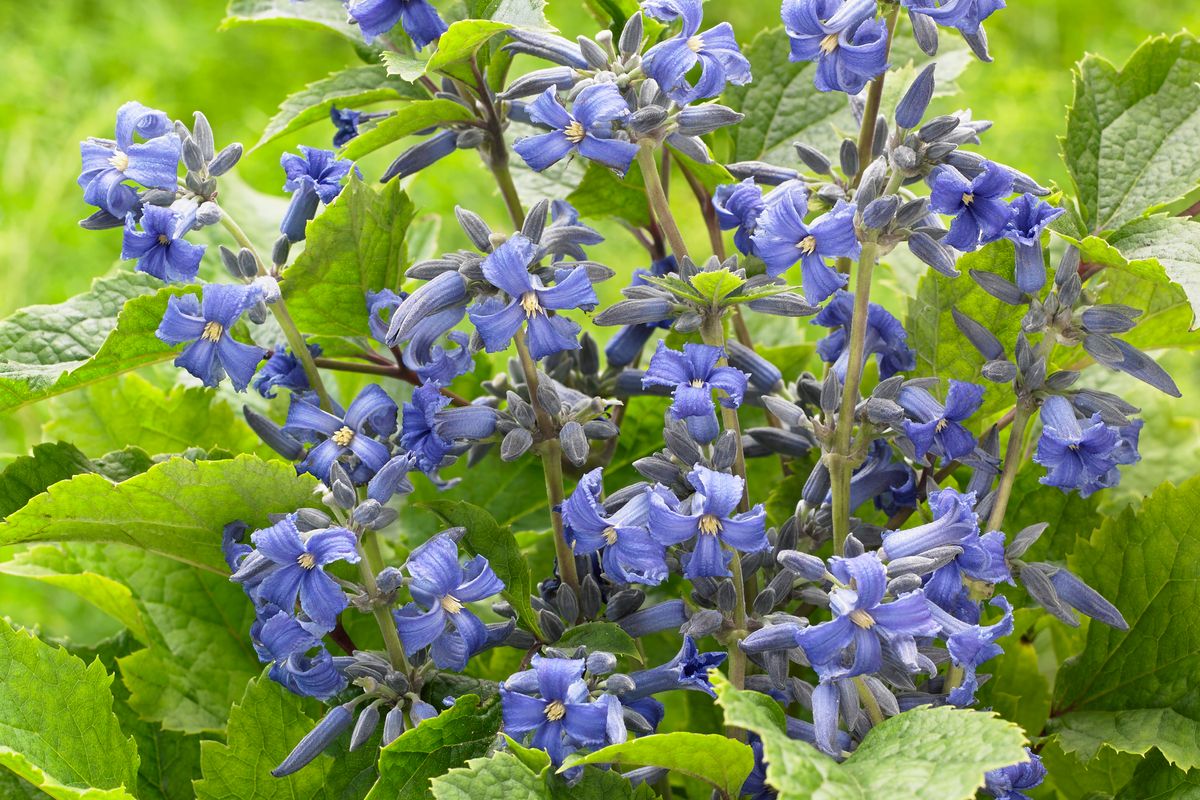
Destined to be a new favorite, Clematis ‘New Love’ is a non-climbing shrublike clematis that serves as a “perennial”, much like a Nepeta or Caryopteris. ‘New Love’ is super unique with elegant, early to mid summerborne, bell shaped periwinkle-blue blooms (with petals that curl backwards to reveal lemon yellow stamens). Late summer they give way to wispy, buff colored seed heads that provide interest during fall. ‘New Love’ produces blooms on new wood and should be pruned early spring, about 4-inches above ground, for optimal flowering. The roughened, tooth-edged foliage of ‘New Love’ contrasts nicely with many other perennials.
Details
Hardiness Zone:
Blossom Color:
Blue to Blue Gray
Growth Habit:
Shrubby
Max Height:
3'
Texture:
Recommended Spacing:
We sell this plant in these containers:
Special Characteristics






Features
A non-climbing Clematis, 'New Love' serves more as a perennial, becoming smothered with deep indigo, bell shaped flowers with yellow stamens in the summer. Destined to be a new favorite.
Landscape Value
A lovely specimen plant, it is an eye-catcher in a large container (Try growing it with an obelisk)- or added to mixed borders, or en masse!
Care
Watering:
'New Love' Clematis is moderately drought tolerant but benefits from occasional watering, to maintain soil in a moist but not wet condition, during the summer months.
Fertilizing:
'New Love' Clematis benefits from regular feeding and likely will grow best with: a spring (May) application of slow release fertilizer with a 3-1-2 ratio (such as a 15-5-10) at a rate of about 10 pounds per 1000 square feet, and a summer (July) application of slow release fertilizer with a 3-1-2 ratio (such as a 15-5-10) at a rate of about 10 pound per 1000 square feet, and and an early fall (September) application of a 2-1-2 ratio (such as a 10-5-10) at a rate of 15 pounds per 1000 square feet to encourage root development and cold hardiness.
Pruning:
'New Love' Clematis should be enjoyed all winter long, then, during early April before it begins to grow again, it should be pruned or mowed back to ground level.