
Convallaria majalis
Blooming Time
Exposure


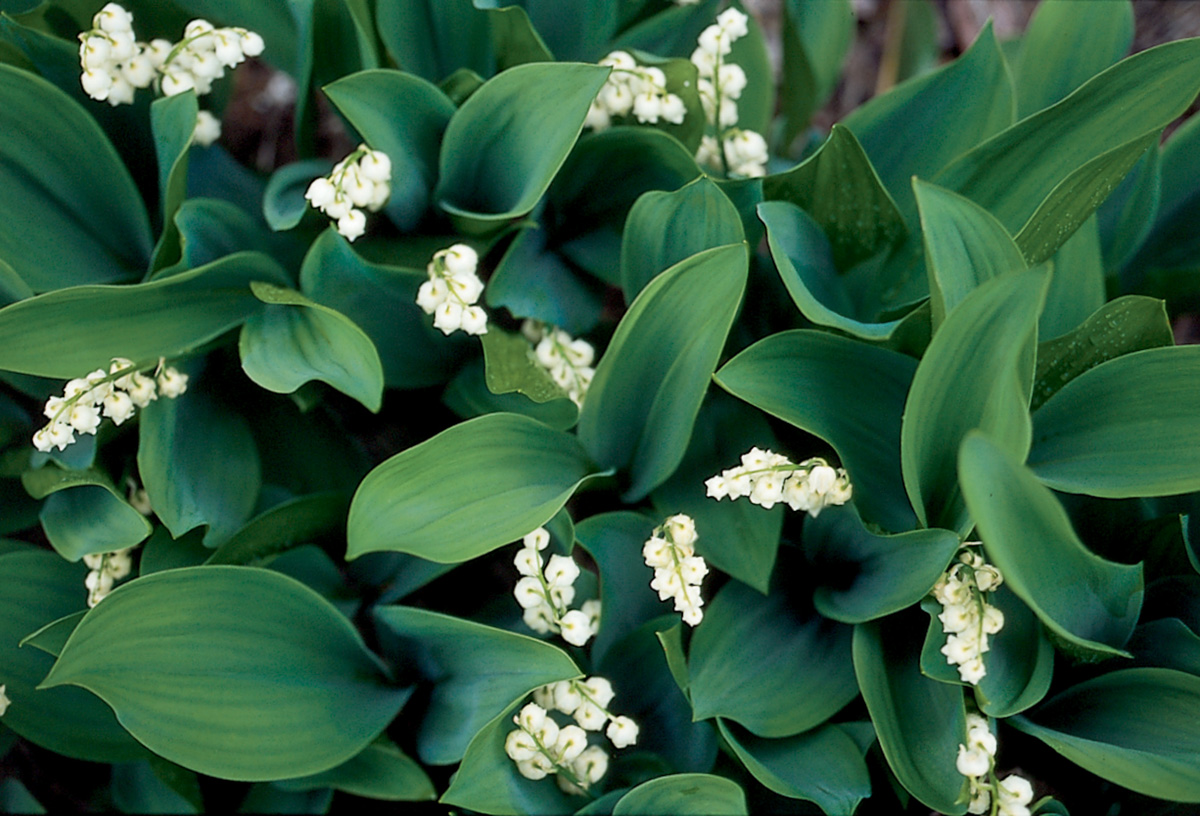
A classic rhizomatous species that spreads at a moderate pace, lily of the valley displays attractive dark green deciduous foliage and nodding, waxy white, ¼-inch wide, pleasantly fragrant mid- to late springborne flowers. Followed by orange-red, ¼-inch wide berries, the fruit, however, is nonedible and thus lily of the valley should be sited in areas unlikely to be used by small children.
Details
Hardiness Zone:
Blossom Color:
White to Cream
Growth Habit:
Creeping
Max Height:
8"
Texture:
Recommended Spacing:
We sell this plant in these containers:
Special Characteristics







Features
Classic spreading ground cover with blue green leaves and intensely fragrant springborne ivory white bell shaped flowers.
Landscape Value
Small to large scale ground cover. Note: fruit should never be eaten as it is poisonous.
Care
Watering:
Lily of the Valley is moderately drought tolerant but benefits from occasional watering, to maintain soil in a moist but not wet condition, during the summer months.
Fertilizing:
Lily of the Valley is a moderate feeder, benefiting from a couple of annual applications of slow release fertilizer. A spring application of a 3-1-2 ratio (such as a 15-5-10) can be applied at a rate of about 10 pounds per 1000 square feet, and during early fall, an application of a 2-1-2 ratio (such as a 10-5-10) can be applied to encourage root development and cold hardiness.
Pruning:
Lily of the Valley is a deciduous plant (nonevergreen) and does not require pruning. It is perfectly acceptable to allow the dropped leaves to decompose and nourish the soil.