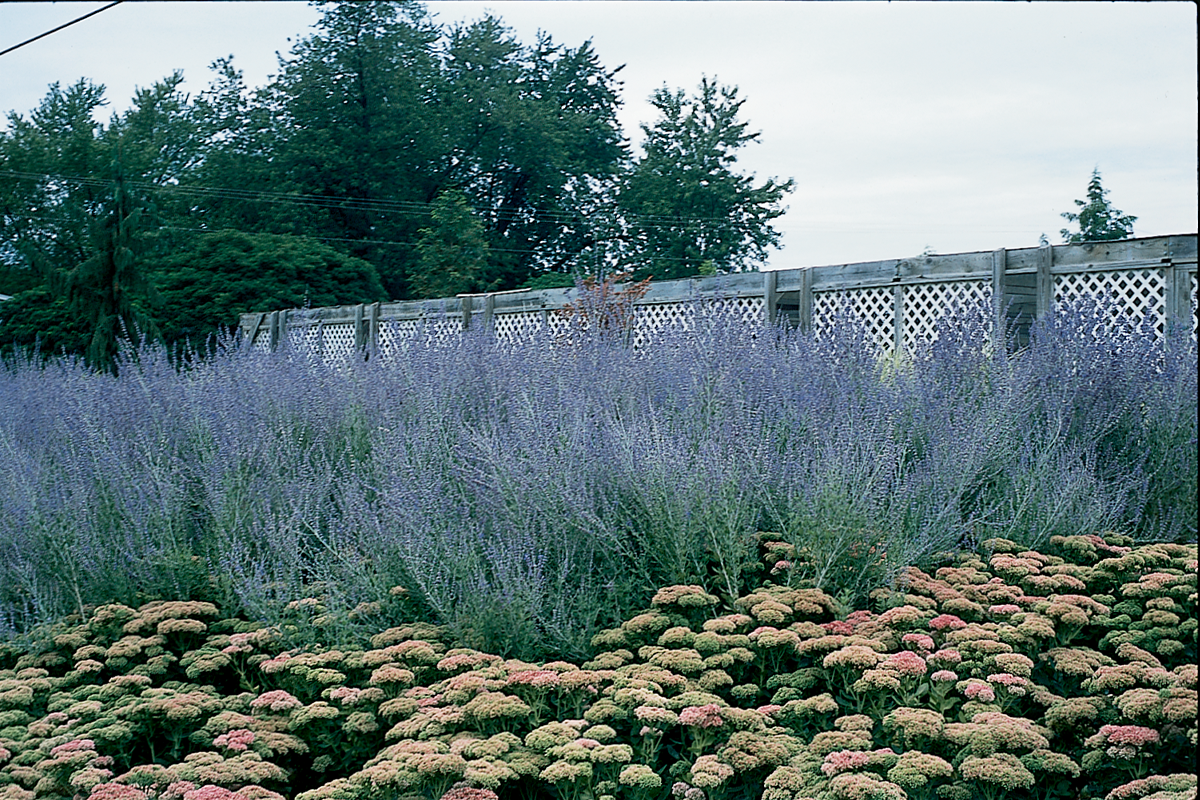
Perovskia atriplicifolia ‘Longin’

Blooming Time

August
September

Exposure

True
Full Sun
True
Light Shade

A splendid upright, nonlodging form of the 1995 Perennial Plant Of The Year, ‘Longin’ Russian sage has a number of merits – not the least of which is its gray-green pleasantly aromatic foliage. And to anyone who has seen the unforgettable lavender blue long lasting late summer- and fallborne flowers, the plant becomes unforgettable. Needless to say, it is a tremendous companion to the ‘perennials of fall’. Truly deserving of its award of merit, Russian sage needs little care (prune it to 12 inches in late winter), shows great drought tolerance, and thrives in infertile sandy and gravelly soils.

Details

Hardiness Zone:

5

Blossom Color:

Violet to Purple

Growth Habit:

Shrubby

Max Height:

4'

Texture:

Fine Texture

Recommended Spacing:

2' to 2½'

We sell this plant in these containers:
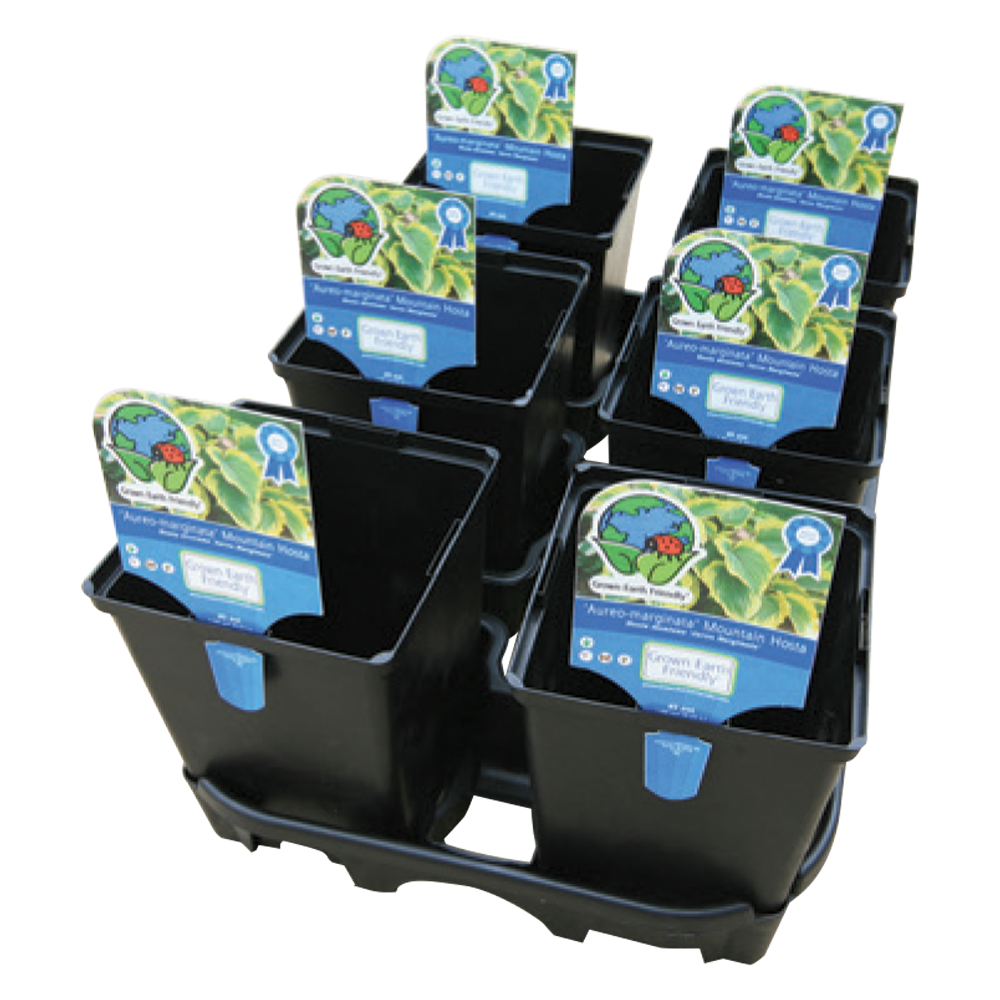
#1 Pot
#1 Pot

Special Characteristics

True
Cuttings
True
Seasonal Effect
True
Moderate Area
True
Salt Tolerant
True
Drought Tolerant
True
Butterflies
True
Bees
True
Large Area
True
Deer Resistant
True
Sandy Soil Tolerant
True
Fragrant Flowers

Features

Gray-green pleasantly aromatic foliage accented late summer and fall with long lasting lavender blue flowers.

Landscape Value

Moderate to large scale ground cover, accent, specimen, companion--very high contrast plant valued for brightening up

Care

Watering:

'Longin' Russian Sage is very drought tolerant and typically only needs watering during the hottest days of summer.

Fertilizing:

'Longin' Russian Sage is a moderate feeder, benefiting from a couple of annual applications of slow release fertilizer. A spring application of a 3-1-2 ratio (such as a 15-5-10) can be applied at a rate of about 10 pounds per 1000 square feet, and during early fall, an application of a 2-1-2 ratio (such as a 10-5-10) can be applied to encourage root development and cold hardiness.

Pruning:

'Longin' Russian Sage sets its flower buds in summer, and any pruning should be conducted in April, immediately after winter.

Companion Plants

Panicum virgatum ‘Rotstrahlbusch’View
Switch Grass, Red
Solidago rugosa ‘Fireworks’View
Goldenrod, `Fireworks'
Sedum Strawberry Fluff™ (`Nonfful’)View
Sedum, Strawberry Fluff™
Rudbeckia fulgida var. sullivantii ‘Little Goldstar’View
Coneflower, Orange, `Little Goldstar' Dwarf
Echinacea ‘Fragrant Angel’View
Coneflower, `Fragrant Angel'
Echinacea Crazy Pink™ PP21,023View
Coneflower, `Crazy Pink'
Echinacea ‘Delicious Candy’ PP24,329View
Coneflower, `Delicious Candy'
Echinacea Dark Shadows™ ‘Wicked’ PPAFView
Coneflower, Dark Shadows™ `Wicked'
Echinacea ‘Orange Skipper’ PPAFView
Coneflower, `Orange Skipper'
Echinacea Kismet® White PP30,856View
Coneflower, Kismet® White
Echinacea Kismet® Raspberry PP28,768View
Coneflower, Kismet® Raspberry
Echinacea ‘Glowing Dream’ PP24,329View
Coneflower, `Glowing Dream'
Panicum virgatum ‘Heavy Metal’View
Switch Grass, `Heavy Metal'
Panicum virgatum ‘Shenandoah’View
Switch Grass, `Shenandoah'
Panicum virgatum Dream Catcher® Lightning Bolt® (‘Nontlobg’) PP36,395View
Switch Grass, Lightning Bolt®
Panicum virgatum Dream Catcher® Smoky Rose® (‘Nonesory’) PP36,511View
Switch Grass, Smoky Rose®
Rudbeckia speciosa ‘Viette’s Little Suzy’View
Coneflower, Orange, `Little Suzy' Dwarf
Rudbeckia x ‘Glitters Like Gold’ PP30,933View
Coneflower, Orange, `Glitters Like Gold'
Rudbeckia fulgida var. sullivantii ‘Goldsturm’View
Coneflower, Orange, `Goldsturm'
Rudbeckia fulgida var. deamiiView
Coneflower, Orange, Deam's
Rudbeckia ‘American Gold Rush’ PP28,498View
Coneflower, Orange, `American Gold Rush'
Sedum ‘Powderpuff’ PP32,714View
Sedum, `Powderpuff'
Sedum ‘Autumn Fire’ PPAFView
Sedum, `Autumn Fire'
Sedum ‘Autumn Joy’View
Sedum, `Autumn Joy'
Sedum ‘Carl’View
Sedum, `Carl'
Sedum spectabile ‘Neon’View
Sedum, `Neon'
Solidago Little Lemon®View
Goldenrod, Little Lemon®