
Cornus canadensis
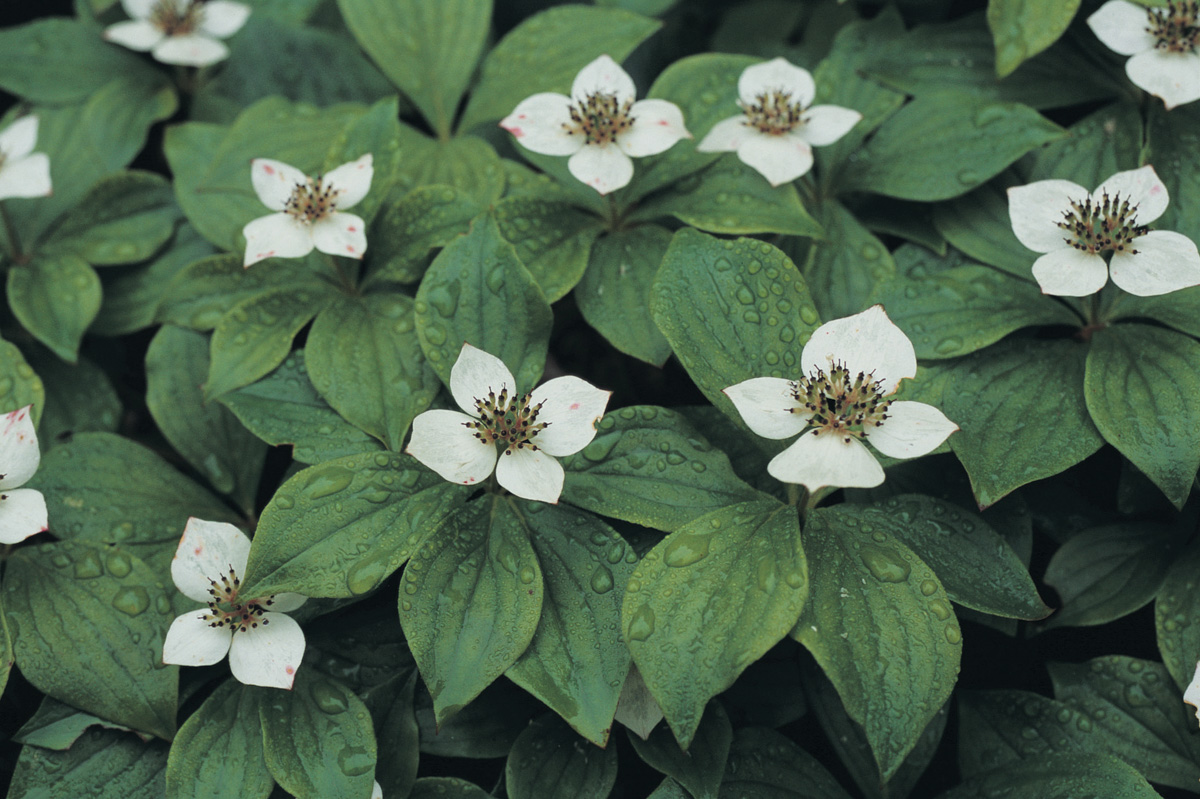
Blooming Time
Exposure


Ideal for use as general ground cover or for accent in combination with ericaceous plants like rhododendron, blueberry, and huckleberry, bunchberry is also a superb companion to hostas, dogwood and hemlocks – the main thing is that it has its roots in a cool, organically rich, moisture retentive soil of acidic pH. Once that has been accomplished, get ready to appreciate one of our finest native ground covers. Quick to emerge in spring, its deciduous prominently veined foliage is first lime green before changing to dark glossy green. By midspring the foliage is topped by tiny yellow flowers made showy by their large white bracts. Later, toward the end of summer, clusters of prominent bright red fruit mature, and finally, during fall, the foliage turns deep reddish purple before it goes to sleep for the winter.
Details
Hardiness Zone:
Blossom Color:
White to Cream
Growth Habit:
Slow Spreading
Max Height:
6"
Texture:
Recommended Spacing:
We sell this plant in these containers:
Special Characteristics






Features
Native species with attractive foliage and bright-white early springborne flowers followed by fruit of bright red in fall.
Landscape Value
Small scale ground cover, companion, or accent plant. Needs moist acidic soil.
Care
Watering:
Bunchberry is moderately drought tolerant but benefits from occasional watering, to maintain soil in a moist but not wet condition, during the summer months.
Fertilizing:
Bunchberry is a moderate feeder, benefiting from a couple of annual applications of slow release fertilizer. A spring application of a 3-1-2 ratio (such as a 15-5-10) can be applied at a rate of about 10 pounds per 1000 square feet, and during early fall, an application of a 2-1-2 ratio (such as a 10-5-10) can be applied to encourage root development and cold hardiness.
Pruning:
Bunchberry is a deciduous plant (nonevergreen) and does not require pruning. It is perfectly acceptable to allow the dropped leaves to decompose and nourish the soil.