
Geranium maculatum
Blooming Time
Exposure

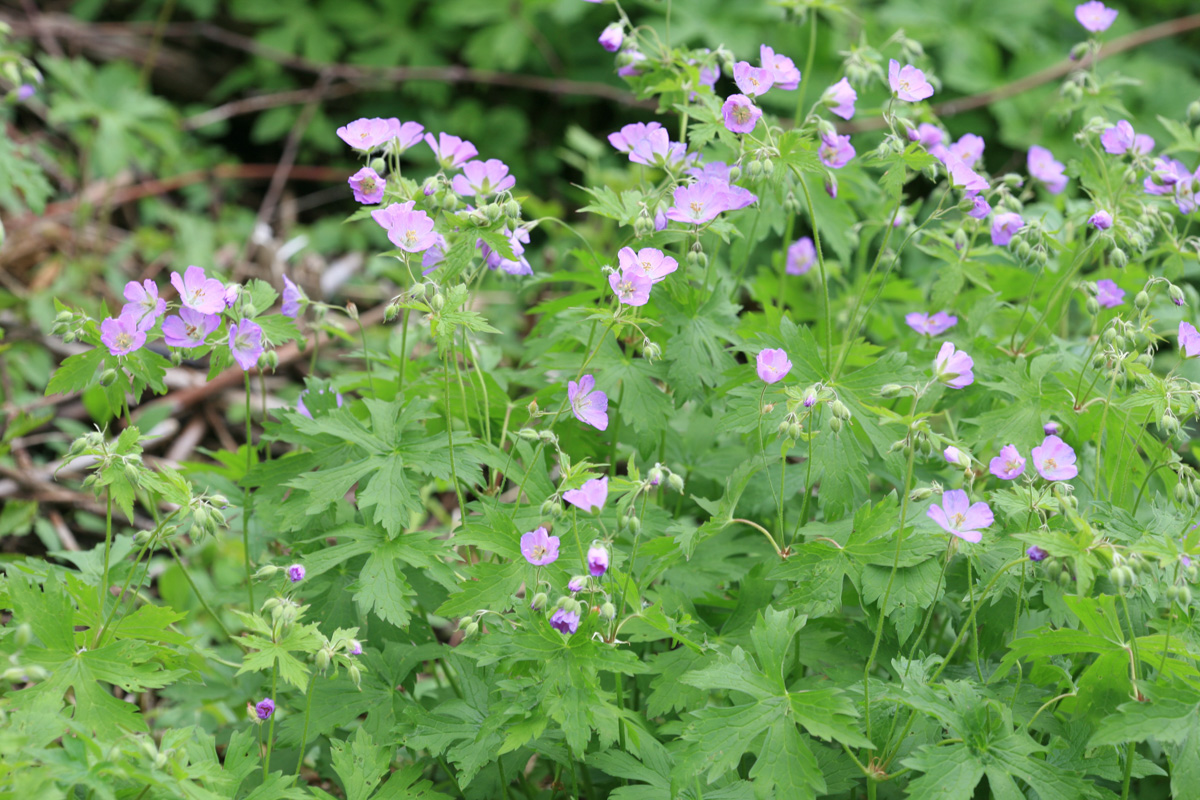
Wild geranium is becoming increasingly popular for its lovely rose to violet-purple flowers, which it bears in good number April through June. Each is delicate, five-petaled, wind responsive, and held in clusters of two to five at the top of thin floral stems. Wild geranium’s foliage is deeply dissected, upright growing on unbranched stems, and of rich substance. Native to eastern North America, it can be found naturally in rich to rocky open woodlands and thickets. Although it colonizes slowly, it is not an aggressive grower. It prefers moist, hummus-rich soil, performs well in a variety of conditions, and is at its best in shady gardens and borders.
Details
Hardiness Zone:
Blossom Color:
Violet to Purple
Growth Habit:
Sprawling
Max Height:
1½'
Texture:
Recommended Spacing:
We sell this plant in these containers:
Special Characteristics










Features
Wild geranium is becoming increasingly popular for its lovely rose to violet-purple flowers, which it bears in good number April through June. Each is delicate, five-petaled, wind responsive, and held in clusters of two to five at the top of thin floral stems. Wild geranium's foliage is deeply dissected, upright growing on unbranched stems, and of rich substance.
Landscape Value
Native to eastern North America, it can be found naturally in rich to rocky open woodlands and thickets. Although it colonizes slowly, it is not an aggressive grower. It prefers moist, hummus-rich soil, performs well in a variety of conditions, and is at its best in shady gardens and borders.
Care
Watering:
Wild Geranium is moderately drought tolerant but benefits from occasional watering, to maintain soil in a moist but not wet condition, during the summer months.
Fertilizing:
Wild Geranium needs little fertilizer, but benefits from a single springtime or fall topdressing (about 1 inch deep) of organic compost or well rotted leaves. Alternatively, a springtime application of a slow release fertilizer with a 3-1-2 ratio (such as a 15-5-10) can be applied at a rate of about 10 pounds per 1000 square feet.
Pruning:
Wild Geranium should be pruned while dormant during late fall or winter.