
Osmunda claytoniana
Blooming Time
Exposure



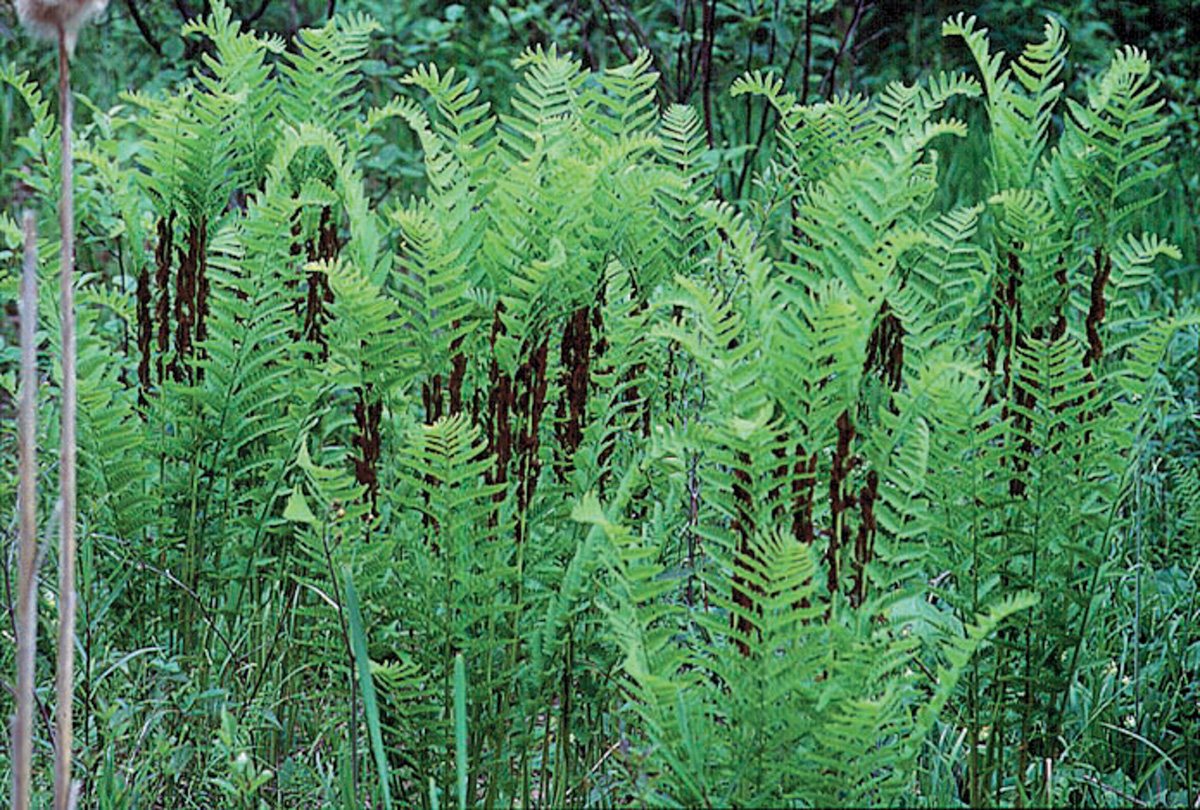
Medium green, the tall deciduous fronds of this upright growing fern are “interrupted” in the center by spore-containing fertile leaflets which mature to brown, liberate their spores, then fall off, thus leaving a gap or interruption in the featherlike nature of the fronds. Exceptionally striking, interrupted fern is at it’s best near the edge of a stream or pond, and 3 to 5 specimens planted together are impressive and commanding.
Details
Hardiness Zone:
Blossom Color:
Tan to Brown
Growth Habit:
Slow Spreading
Max Height:
4'
Texture:
Recommended Spacing:
We sell this plant in these containers:
Special Characteristics







Features
Medium green upright leaves are interrupted in the center by spore bearing leaflets which mature to brown. Exceptionally striking fern. Native species, moisture tolerant.
Landscape Value
Specimen, companion, accent, or massed as a ground cover.
Care
Watering:
Interrupted Fern requires a fair amount of supplemental watering and often requires watering on a regular basis during the growing season.
Fertilizing:
Interrupted Fern benefits from regular feeding and likely will grow best with: a spring (May) application of slow release fertilizer with a 3-1-2 ratio (such as a 15-5-10) at a rate of about 10 pounds per 1000 square feet, and a summer (July) application of slow release fertilizer with a 3-1-2 ratio (such as a 15-5-10) at a rate of about 10 pound per 1000 square feet, and and an early fall (September) application of a 2-1-2 ratio (such as a 10-5-10) at a rate of 15 pounds per 1000 square feet to encourage root development and cold hardiness.
Pruning:
Interrupted Fern is a deciduous plant (nonevergreen) and does not require pruning. It is perfectly acceptable to allow the dropped leaves to decompose and nourish the soil.