
Helleborus x hybridus
Blooming Time
Exposure


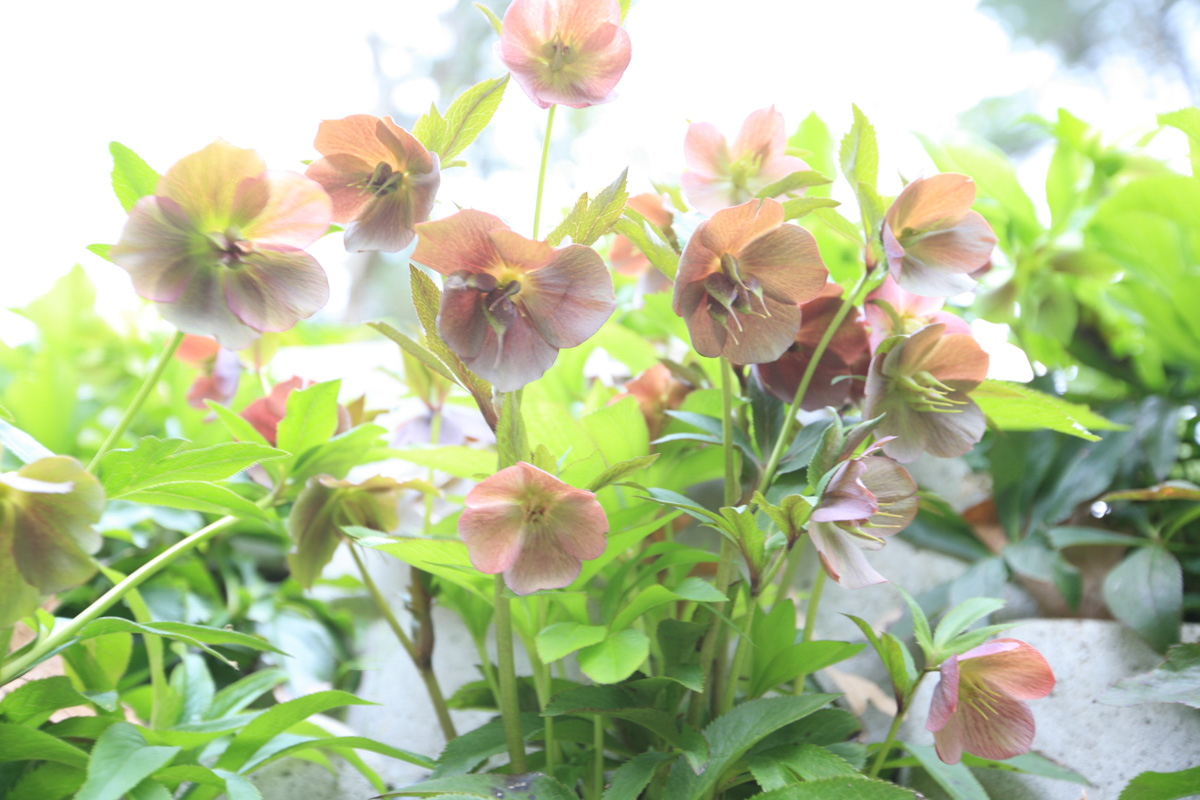
A stemless herbaceous ground cover that blooms very early; usually beginning February and lasting into April. Lenten rose is a rugged, coarse textured, leathery salt with shiny green foliage that remains attractive year-round. Ideally suited for use on a moderate scale in naturalistic woodland landscapes, it is best employed near the house to increase visibility (especially of its flowers, during cold weather when one is less likely to be outdoors). It is superb in shady wooded plantings. Its flowers are nodding, 3 to 4-inches wide, and vary in color from white to plum, often with spotting inside. 2005 Perennial Plant of the Year.
Details
Hardiness Zone:
Blossom Color:
Variegated/Multicolored
Growth Habit:
Clump Forming
Max Height:
1½'
Texture:
Recommended Spacing:
We sell this plant in these containers:
Special Characteristics









Features
Coarse textured, leathery shiny green foliage with super-early blooming 3 to 4-inch wide white flowers during winter and early spring.
Landscape Value
Small to large scale ground cover, accent, specimen, companion--unique for its ability to flower in very cold weather.
Care
Watering:
Lenten Rose is very drought tolerant and typically only needs watering during the hottest days of summer.
Fertilizing:
Lenten Rose is a moderate feeder, benefiting from a couple of annual applications of slow release fertilizer. A spring application of a 3-1-2 ratio (such as a 15-5-10) can be applied at a rate of about 10 pounds per 1000 square feet, and during early fall, an application of a 2-1-2 ratio (such as a 10-5-10) can be applied to encourage root development and cold hardiness.
Pruning:
Lenten Rose is evergreen and does not require pruning. It is normally only pruned for the purpose of keeping it within bounds.