
Leptinella squalida ‘Platt’s Black’
Blooming Time
Exposure



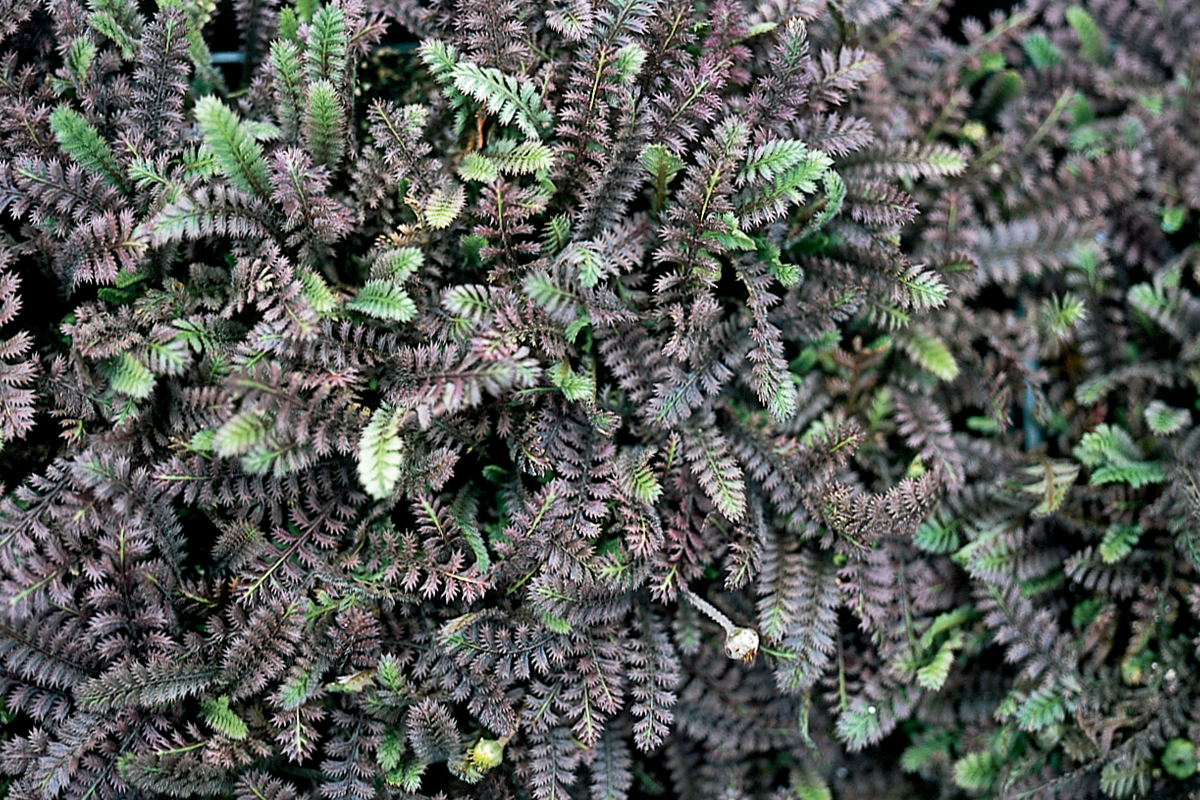
‘Platt’s Black’ brass buttons is rare and choice – a real collector’s plant. That’s how it might be described in 2003 (the year we introduced it). But, in the future, we are sure it will become very popular-since ‘Platt’s Black’ is fascinating and functional, sure to please, and bound to get lots of attention. ‘Platt’s Black’ is a tiny horizontal creeper for use around and between stepping stones and pavers. It displays unique fern-textured blackish purple oftimes-green-tipped foot traffic tolerant foliage and tiny yellowish summerborne flowers.
Details
Hardiness Zone:
Blossom Color:
Yellow to Chartreuse
Growth Habit:
Creeping
Max Height:
1"
Texture:
Recommended Spacing:
We sell this plant in these containers:
Special Characteristics





Features
Fascinating miniature fern-shaped evergreen leaves are deep purple, tipped in lime green, greenish yellow flowers arise throughout summer.
Landscape Value
Creeping/carpeting ground cover used as a foot-friendly filler between patio- and stepping stones.
Care
Watering:
'Platt's Black' Brass Buttons requires a fair amount of supplemental watering and often requires watering on a regular basis during the growing season.
Fertilizing:
'Platt's Black' Brass Buttons is a moderate feeder, benefiting from a couple of annual applications of slow release fertilizer. A spring application of a 3-1-2 ratio (such as a 15-5-10) can be applied at a rate of about 10 pounds per 1000 square feet, and during early fall, an application of a 2-1-2 ratio (such as a 10-5-10) can be applied to encourage root development and cold hardiness.
Pruning:
'Platt's Black' Brass Buttons is a deciduous plant (nonevergreen) and does not require pruning. It is perfectly acceptable to allow the dropped leaves to decompose and nourish the soil.