
Schizachyrium scoparium Free Spirit® Exclamation Point® PPAF (‘Nontnio’)
Blooming Time
Exposure

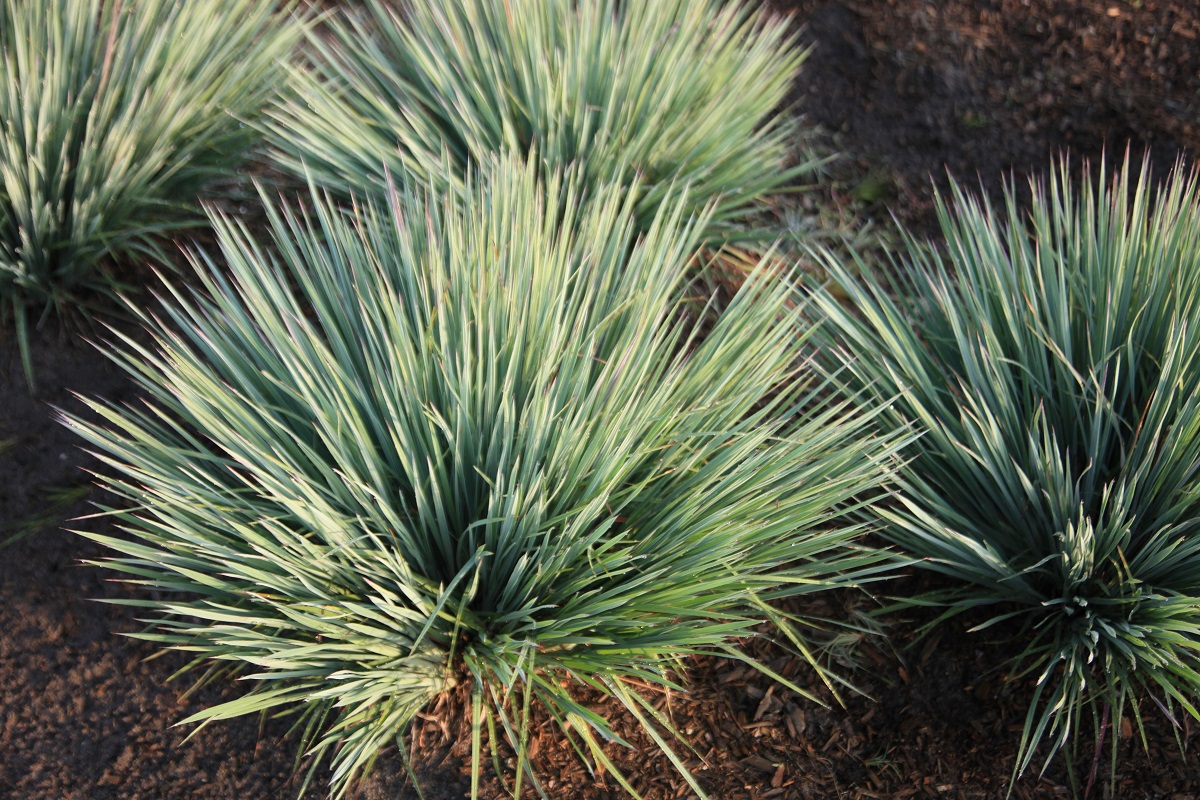
Exclaimation Point® takes its name for how it punctuates the growing season- by coloring up with flecks of purple and maroon. But it is fabulous during spring and summer and is immediately recognizable for its pincushion-like foliage arrangement. It’s not prickly, but is neatly arranged and colored steel blue and is unbothered by wind and rain. Exclaimation Point® is very hardy, looks beautiful in large plantings as a colorful ground cover, and combines with endless companions.
Details
Hardiness Zone:
Blossom Color:
Tan to Brown
Growth Habit:
Clump Forming
Max Height:
2½'
Texture:
Recommended Spacing:
We sell this plant in these containers:
Special Characteristics











Features
A Hortech Original, distinctive pincushion-like foliage arrangement is punctuated with flecks of purple and maroon. Native Cultivar.
Landscape Value
Very hardy, it looks beautiful in large plantings as a colorful ground cover and combines with endless companions.
Care
Watering:
Exclamation Point® Little Bluestem is very drought tolerant and typically only needs watering during the hottest days of summer.
Fertilizing:
Exclamation Point® Little Bluestem needs little fertilizer, but benefits from a single springtime or fall topdressing (about 1 inch deep) of organic compost or well rotted leaves. Alternatively, a springtime application of a slow release fertilizer with a 3-1-2 ratio (such as a 15-5-10) can be applied at a rate of about 10 pounds per 1000 square feet.
Pruning:
Exclamation Point® Little Bluestem should be enjoyed all winter long, then, during early April before it begins to grow again, it should be pruned or mowed back to ground level.