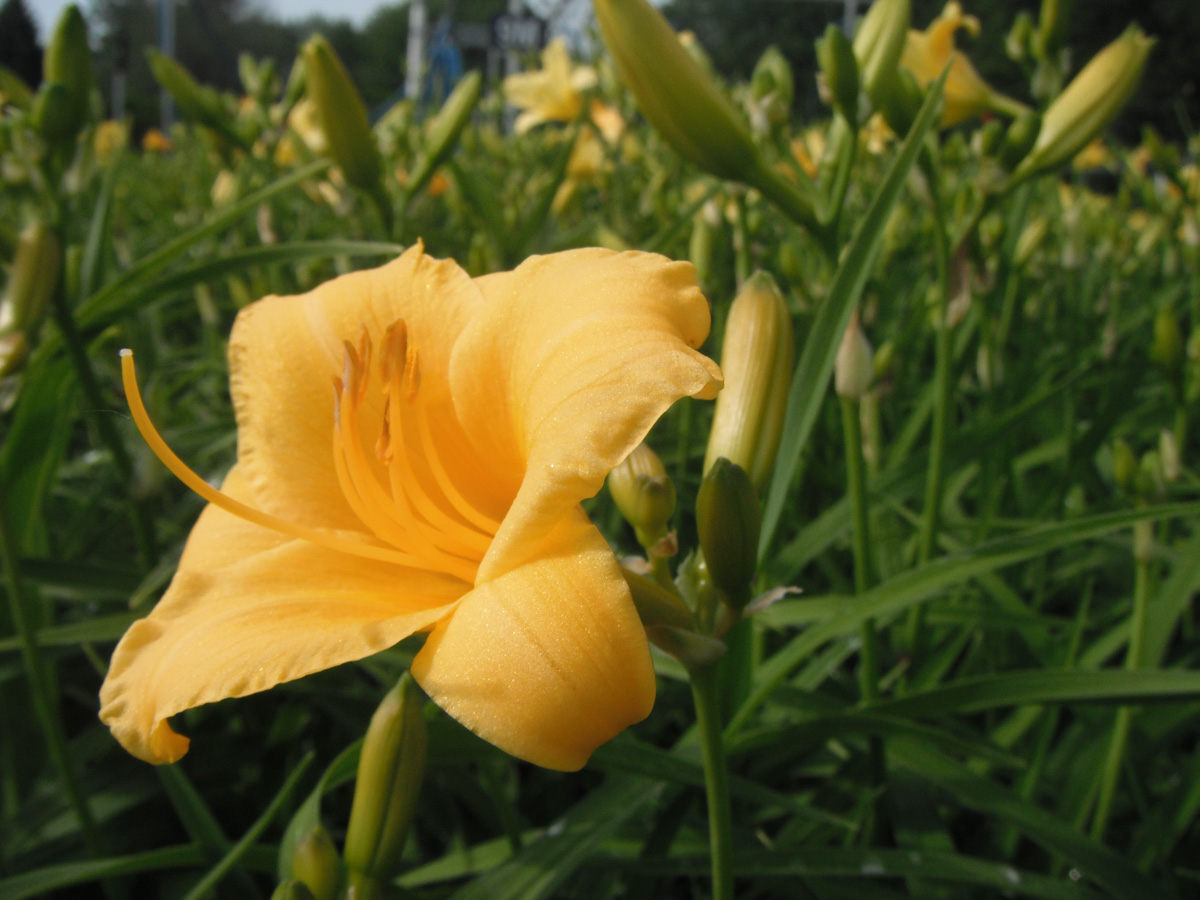
Hemerocallis ‘Happy Returns’

Blooming Time

June
July
August
September

Exposure

True
Full Sun
True
Light Shade

Bred by the accomplished hybridizer Daryl Apps, ‘Happy Returns’, a descendent of ‘Stella de Oro’, demonstrates a very long blooming season (late spring through fall), superb heat tolerance, and fragrant canary yellow 3½-inch wide flowers that go nicely with other colors in the landscape. ‘Happy Returns’ is a tremendous landscaper’s plant, filling out rapidly and making a bold visual statement. It has won numerous awards and is extremely popular.

Details

Hardiness Zone:

4

Blossom Color:

Yellow to Chartreuse

Growth Habit:

Clump Forming

Max Height:

16"

Texture:

Medium Texture

Recommended Spacing:

10" to 14"

We sell this plant in these containers:
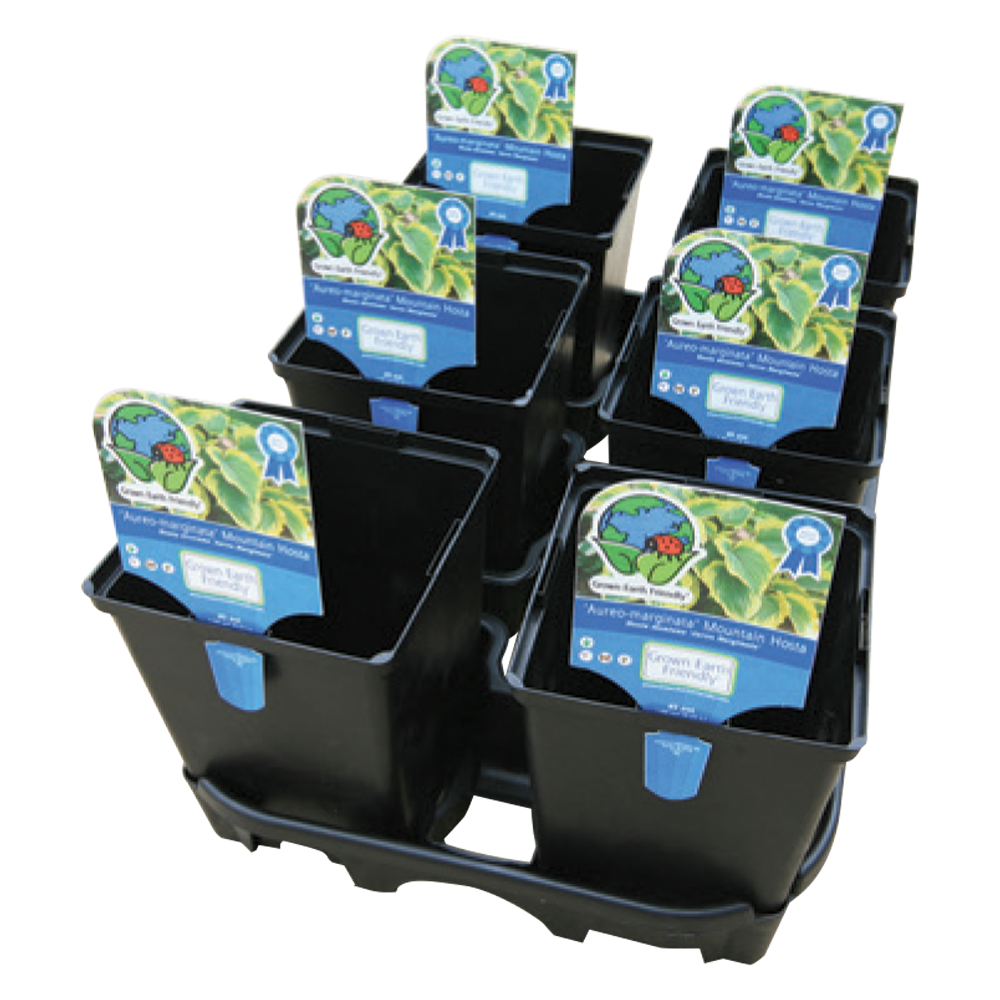
#1 Pot
#1 Pot

Special Characteristics

True
Seasonal Effect
True
Moderate Area
True
Salt Tolerant
True
Drought Tolerant
True
Hummingbird
True
Butterflies
True
Bees
True
Large Area
True
Sandy Soil Tolerant
Controls Erosion
True
Rebloomer
True
Award Winning

Features

Attractive green sword shaped leaves and canary yellow reblooming flowers that arise from early summer through fall.

Landscape Value

Moderate to large scale ground cover, edging, accent, or companion. Rugged, drought tolerant, greatly valued for colorful summerborne flowers.

Care

Watering:

'Happy Returns' Daylily is moderately drought tolerant but benefits from occasional watering, to maintain soil in a moist but not wet condition, during the summer months.

Fertilizing:

'Happy Returns' Daylily is a moderate feeder, benefiting from a couple of annual applications of slow release fertilizer. A spring application of a 3-1-2 ratio (such as a 15-5-10) can be applied at a rate of about 10 pounds per 1000 square feet, and during early fall, an application of a 2-1-2 ratio (such as a 10-5-10) can be applied to encourage root development and cold hardiness.

Pruning:

'Happy Returns' Daylily should be enjoyed all winter long, then, during early April before it begins to grow again, it should be pruned or mowed back to ground level.

Companion Plants

Perovskia atriplicifolia ‘Filigran’View
Sage, Russian, `Filigran'
Lavandula angustifolia ‘Munstead Strain’View
Lavender, `Munstead'
Geranium sanguineum ‘Alpenglow’View
Geranium, `Alpenglow'
Coreopsis ‘Red Satin’ PP25,736View
Coreopsis, `Red Satin'
Coreopsis verticillata ‘Moonbeam’View
Coreopsis, Threadleaf `Moonbeam'
Coreopsis verticillata ‘Zagreb’View
Coreopsis, Threadleaf `Zagreb'
Coreopsis Leading Lady ‘Lauren’ PPAFView
Coreopsis, Leading Lady `Lauren'
Coreopsis Li’l Bang™ ‘Darling Clementine’ PP31,843View
Coreopsis, Li'l Bang™ `Darling Clementine'
Coreopsis grandiflora ‘Heliot’View
Coreopsis, `Heliot'
Geranium macrorrhizum ‘Bevan’s Variety’View
Geranium, Bevan's Bigroot
Geranium sanguineum ‘Pink Summer’View
Geranium, `Pink Summer'
Geranium sanguineum ‘Pink Diadem’View
Geranium, `Pink Diadem'
Geranium Azure Rush®View
Geranium, Azure Rush®
Lavandula intermedia ‘Sensational!’ PP31,786View
Lavender, `Sensational!'
Lavandula x intermedia ‘Phenomenal’ PP24,193View
Lavender, `Phenomenal'
Lavandula x intermedia ‘Violet Intrigue’View
Lavender, `Violet Intrigue'
Lavandula angustifolia ‘Big Time Blue’ PP24,827View
Lavender, `Big Time Blue'
Lavandula x intermedia ‘Grosso’View
Lavender, `Grosso'
Perovskia atriplicifolia ‘Blue Jean Baby’ PP29,281View
Sage, Russian, `Blue Jean Baby'
Perovskia atriplicifolia ‘Little Spire’View
Sage, Russian, `Little Spire'
Perovskia atriplicifolia ‘Longin’View
Sage, Russian, `Longin'