
Stachys byzantia ‘Big Ears’
Blooming Time
Exposure


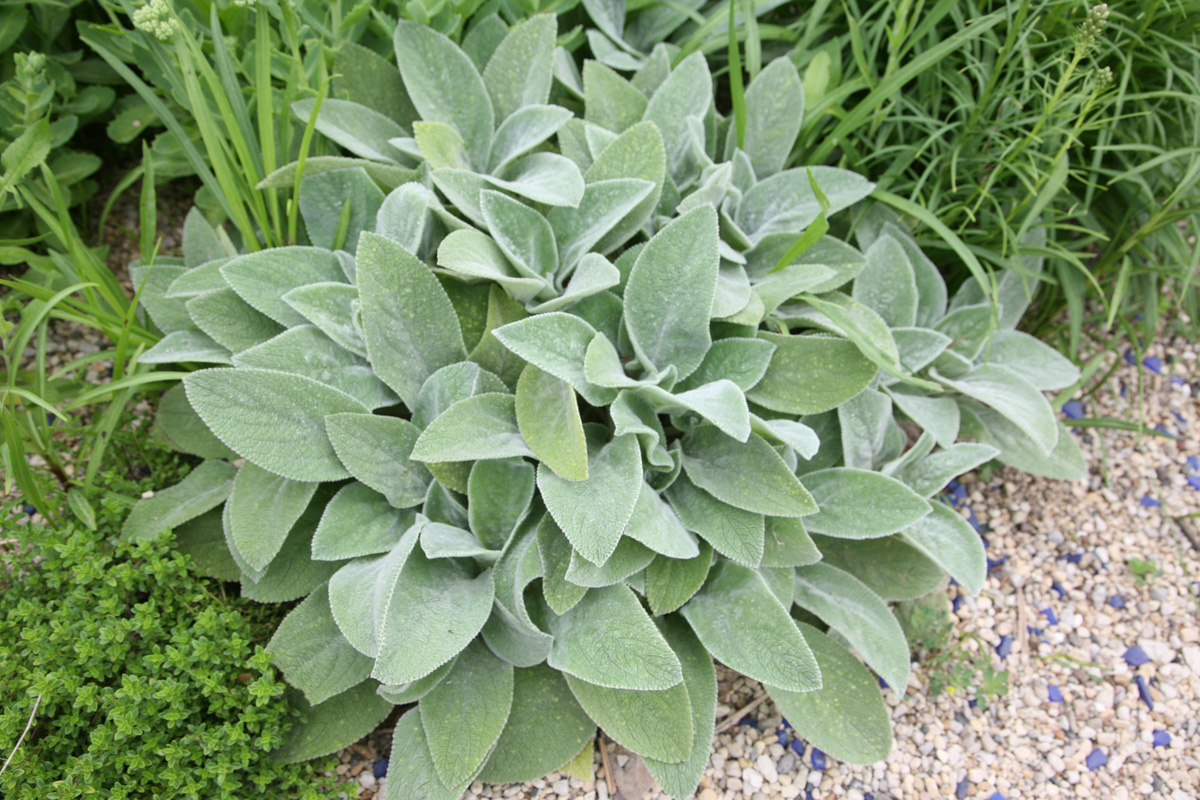
This cultivar of lamb’s ears is particularly ornamental, both for its fuzzy blue-green foliage and its interesting infrequently-borne blue to pink flowers that ascend upon fuzzy, leafy stems. The foliage of ‘Big Ears’ is exceptionally attractive and makes this plant phenomenally drought and heat tolerant. It requires virtually no supplemental irrigation and is a natural ‘adapted’ accent to native plants in low maintenance landscaping. Use ‘Big Ears’ as a general cover, pathway, or patio edging where it softens the hard lines of stone, pavers and timbers.
Details
Hardiness Zone:
Blossom Color:
Rose to Pink
Growth Habit:
Clump Forming
Max Height:
12"
Texture:
Recommended Spacing:
We sell this plant in these containers:
Special Characteristics










Features
This cultivar of lamb's ears is particularly ornamental, both for its fuzzy blue-green foliage and its interesting infrequently-borne blue to pink flowers that ascend upon fuzzy, leafy stems. The foliage of 'Big Ears' is exceptionally attractive and makes this plant phenomenally drought and heat tolerant.
Landscape Value
It requires virtually no supplemental irrigation and is a natural 'adapted' accent to native plants in low maintenance landscaping. Use 'Big Ears' as a general cover, pathway, or patio edging where it softens the hard lines of stone, pavers and timbers.
Care
Watering:
'Big Ears' Lambs Ears is very drought tolerant and typically only needs watering during the hottest days of summer.
Fertilizing:
'Big Ears' Lambs Ears is a moderate feeder, benefiting from a couple of annual applications of slow release fertilizer. A spring application of a 3-1-2 ratio (such as a 15-5-10) can be applied at a rate of about 10 pounds per 1000 square feet, and during early fall, an application of a 2-1-2 ratio (such as a 10-5-10) can be applied to encourage root development and cold hardiness.
Pruning:
'Big Ears' Lambs Ears should be enjoyed all winter long, then, during early April before it begins to grow again, it should be pruned or mowed back to ground level.