
Epimedium grandiflorum var. higoense ‘Bandit’
Blooming Time

April
May

Exposure

True
Light Shade
True
Moderate Shade

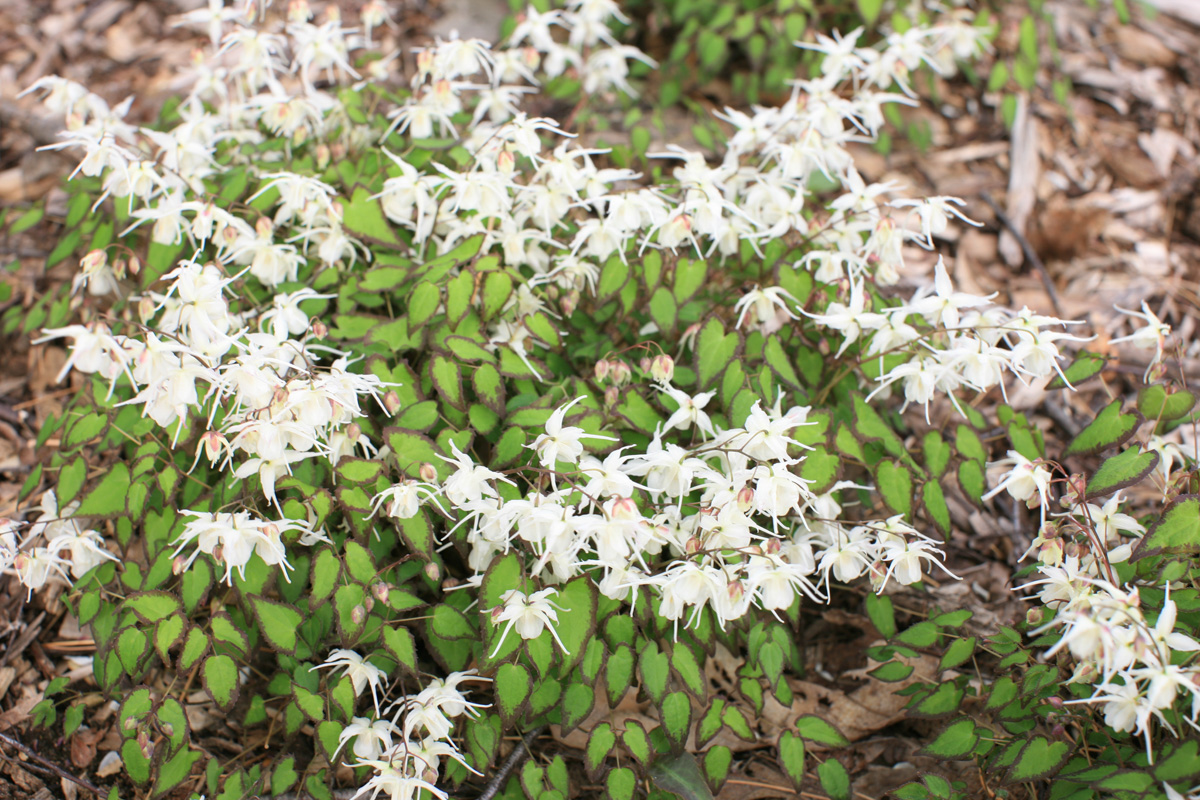
Originally imported from Japan by We Du Nursery, ‘Bandit’ is one of the most distinct Epimedium selections. Its name ‘Bandit’ comes from the unique dark purple band that surrounds the edge of each small leaflet as it emerges in spring. Shortly after leaf emergence, its foliage is topped with creamy-white flowers that nearly smother the plant. ‘Bandit’ is a great ground cover, rock garden specimen, or companion to ther shade loving perennials.

Details

Hardiness Zone:

5

Blossom Color:

White to Cream

Growth Habit:

Clump Forming

Max Height:

8"

Texture:

Fine Texture

Recommended Spacing:

12" to 14"

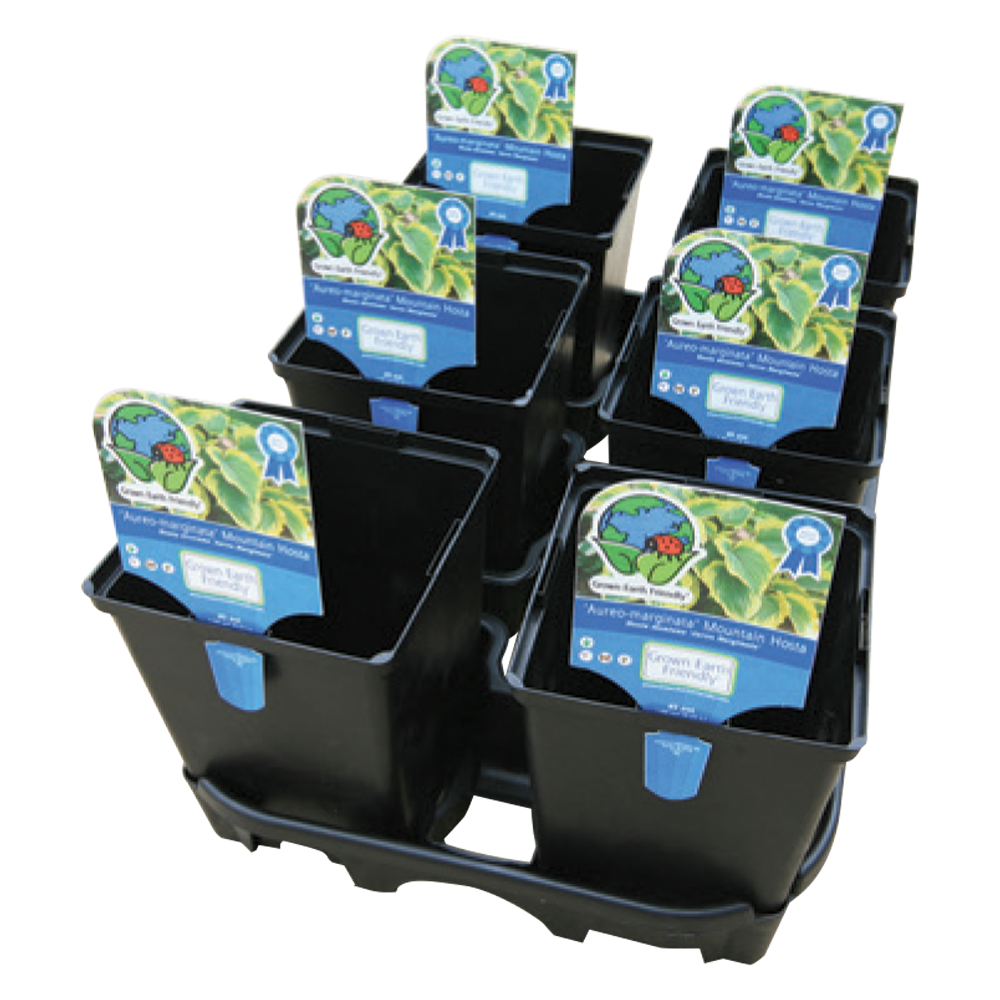
We sell this plant in these containers:
#1 Pot
#1 Pot

Special Characteristics

True
Seasonal Effect
True
Moderate Area
True
Drought Tolerant
True
Bees
True
Small Area
True
Deer Resistant
True
Sandy Soil Tolerant

Features

'Bandit' comes from the unique dark purple band that surrounds the edge of each small leaflet as it emerges in spring.

Landscape Value

'Bandit' is a great ground cover, rock garden specimen, or companion to other shade loving perennials.

Care

Watering:

'Bandit' Epimedium is moderately drought tolerant but benefits from occasional watering, to maintain soil in a moist but not wet condition, during the summer months.

Fertilizing:

'Bandit' Epimedium is a moderate feeder, benefiting from a couple of annual applications of slow release fertilizer. A spring application of a 3-1-2 ratio (such as a 15-5-10) can be applied at a rate of about 10 pounds per 1000 square feet, and during early fall, an application of a 2-1-2 ratio (such as a 10-5-10) can be applied to encourage root development and cold hardiness.

Pruning:

'Bandit' Epimedium should be enjoyed all winter long, then, during early April before it begins to grow again, it should be pruned or mowed back to ground level.

Companion Plants

Dryopteris affinisView
Fern, Male, Golden-scaled
Cimicifuga ramosa ‘Pink Spike’View
Snakeroot, `Pink Spike'
Astilbe ‘Mighty Chocolate Cherry’View
Astilbe, `Mighty Chocolate Cherry'
Astilbe chinensis ‘Vision in Red’View
Astilbe, `Vision in Red'
Astilbe chinensis ‘Maggie Daley’View
Astilbe, `Maggie Daley'
Astilbe chinensis ‘Lowlands Ruby Red’View
Astilbe, `Lowlands Ruby Red'
Astilbe chinensis ‘Little Vision in Pink’ PP21,886View
Astilbe, `Little Vision in Pink'
Astilbe x arendsii Nemo®View
Astilbe, Nemo®
Carex Feather Falls™ PP26,199View
Sedge, Feather Falls™
Carex hachijoensis ‘Evergold’View
Sedge, Japanese, `Evergold'
Carex oshimensis EverColor® ‘Everillo’ PP21,002View
Sedge, EverColor® `Everillo'
Carex pensylvanicaView
Sedge, Pennsylvania
Carex morrowii ‘Ice Dance’View
Sedge, `Ice Dance'
Cimicifuga ramosa ‘Brunette’View
Snakeroot, `Brunette'
Heucherella ‘Stoplight’View
Foamy Bells, `Stoplight'
Tiarella ‘Spring Symphony’View
Foamflower, `Spring Symphony'
Tiarella ‘Sugar and Spice’View
Foamflower, `Sugar & Spice'
Phegopteris decursive-pinnataView
Fern, Japanese Beech
Matteuccia struthiopteris var. pennsylvanicaView
Fern, Ostrich
Iris cristataView
Iris, Crested
Iris cristata ‘Alba’View
Iris, Crested, Dwarf, White Flowered
Dryopteris affinis ‘Stableri’View
Fern, Male, Golden-scaled, Stabler's
Dryopteris filix-mas ‘Barnesii’View
Fern, Male, Barne's
Epimedium warleyenseView
Epimedium, Orange Flowered
Epimedium x versicolor ‘Sulphureum’View
Epimedium, Yellow Flowered