
Tiarella ‘Spring Symphony’
Blooming Time
Exposure


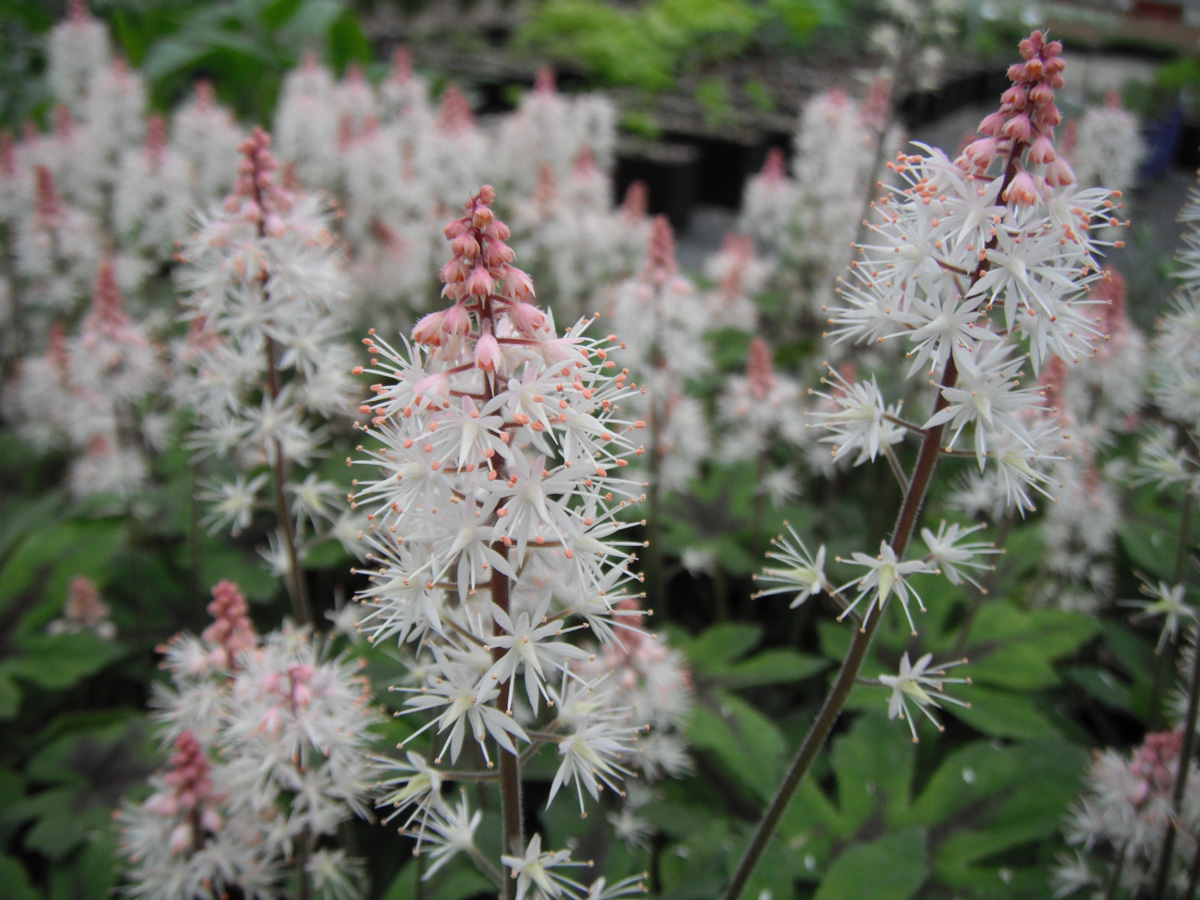
‘Spring Symphony’ is a botanical masterpiece, with its amazing display of light pink flowers as its crescendo. Clouds of beautiful flowers are held atop dense, clean, deeply lobed midgreen foliage with black streaked centers. Like other Tiarella, it is happiest in a moist, well-drained soil and is very low maintenance. Besides being an excellent choice for a container, it pairs well with companions in the landscape.
Details
Hardiness Zone:
Blossom Color:
White to Cream
Growth Habit:
Clump Forming
Max Height:
8"
Texture:
Recommended Spacing:
We sell this plant in these containers:
Special Characteristics












Features
A botanical masterpiece, with its amazing display of light pink flowers as its crescendo. Clouds of beautiful flowers are held atop dense, clean, deeply lobed midgreen foliage with streaked black centers.
Landscape Value
Happiest in a moist, well-drained soil and is very low maintenance. An excellent choice for a container.
Care
Watering:
'Spring Symphony' Foamflower is moderately drought tolerant but benefits from occasional watering, to maintain soil in a moist but not wet condition, during the summer months.
Fertilizing:
'Spring Symphony' Foamflower is a moderate feeder, benefiting from a couple of annual applications of slow release fertilizer. A spring application of a 3-1-2 ratio (such as a 15-5-10) can be applied at a rate of about 10 pounds per 1000 square feet, and during early fall, an application of a 2-1-2 ratio (such as a 10-5-10) can be applied to encourage root development and cold hardiness.
Pruning:
'Spring Symphony' Foamflower is evergreen and does not require pruning. It is normally only pruned for the purpose of keeping it within bounds.