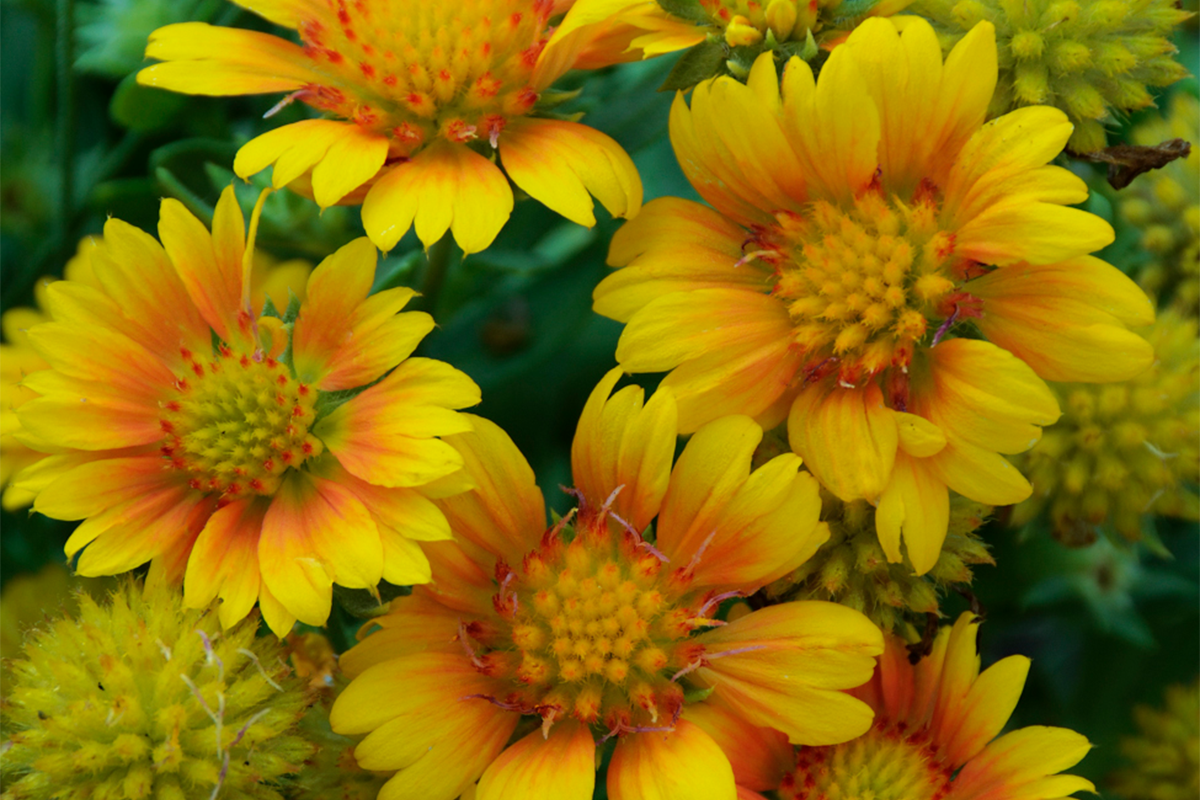
Gaillardia aristata ‘Arizona Apricot’

Blooming Time

July
August
September
October

Exposure

True
Full Sun

‘Arizona Apricot’ blanket flower blooms profusely and continuously all summer long, providing food to pollinators and birds, and beauty to passersby. Its flowers are packed with fiery shades of red, orange, and yellow which melt together over time. Fuzzy globose seed heads prolong the season of interest. With a petite habit and reliability as a repeat bloomer ‘Arizona Apricot’ is best used in mixed borders, as an edging, and within containers. 2009 Fleuroselect Approved Novelty Winner, 2011 All America Selections Flower Winner.

Details

Hardiness Zone:

4

Blossom Color:

Orange, Copper, Gold

Growth Habit:

Sprawling

Max Height:

10"

Texture:

Medium Texture

Recommended Spacing:

12" to 1½'

We sell this plant in these containers:
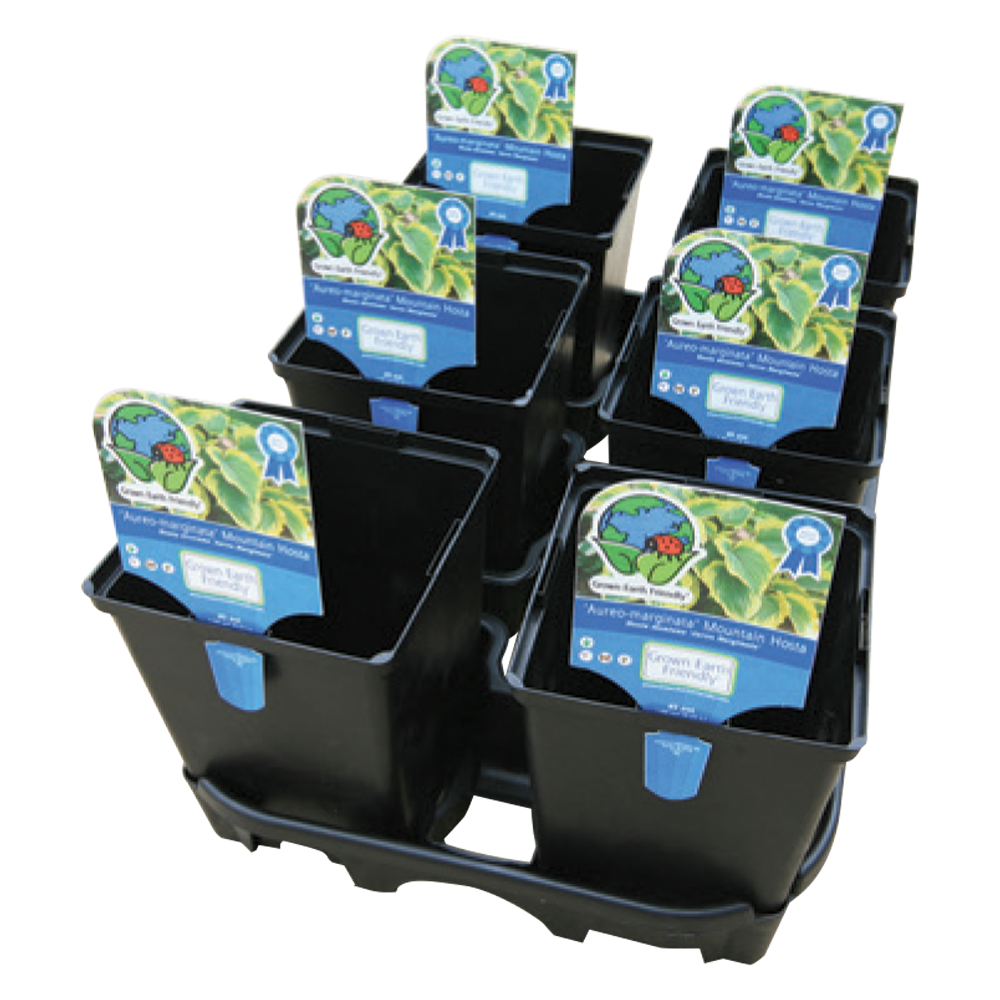
#1 Pot
#1 Pot

Special Characteristics

True
Cuttings
True
Seasonal Effect
True
Moderate Area
True
Drought Tolerant
True
Butterflies
True
Bees
True
Small Area
True
Deer Resistant
True
Sandy Soil Tolerant
True
Native Cultivar
True
Award Winning

Features

'Arizona Apricot' blanket flower blooms profusely and continuously all summer long, providing food to pollinators and birds, and beauty to passersby.

Landscape Value

Best used in mixed borders, as an edging, and within in containers.

Care

Watering:

'Arizona Apricot' Blanket Flower is moderately drought tolerant but benefits from occasional watering, to maintain soil in a moist but not wet condition, during the summer months.

Fertilizing:

'Arizona Apricot' Blanket Flower is a moderate feeder, benefiting from a couple of annual applications of slow release fertilizer. A spring application of a 3-1-2 ratio (such as a 15-5-10) can be applied at a rate of about 10 pounds per 1000 square feet, and during early fall, an application of a 2-1-2 ratio (such as a 10-5-10) can be applied to encourage root development and cold hardiness.

Pruning:

'Arizona Apricot' Blanket Flower should be enjoyed all winter long, then, during early April before it begins to grow again, it should be pruned or mowed back to ground level.

Companion Plants

Allium ‘Millenium’View
Ornamental Chive, `Millenium'
Achillea millefolium ‘Strawberry Seduction’ PP18,401View
Yarrow, `Strawberry Seduction'
Achillea millefolium ‘Saucy Seduction’ PP20,782View
Yarrow, `Saucy Seduction'
Achillea millefolium ‘Sunny Seduction’ PP20,808View
Yarrow, `Sunny Seduction'
Allium senescens Mini Milli® (`Nonillim’)View
Ornamental Chive, Mini Milli®
Allium Glitterbug® Pink Moon Rising® (‘Nongnisl’)View
Ornamental Chive, Pink Moon Rising®
Allium Glitterbug® Bee’s Knees® (`Nonseenk’)View
Ornamental Chive, Bee's Knees®
Anemone Dreaming Swan™ PP27,384View
Windflower, Dreaming Swan™
Allium senescens Cosmic Blue® (`Noneulb’)View
Ornamental Chive, Cosmic Blue®
Allium schoenoprasum var. sibiricum ‘Pink Giant’View
Ornamental Chive, `Pink Giant'
Gentiana cruciataView
Cross Gentian
Geranium Azure Rush®View
Geranium, Azure Rush®
Geranium x ‘Rozanne’ PP12,175View
Geranium, `Rozanne'
Geum Pretticoats™ Peach PP31,208View
Avens, Pretticoats™ Peach
Geum ‘Sunkissed Lime’ PP26,622View
Avens, `Sunkissed Lime'
Geum Tempo™ Rose PP31,209View
Avens, `Tempo Rose'
Miscanthus sinensis ‘Little Kitten’View
Japanese Silver Grass, `Little Kitten'
Miscanthus sinensis ‘Little Zebra’View
Zebra Grass, Dwarf, `Little Zebra'
Miscanthus sinensis ‘Gracillimus’View
Japanese Silver Grass, Narrow Leaved
Panicum virgatum ‘Shenandoah’View
Switch Grass, `Shenandoah'
Pennisetum alopecuroides ‘Hameln’View
Fountain Grass, `Hameln' Dwarf
Salvia nemorosa ‘Spring King’View
Sage, `Spring King'
Salvia nemorosa ‘Midnight Rose’ PPAFView
Sage, 'Midnight Rose'
Salvia nemorosa ‘May Night’View
Sage, `May Night'
Salvia nemorosa ‘Midnight Purple’ PPAFView
Sage, `Midnight Purple'
Salvia nemorosa ‘Blue by You’ PP31,033View
Sage, `Blue by You'
Salvia Fashionista® ‘Moulin Rouge’ PP32,387View
Sage, Perennial, Fashionista® `Moulin Rouge'
Sporobolus heterolepsis ‘Tara’View
Prairie Dropseed, Dwarf, `Tara'
Sporobolus heterolepisView
Prairie Dropseed