
Miscanthus sinensis ‘Little Zebra’
Blooming Time
Exposure


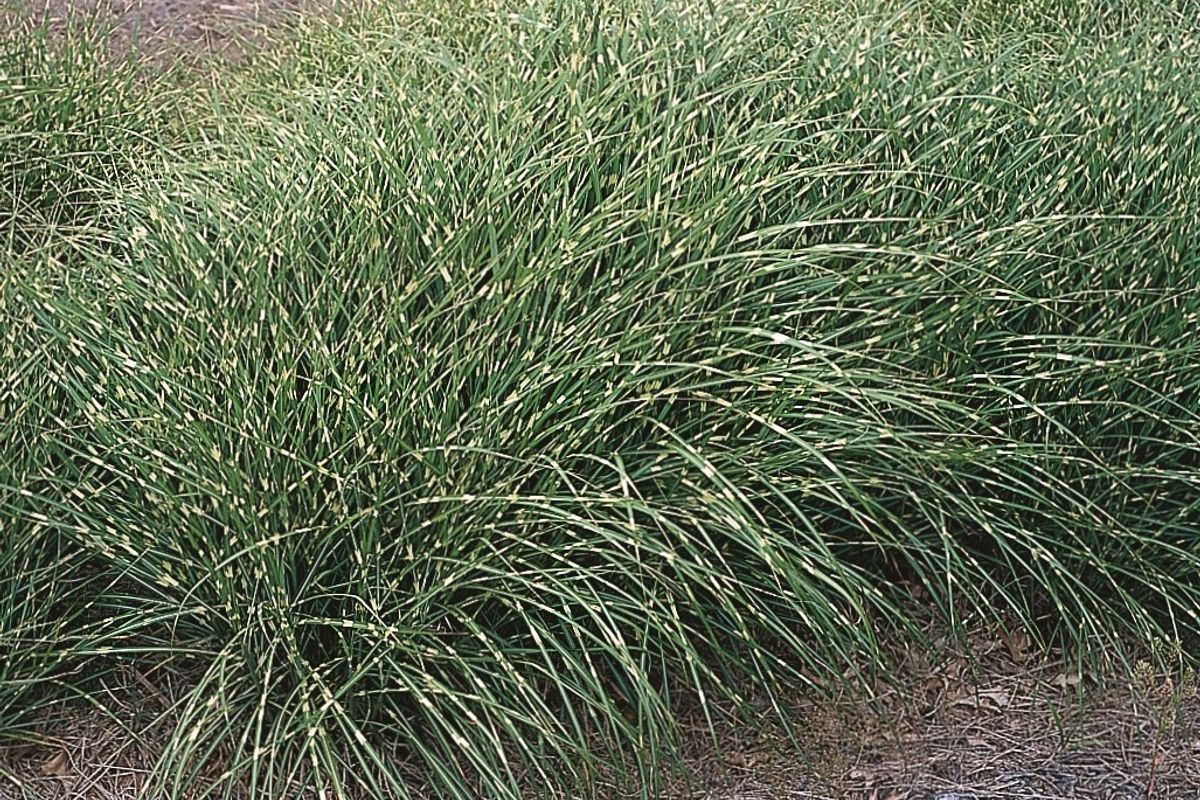
Discovered by Tom Walsh this miniature zebra grass holds its green and yellow banding all season. This makes it a superior selection as other varieties often fade to all green during the summer months. What’s more, ‘Little Zebra’ has the desirable trait of flowering during late summer – so its lovely reddish purple plumes are borne reliably every year, even during seasons of cool weather. ‘Little Zebra’ is perfect for accent or specimen use in ornamental grass- and perennial-border plantings, rock gardens, and even as a dwarf hedging or large scale ground cover. It is neat, tidy, reliable, and easy to maintain.
Details
Hardiness Zone:
Blossom Color:
Violet to Purple
Growth Habit:
Clump Forming
Max Height:
4'
Texture:
Recommended Spacing:
We sell this plant in these containers:
Special Characteristics








Features
Smallest of the zebra grasses. Leaves banded bright yellow and dark green, red fallborne floral plumes turn silver with age--nice all winter.
Landscape Value
Superb specimen, accent, companion, or dwarf hedge. Also excellent as a large-scale ground cover when mass planted.
Care
Watering:
'Little Zebra' Dwarf Zebra Grass is moderately drought tolerant but benefits from occasional watering, to maintain soil in a moist but not wet condition, during the summer months.
Fertilizing:
'Little Zebra' Dwarf Zebra Grass is a moderate feeder, benefiting from a couple of annual applications of slow release fertilizer. A spring application of a 3-1-2 ratio (such as a 15-5-10) can be applied at a rate of about 10 pounds per 1000 square feet, and during early fall, an application of a 2-1-2 ratio (such as a 10-5-10) can be applied to encourage root development and cold hardiness.
Pruning:
'Little Zebra' Dwarf Zebra Grass should be enjoyed all winter long, then, during early April before it begins to grow again, it should be pruned or mowed back to ground level.