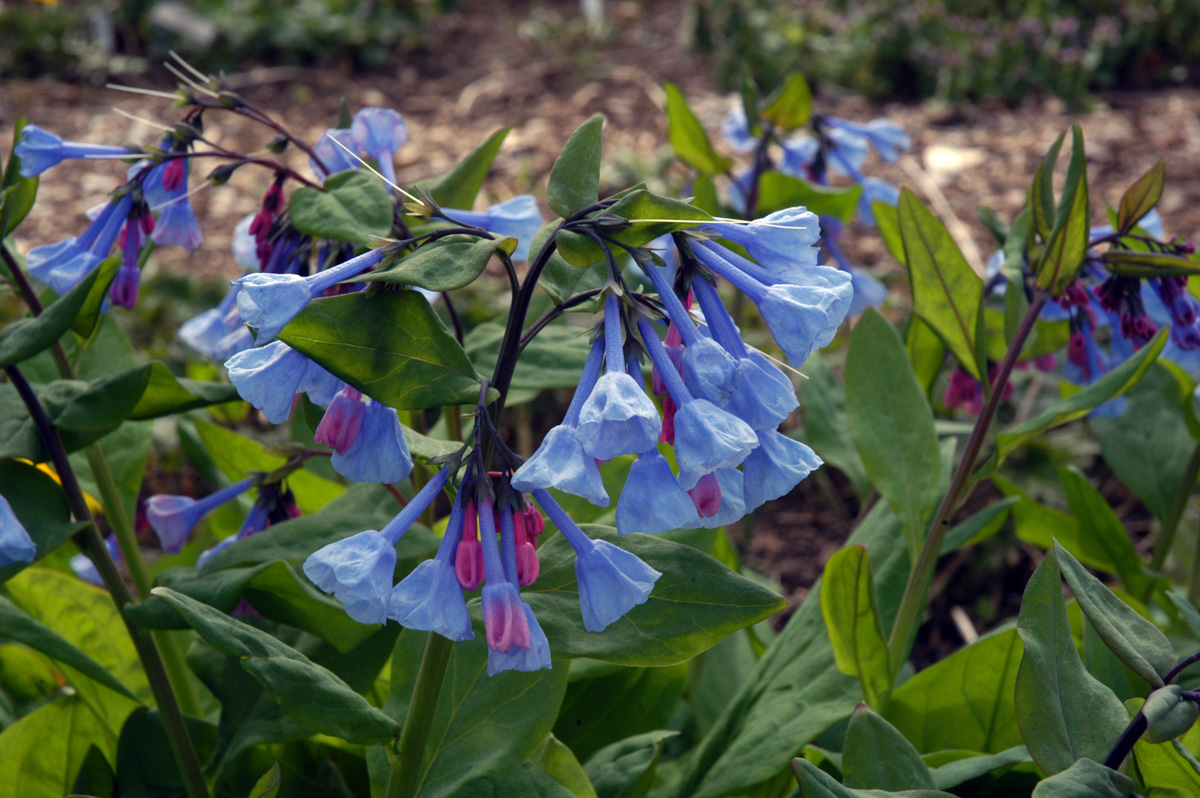
This North American native is a gorgeous early bloomer, growing quickly in the early spring when it produces loose terminal clusters of pendulous, trumpet-shaped flowers that emerge with a pinkish cast and then turn to blue. Virginia bluebells are considered a spring ephemeral, meaning it will complete its life cycle in the spring and go dormant by mid-summer. Given its life cycle, it is best to plant alongside other items that can expand and fill the void.
×
Quantity Calculator
Details
Hardiness Zone:
3
Blossom Color:
Blue to Blue Gray
Growth Habit:
Slow Spreading
Max Height:
2'
Texture:
Medium Texture
Recommended Spacing:
12" to 1½'
We sell this plant in these containers:
#1 Pot
Special Characteristics
Cuttings
Seasonal Effect
Moderate Area
Hummingbird
Butterflies
Bees
Small Area
Moisture Tolerant
Native Species
Features
Gorgeous early bloomer, growing quickly in early spring when it produces loose terminal clusters of pendulous, trumpet-shaped flowers that emerge with a pinkish cast and turn to blue.
Landscape Value
Considered a spring ephemeral, it is best to plant alongside other items that can expand and fill the void.
Care
Watering:
Virginia Bluebells is moderately drought tolerant but benefits from occasional watering, to maintain soil in a moist but not wet condition, during the summer months.
Fertilizing:
Virginia Bluebells needs little fertilizer, but benefits from a single springtime or fall topdressing (about 1 inch deep) of organic compost or well rotted leaves. Alternatively, a springtime application of a slow release fertilizer with a 3-1-2 ratio (such as a 15-5-10) can be applied at a rate of about 10 pounds per 1000 square feet.
Pruning:
Virginia Bluebells is a deciduous plant (nonevergreen) and does not require pruning. It is perfectly acceptable to allow the dropped leaves to decompose and nourish the soil.