
Diervilla x splendens Mountaineer® Keylime (`Noniba’)
Blooming Time
Exposure


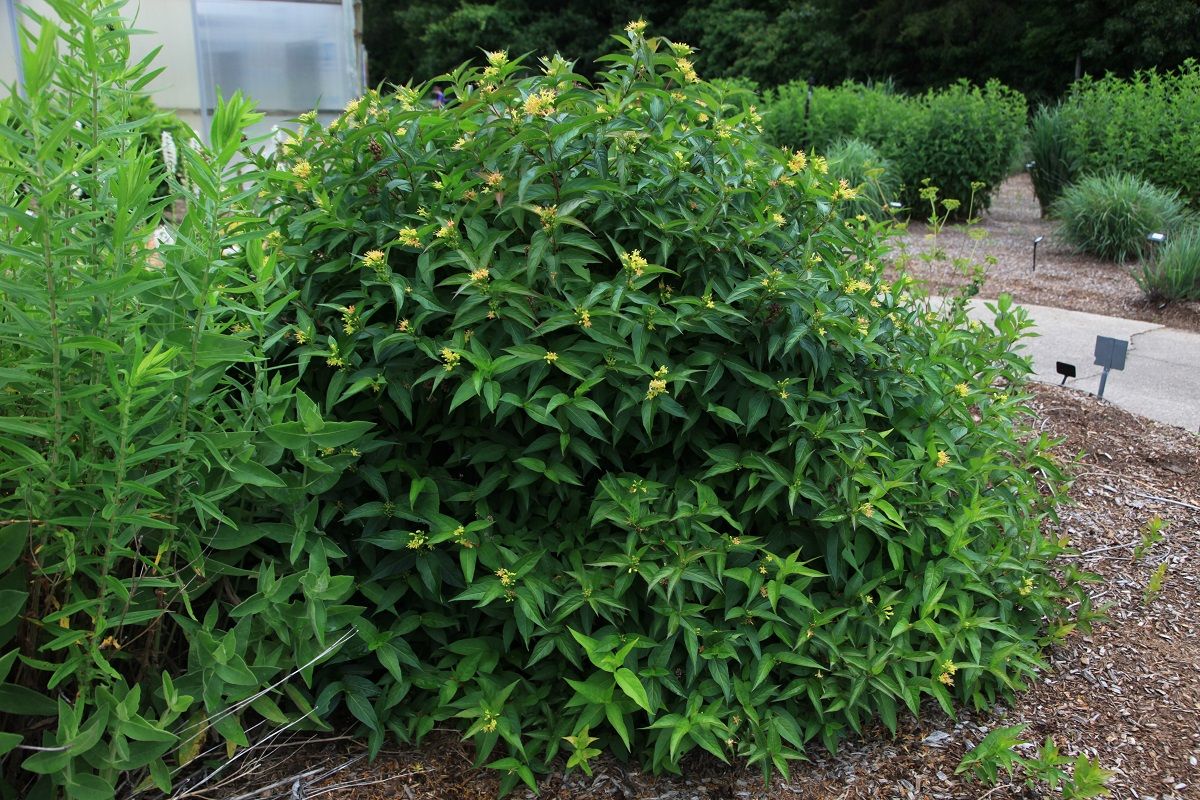
Mountaineer® Keylime has been rock-solid for color, health, habit and hardiness. Like our other Diervilla selections, it is tightly branched for low maintenance and never requires shearing. From spring to late summer, its handsome foliage is keylime-green until fall when it becomes infused with hues of purple. Flowering occurs early to midsummer with yellow trumpets borne at the branch tips. These attract butterflies, bees and hummingbirds and contrast nicely with the foliage. Effective uses include ground covering, dwarf hedging, soil stabilizing, and and any type of planting that you would typically do with a dwarf shrub. Because it will grow in sun or shade, its companions are numerous.
Details
Hardiness Zone:
Blossom Color:
Yellow to Chartreuse
Growth Habit:
Shrubby
Max Height:
3½'
Texture:
Recommended Spacing:
We sell this plant in these containers:
Special Characteristics









Features
Handsome foliage is keylime-green until fall when it becomes infused with hues of purple.
Landscape Value
Effective uses include ground covering, dwarf hedging, soil stabilizing, and and any type of planting that you would typically do with a dwarf shrub.
Care
Watering:
Mountaineer® Keylime Bush Honeysuckle is moderately drought tolerant but benefits from occasional watering, to maintain soil in a moist but not wet condition, during the summer months.
Fertilizing:
Mountaineer® Keylime Bush Honeysuckle is a moderate feeder, benefiting from a couple of annual applications of slow release fertilizer. A spring application of a 3-1-2 ratio (such as a 15-5-10) can be applied at a rate of about 10 pounds per 1000 square feet, and during early fall, an application of a 2-1-2 ratio (such as a 10-5-10) can be applied to encourage root development and cold hardiness.
Pruning:
Mountaineer® Keylime Bush Honeysuckle sets its flower buds in summer, and any pruning should be conducted in April, immediately after winter.