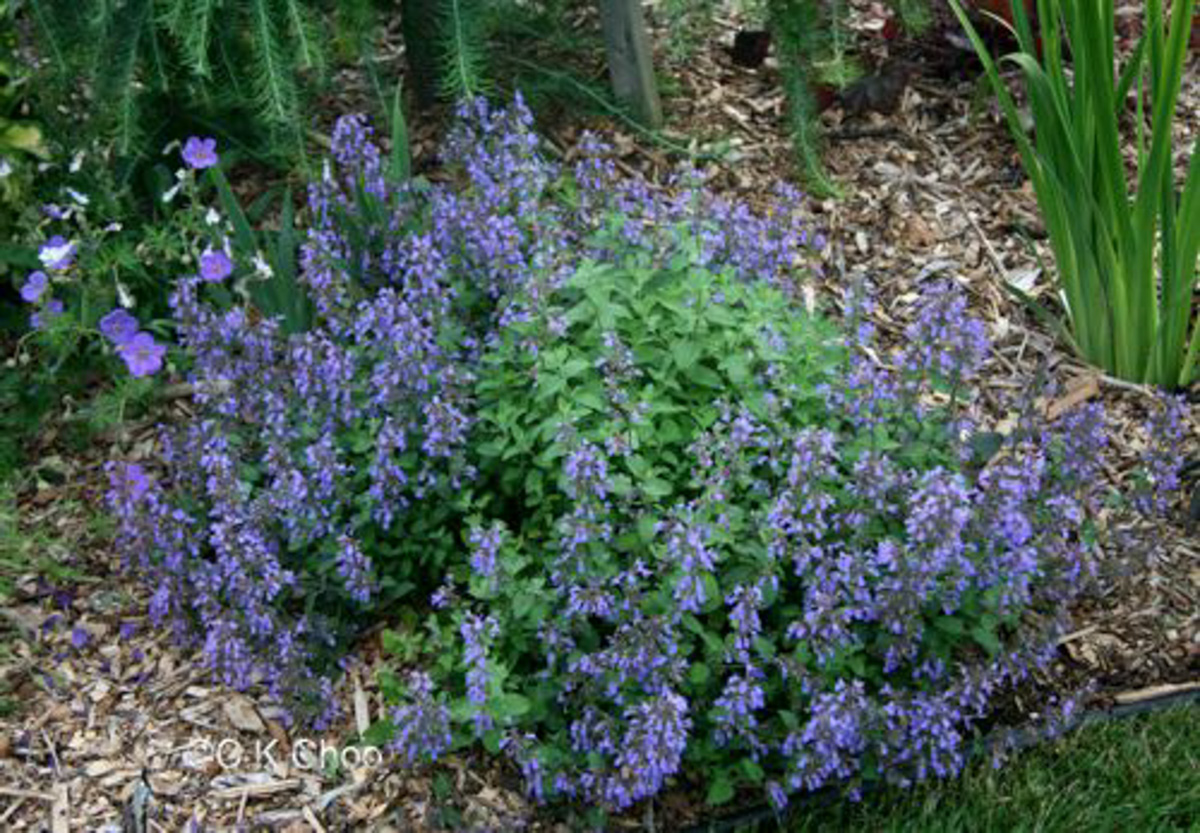
Nepeta x faassenii ‘Blue Wonder’

Blooming Time

June
September

Exposure

True
Full Sun
True
Light Shade

A truly excellent herbaceous, mound forming, compact growing ground cover, ‘Blue Wonder’ Persian Nepeta is very hardy and troublefree. Used as a specimen or mass planted as a low maintenance ground cover, this pleasantly aromatic gray green heart-leaved cultivar easily combines with a multitude of other herbs and shrubs. During spring its 6-inch-tall spikes of 1/2 inch long dark blue flowers decorate the landscape, and often do so again in fall if the flowers are cut back toward the end of the spring bloom.

Details

Hardiness Zone:

3

Blossom Color:

Violet to Purple

Growth Habit:

Sprawling

Max Height:

15"

Texture:

Fine Texture

Recommended Spacing:

2' to 3'

We sell this plant in these containers:
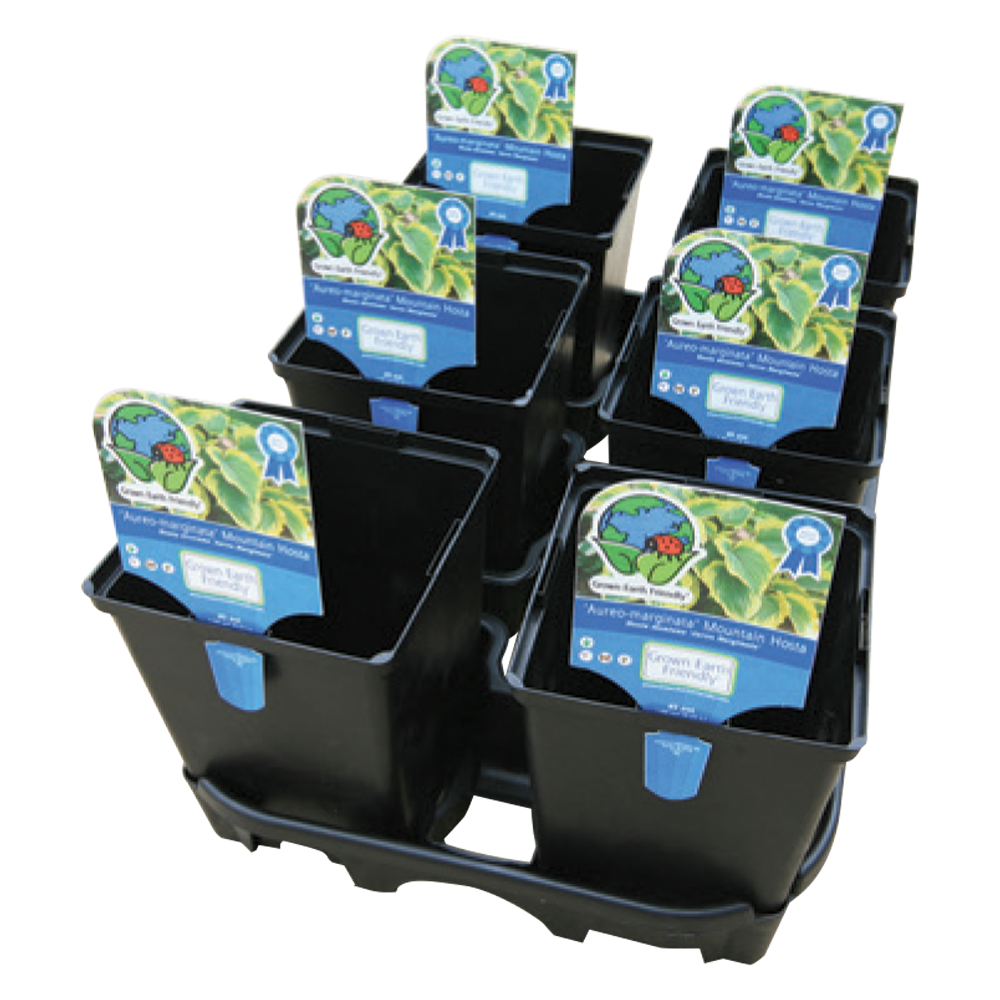
#1 Pot
#1 Pot

Special Characteristics

True
Cuttings
True
Seasonal Effect
True
Moderate Area
True
Salt Tolerant
True
Drought Tolerant
True
Hummingbird
True
Butterflies
True
Bees
True
Large Area
True
Small Area
True
Deer Resistant
True
Rebloomer

Features

Dark blue hummingbird attracting flowers on 6-inch tall spikes mid summer and early fall nearly obscure pleasantly aromatic gray green heart-leaves.

Landscape Value

Moderate to large scale ground cover, accent, edging,specimen, or companion.

Care

Watering:

'Blue Wonder' Hybrid Nepeta is moderately drought tolerant but benefits from occasional watering, to maintain soil in a moist but not wet condition, during the summer months.

Fertilizing:

'Blue Wonder' Hybrid Nepeta is a moderate feeder, benefiting from a couple of annual applications of slow release fertilizer. A spring application of a 3-1-2 ratio (such as a 15-5-10) can be applied at a rate of about 10 pounds per 1000 square feet, and during early fall, an application of a 2-1-2 ratio (such as a 10-5-10) can be applied to encourage root development and cold hardiness.

Pruning:

'Blue Wonder' Hybrid Nepeta should be enjoyed all winter long, then, during early April before it begins to grow again, it should be pruned or mowed back to ground level.

Companion Plants

Echinacea ‘Delicious Candy’ PP24,329View
Coneflower, `Delicious Candy'
Diervilla lonicera ‘Michigan Sunset’View
Bush Honeysuckle, `Michigan Sunset' Dwarf
Agastache ‘Peachie Keen’ PP25,886View
Hyssop, `Peachie Keen'
Agastache ‘Rosie Posie’ PP25,857View
Hyssop, `Rosie Posie'
Agastache x ‘Blue Fortune’View
Hyssop, `Blue Fortune'
Agastache Beelicious® Purple PP30,614View
Hyssop, Beelicious® Purple
Amsonia ciliata ‘Verdant Venture’ PP33,415View
Blue Star, Fringed, `Verdant Venture'
Amsonia hubrichtii ‘Halfway to Arkansas’View
Blue Star, Narrow Leaf, `Halfway to Arkansas'
Amsonia x Butterscotch™View
Blue Star, Butterscotch™
Amsonia ‘Starstruck’ PP32,246View
Blue Star, `Starstruck'
Amsonia ‘Blue Ice’View
Blue Star, `Blue Ice'
Diervilla x splendens Mountaineer® Keylime (`Noniba’)View
Bush Honeysuckle, Mountaineer® Keylime Bush
Diervilla x splendens Mountaineer® Merlot (`Nontolre’)View
Bush Honeysuckle, Mountaineer® Merlot Bush
Diervilla x splendens Mountaineer® Sunshine (`Nonenih’)View
Bush Honeysuckle, Mountaineer® Sunshine Bush
Diervilla x splendens Mountaineer® Wasabi (‘Nonibas’)View
Bush Honeysuckle, Mountaineer® Wasabi Bush
Rudbeckia fulgida var. deamiiView
Coneflower, Orange, Deam's
Rudbeckia fulgida var. sullivantii ‘Little Goldstar’View
Coneflower, Orange, `Little Goldstar' Dwarf
Rudbeckia ‘American Gold Rush’ PP28,498View
Coneflower, Orange, `American Gold Rush'
Rudbeckia speciosa ‘Viette’s Little Suzy’View
Coneflower, Orange, `Little Suzy' Dwarf
Pennisetum alopecuroides ‘Red Head’View
Fountain Grass, `Red Head'
Pennisetum alopecuroides Jambalaya™ PP31,176View
Fountain Grass, Jambalaya
Pennisetum alopecuroides Fuzzy Wuzzy® PPAF (‘Nonyzz’)View
Fountain Grass, Fuzzy Wuzzy®
Pennisetum alopecuroides ‘Moudry’View
Fountain Grass, Black Flowered