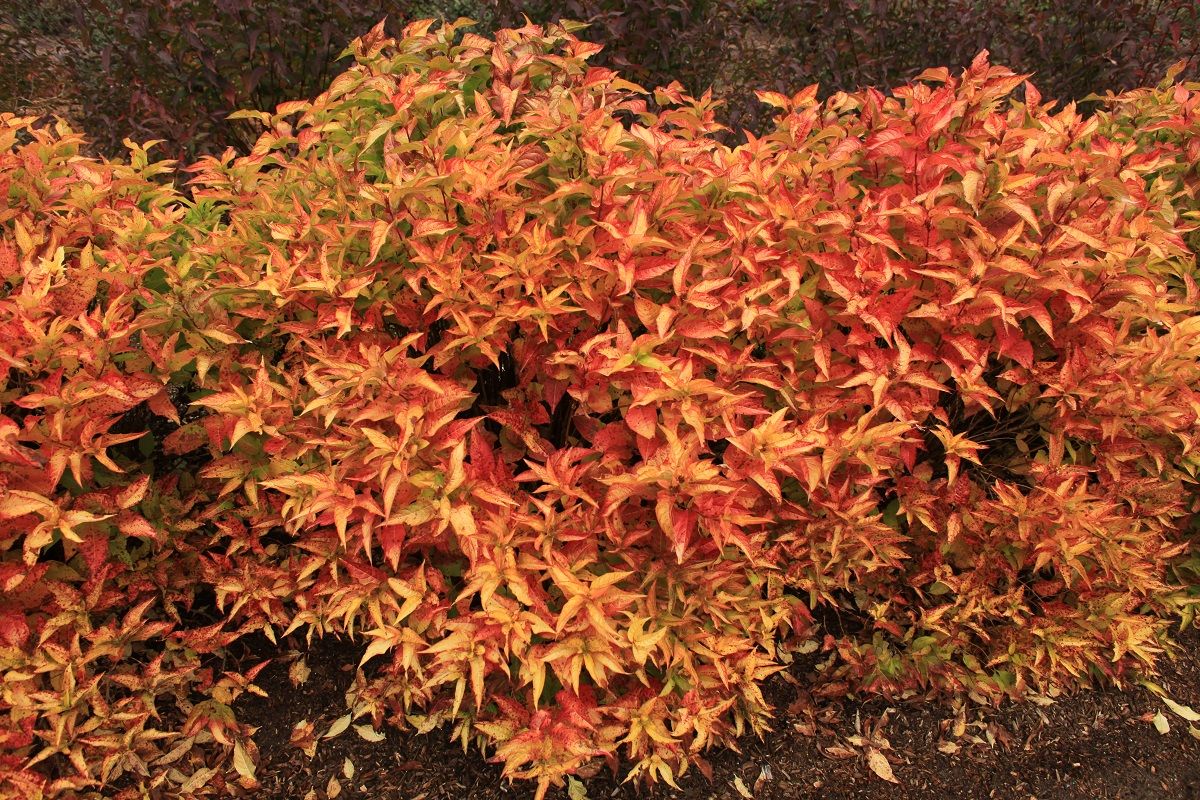
Mountaineer® Wasabi had proven to be strong, hardy, well-behaved and colorful. The original plant has never been sheared and it remains tightly branched and attractive. Wasabi features chartreuse-green foliage from spring to late summer, then becomes infused with orange and red during fall. It blooms early to midsummer with yellow trumpet-shaped flowers and grows well in sun or shade. Wasabi can substituted for golden Spirea or privet, and looks natural in our North American landscapes. It can be used as a hedge, specimen, soil stabilizer or bank cover and grows well in any well-drained soil.
×
Quantity Calculator
Details
Hardiness Zone:
4
Blossom Color:
Yellow to Chartreuse
Growth Habit:
Shrubby
Max Height:
4'
Texture:
Coarse Texture
Recommended Spacing:
4' to 4½'
We sell this plant in these containers:
#2 Pot
Special Characteristics
Moderate Area
Salt Tolerant
Drought Tolerant
Native Hybrid
Hummingbird
Bees
Large Area
Sandy Soil Tolerant
Hortech Original
Controls Erosion
Features
Tightly branched and attractive, Wasabi features chartreuse-green foliage from spring to late summer, then becomes infused with orange and red during fall.
Landscape Value
It can be used as a hedge, specimen, soil stabilizer or bank cover and grows well in any well-drained soil.
Care
Watering:
Mountaineer® Wasabi Bush Honeysuckle is moderately drought tolerant but benefits from occasional watering, to maintain soil in a moist but not wet condition, during the summer months.
Fertilizing:
Mountaineer® Wasabi Bush Honeysuckle is a moderate feeder, benefiting from a couple of annual applications of slow release fertilizer. A spring application of a 3-1-2 ratio (such as a 15-5-10) can be applied at a rate of about 10 pounds per 1000 square feet, and during early fall, an application of a 2-1-2 ratio (such as a 10-5-10) can be applied to encourage root development and cold hardiness.
Pruning:
Mountaineer® Wasabi Bush Honeysuckle sets its flower buds in summer, and any pruning should be conducted in April, immediately after winter.