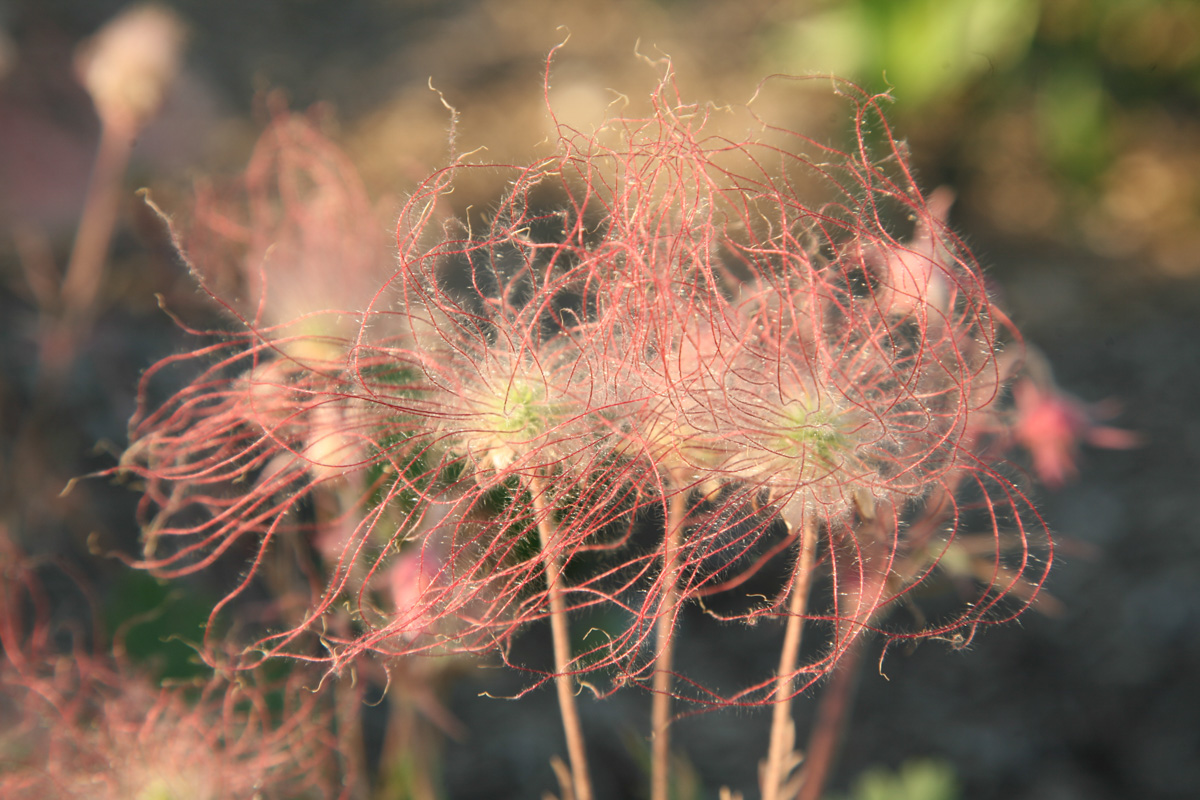
This native Geum is distinctly different than those typically found in the marketplace. It develops rhizomatous clumps of hairy, pinnately divided, mid-green leaves and in late spring forms nodding, globular reddish-pink flowers on hairy wind-responsive stems. The most distinctive feature of prairie smoke is its seed heads that form 2-inch long, soft textured gray tails which collectively resemble a feather duster and are the reason for its namesake. Its smoke-like appearance can last for up to a month, adding great interest to any garden.
×
Quantity Calculator
Details
Hardiness Zone:
3
Blossom Color:
Rose to Pink
Growth Habit:
Clump Forming
Max Height:
1½'
Texture:
Fine Texture
Recommended Spacing:
8" to 12"
We sell this plant in these containers:
#1 Pot
Special Characteristics
Cuttings
Seasonal Effect
Moderate Area
Drought Tolerant
Butterflies
Bees
Small Area
Deer Resistant
Native Species
Features
Nodding, globular reddish-pink flowers on hairy wind responsive stems and seed heads that form 2-inch long, soft textured gray tails which collectively resemble a whimsical feather duster.
Landscape Value
Smoke-like appearance can last for up to a month, adding great interest to any garden as a specimen or accent.
Care
Watering:
Prairie Smoke is very drought tolerant and typically only needs watering during the hottest days of summer.
Fertilizing:
Prairie Smoke is a moderate feeder, benefiting from a couple of annual applications of slow release fertilizer. A spring application of a 3-1-2 ratio (such as a 15-5-10) can be applied at a rate of about 10 pounds per 1000 square feet, and during early fall, an application of a 2-1-2 ratio (such as a 10-5-10) can be applied to encourage root development and cold hardiness.
Pruning:
Prairie Smoke should be enjoyed all winter long, then, during early April before it begins to grow again, it should be pruned or mowed back to ground level.