
Asclepias tuberosa
Blooming Time
Exposure

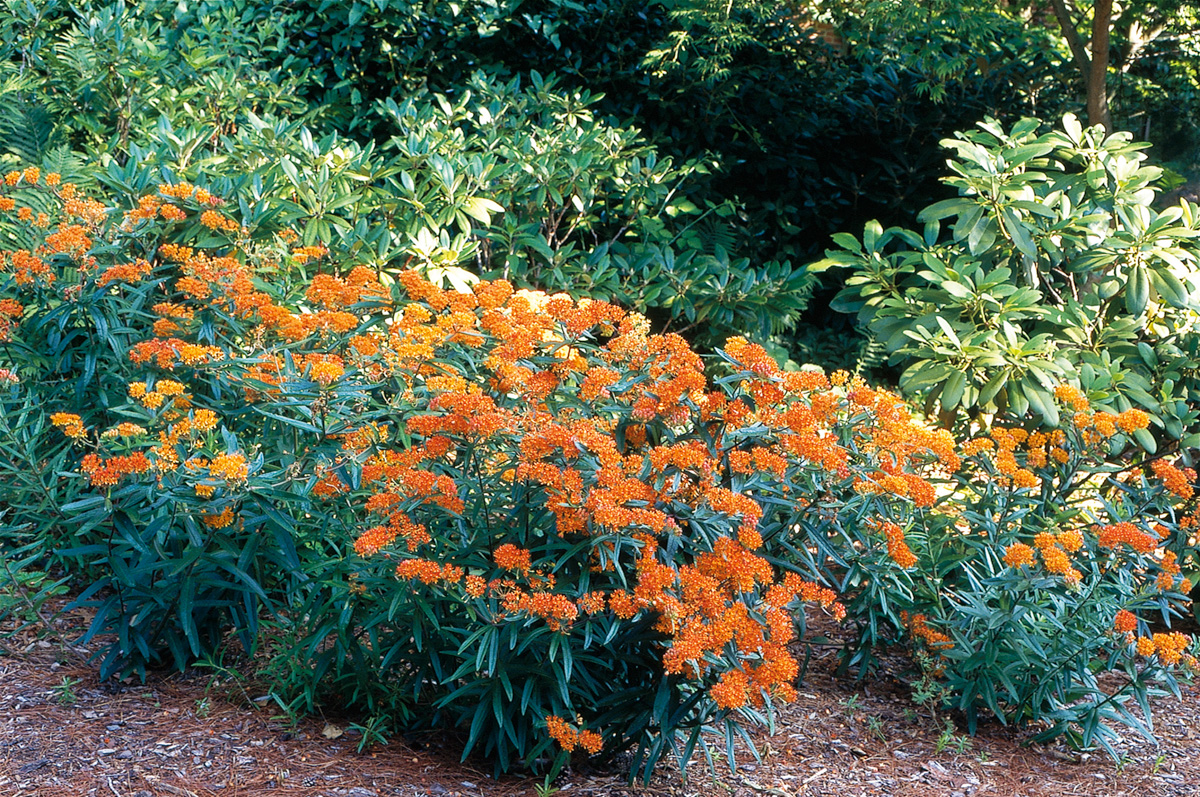
Butterfly milkweed is a popular and florific prairie native that forms a clump of shiny green, narrowly lance-shaped foliage. From summer well into fall, it flowers with vibrant orange flowers in substantial clusters atop its leafy stems. At times they are so bright as to appear neon, and naturally, they are very attractive to various species of butterflies. Tough and drought tolerant, butterfly milkweed is at home in sandy, gravelly or loamy soils. Once established it needs little or no irrigation (due to its substantial tuberous water storing root system). Plant butterfly milkweed in drifts, as an accent, or as edging. 2017 Perennial Plant of the Year.
Details
Hardiness Zone:
Blossom Color:
Orange, Copper, Gold
Growth Habit:
Clump Forming
Max Height:
2'
Texture:
Recommended Spacing:
We sell this plant in these containers:

Special Characteristics











Features
Popular and florific prairie native that forms a clump of shiny-green, narrowly lance-shaped foliage. From summer well into fall, it flowers with vibrant orange flowers in substantial clusters atop its leafy stems.
Landscape Value
Tough and drought-tolerant, it is at home in sandy, gravelly, or loamy soils and requires little or no irrigation once established.
Care
Watering:
Butterfly Milkweed is very drought tolerant and typically only needs watering during the hottest days of summer.
Fertilizing:
Butterfly Milkweed needs little fertilizer, but benefits from a single springtime or fall topdressing (about 1 inch deep) of organic compost or well rotted leaves. Alternatively, a springtime application of a slow release fertilizer with a 3-1-2 ratio (such as a 15-5-10) can be applied at a rate of about 10 pounds per 1000 square feet.
Pruning:
Butterfly Milkweed should be enjoyed all winter long, then, during early April before it begins to grow again, it should be pruned or mowed back to ground level.