
Vernonia ‘Summer’s Surrender’ PP28,475
Blooming Time
Exposure

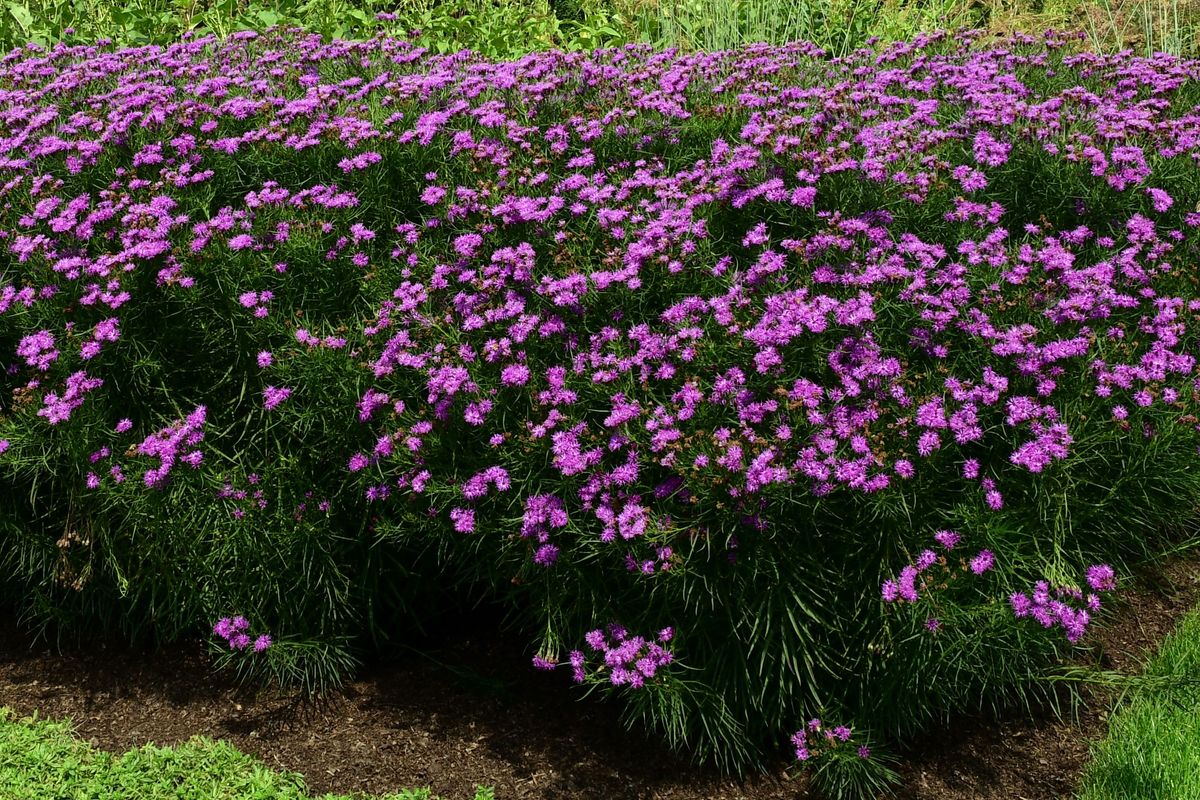
Photo courtesy of Plants Nouveau. A robust grower with a shrubby, upright, non-flopping habit, `Summer’s Surrender’ is clothed in narrow, deep olive-green deciduous foliage. And, growing wider than tall, it is a plant for moderate to large areas, and makes a very intriguing companion plant for large scale ground cover. But, more than anything, it is a plant for late season color and pollinator support. `Summer’s Surrender’s ample clusters of bright-purple aster-like flowers cover the entire plant during August and persist through October to provide a food source for butterflies and bees. Tolerant of poor soils, extreme heat, and highly resistant to rust and mildew, `Summer’s Surrender’ is great in the back of borders, for mass plantings, and for both private and commercial landscapes.
Details
Hardiness Zone:
Blossom Color:
Violet to Purple
Growth Habit:
Clump Forming
Max Height:
4'
Texture:
Recommended Spacing:
We sell this plant in these containers:
Special Characteristics








Features
Shrubby, upright, and non-flopping with narrow, deep olive-green foliage with a late season pollinator supporting flower display- bright purple, aster-like flowers from August until October.
Landscape Value
Tolerant of poor soils, extreme heat, and resistant to rust and mildew- great in the back of the border, mass planting, and for both private and commercial landscapes.
Care
Watering:
`Summer's Surrender' Ironweed is very drought tolerant and typically only needs watering during the hottest days of summer.
Fertilizing:
`Summer's Surrender' Ironweed is a moderate feeder, benefiting from a couple of annual applications of slow release fertilizer. A spring application of a 3-1-2 ratio (such as a 15-5-10) can be applied at a rate of about 10 pounds per 1000 square feet, and during early fall, an application of a 2-1-2 ratio (such as a 10-5-10) can be applied to encourage root development and cold hardiness.
Pruning:
`Summer's Surrender' Ironweed should be enjoyed all winter long, then, during early April before it begins to grow again, it should be pruned or mowed back to ground level.