
Carex stricta
Blooming Time
Exposure


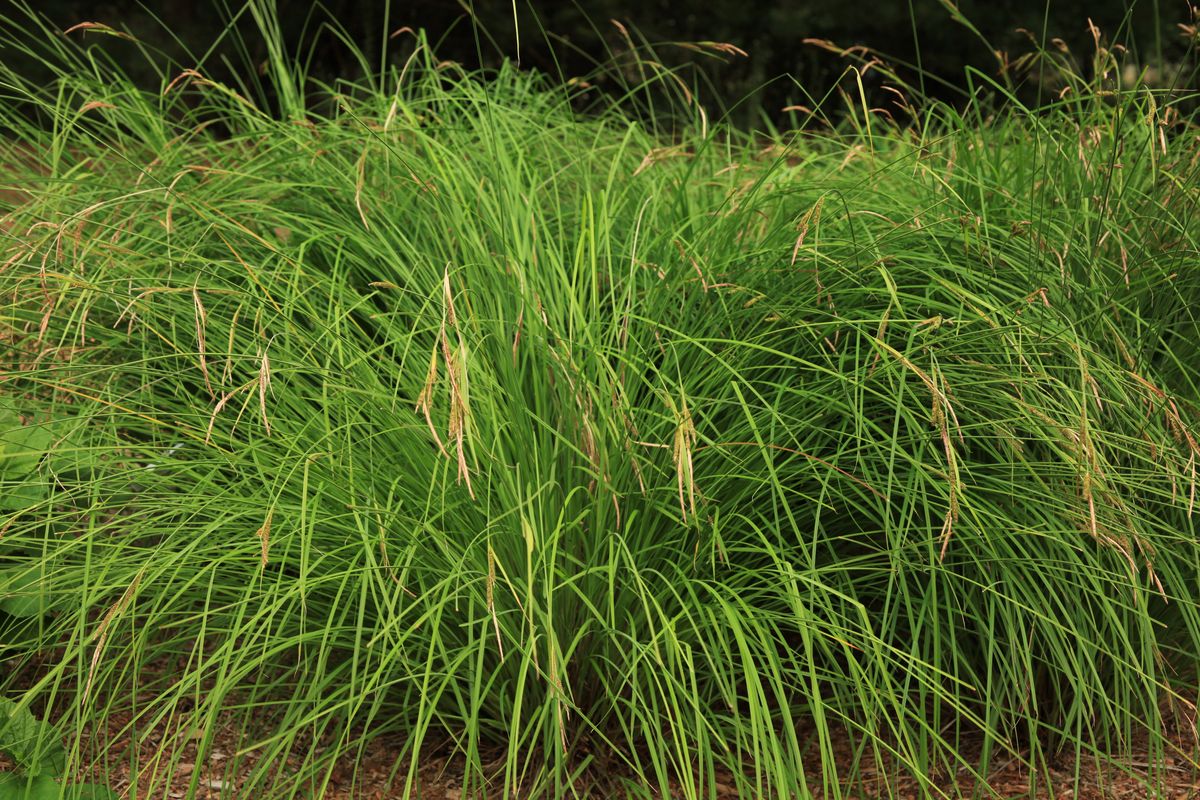
Thriving in both normal garden settings as well as moist to wet areas, this lovely native sedge forms 3-foot-tall clumps of gracefully arching, bright green, ribbon-like blades- achieving a silhouette similar to that of a miniature water fountain. Its cylindrical inflorescences arise above the foliage in late spring, forming dark reddish-brown seed heads that add texture and provide a source of food for birds. In boggy or wet areas, Carex stricta forms tussocks, or ‘hills’ that raise the root system out of standing water, a feature that makes this species well suited for wetland restoration, swales, bogs, ditches, and detention basins.
Details
Hardiness Zone:
Blossom Color:
Tan to Brown
Growth Habit:
Clump Forming
Max Height:
3½'
Texture:
Recommended Spacing:
We sell this plant in these containers:
Special Characteristics






Features
Gracefully arching, bright green, ribbon like blades with cylindrical inflorescences, forming dark reddish-brown seed heads.
Landscape Value
Wetland restoration, swales, bogs, ditches, and detention basins.
Care
Watering:
Tussock Sedge is moderately drought tolerant but benefits from occasional watering, to maintain soil in a moist but not wet condition, during the summer months.
Fertilizing:
Tussock Sedge needs little fertilizer, but benefits from a single springtime or fall topdressing (about 1 inch deep) of organic compost or well rotted leaves. Alternatively, a springtime application of a slow release fertilizer with a 3-1-2 ratio (such as a 15-5-10) can be applied at a rate of about 10 pounds per 1000 square feet.
Pruning:
Tussock Sedge should be pruned while dormant during late fall or winter.